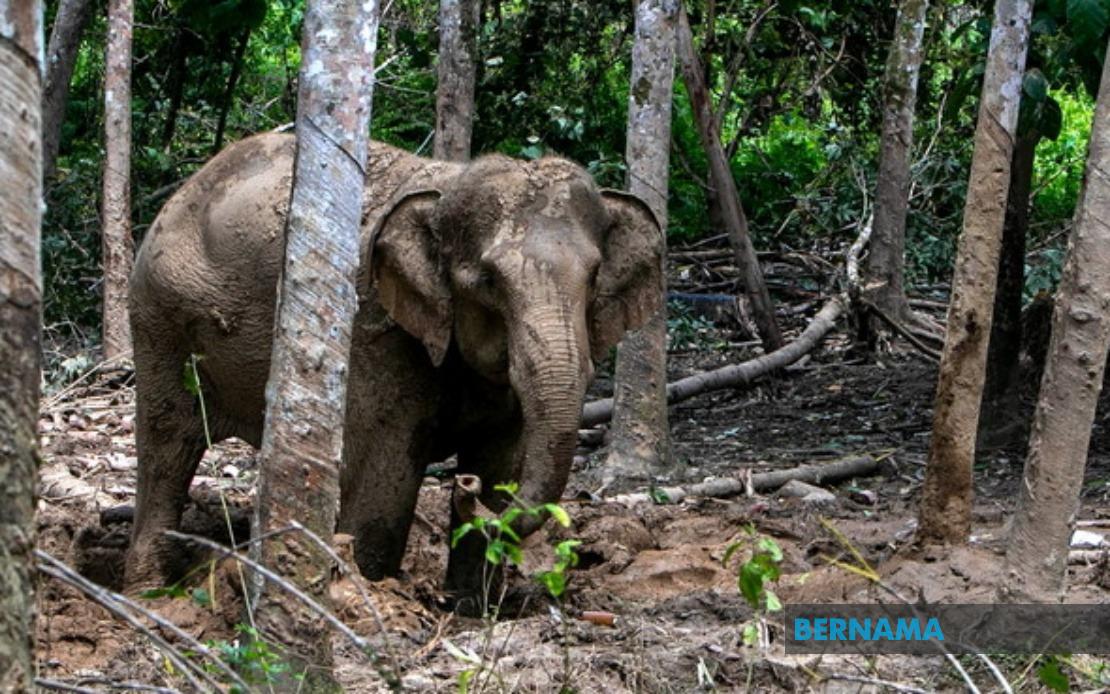
A resident of Kampung Orang Asli Perjek in the Legap Resettlement Scheme near Sungai Siput in Perak sustained serious injuries last Friday after engaging with a herd of wild elephants that had wandered into his village seeking food. The victim, who attempted to chase the animals away alongside other residents, was struck by one of the four pachyderms that had breached the settlement's perimeter. He suffered significant bleeding and briefly lost consciousness before fellow villagers managed to extract him from the dangerous situation and transport him to medical care.
The Department of Wildlife and National Parks, or PERHILITAN, received notification of the attack around 10 pm and promptly dispatched officers from its Sungai Siput district office to assess the situation. Upon investigation, authorities determined that the elephant herd had accessed the area immediately behind residential properties, where they proceeded to consume cassava and banana crops that villagers cultivate for sustenance and income. The proximity of food sources to homes in resettlement areas creates ongoing tension between agricultural communities and migrating wildlife populations seeking natural forage.
The confrontation that led to the injury arose from residents' attempts to protect their livelihoods by forcing the elephants away from the village. However, the victim positioned himself too near the defensive animals, triggering an aggressive response that underscores the unpredictability of human-wildlife interaction in such circumstances. This incident exemplifies the difficult position faced by indigenous communities in Peninsular Malaysia, where traditional settlement patterns increasingly overlap with established elephant migration corridors and feeding territories. The balance between livelihood protection and personal safety remains precarious for residents with limited resources to implement comprehensive deterrent systems.
According to PERHILITAN's official statement, the injured man was evacuated to Raja Permaisuri Bainun Hospital, where he is reportedly in stable condition. The department has committed to supporting his family through the Wildlife Attack Victim Assistance programme, which operates under the purview of the Ministry of Natural Resources and Environmental Sustainability. This compensation mechanism recognises that rural and indigenous communities disproportionately bear the costs of human-wildlife conflict, as their settlements often exist at the margins of protected forest reserves and natural habitats essential for large mammals like elephants.
Following the elephant departure from the village, PERHILITAN deployed drone monitoring technology to confirm the animals had moved away from populated areas. The department subsequently implemented what it described as appropriate management measures designed to mitigate the likelihood of renewed conflict in the locality. These interventions typically involve increased patrols, coordination with local residents on wildlife corridors, and installation of early warning systems to alert communities of approaching herds before they reach villages. The proactive approach reflects growing recognition that reactive responses to wildlife incursions often result in either human casualties or unnecessary animal deaths.
The situation in Sungai Siput represents a broader challenge confronting Perak and other peninsular states where human settlement, agricultural expansion, and wildlife habitats intersect. Elephant populations in Peninsular Malaysia have demonstrated increasing flexibility in movement patterns, partly due to habitat fragmentation and diminishing natural food sources in protected areas. This adaptation, while demonstrating ecological resilience, creates precisely the conditions observed in Kampung Orang Asli Perjek, where elephants raid agricultural plots and face defensive or aggressive responses from communities protecting their resources.
PERHILITAN's advisory to the public against taking independent action when encountering wild animals carries particular weight given this incident. The department emphasised that direct confrontation, particularly with large and powerful creatures like elephants, invariably elevates danger for human participants. Officers possessing appropriate training, equipment, and knowledge of animal behaviour are significantly better positioned to manage such situations safely. Community education about these realities represents a crucial component of long-term conflict mitigation, though implementation remains challenging in geographically remote and economically constrained areas.
The availability of a dedicated hotline at 1-800-88-5151 and the Public Complaints Management System on PERHILITAN's official website reflects institutional efforts to streamline reporting and response protocols. These mechanisms enable residents to alert authorities at the earliest signs of elephant activity, potentially allowing intervention before confrontations escalate to dangerous levels. However, the effectiveness of such systems depends upon awareness among rural communities, accessibility of communication infrastructure in remote regions, and capacity of response teams to act with sufficient speed.
For Orang Asli communities specifically, incidents such as this underscore the complex relationship between development, land rights, and environmental management. Resettlement schemes like Legap RPS were established to provide indigenous communities with secure land tenure and residential infrastructure, yet these programmes often situate villages within or adjacent to areas traversed by wildlife. The tension between providing secure homes and minimising environmental risk represents an ongoing policy challenge for Malaysian authorities balancing social welfare objectives with conservation imperatives.
The injury in Sungai Siput will likely prompt renewed discussions among state and federal authorities regarding wildlife corridor designation, community compensation mechanisms, and prevention strategies. Regional neighbours including Thailand and Indonesia face similar challenges with cross-border elephant populations, suggesting that effective solutions may require transnational cooperation on habitat management and animal movement patterns. For Malaysian readers, particularly those in Perak and other states sharing elephant territory, this incident serves as a sobering reminder of the costs borne by those living at the frontier between human settlement and wild nature.

