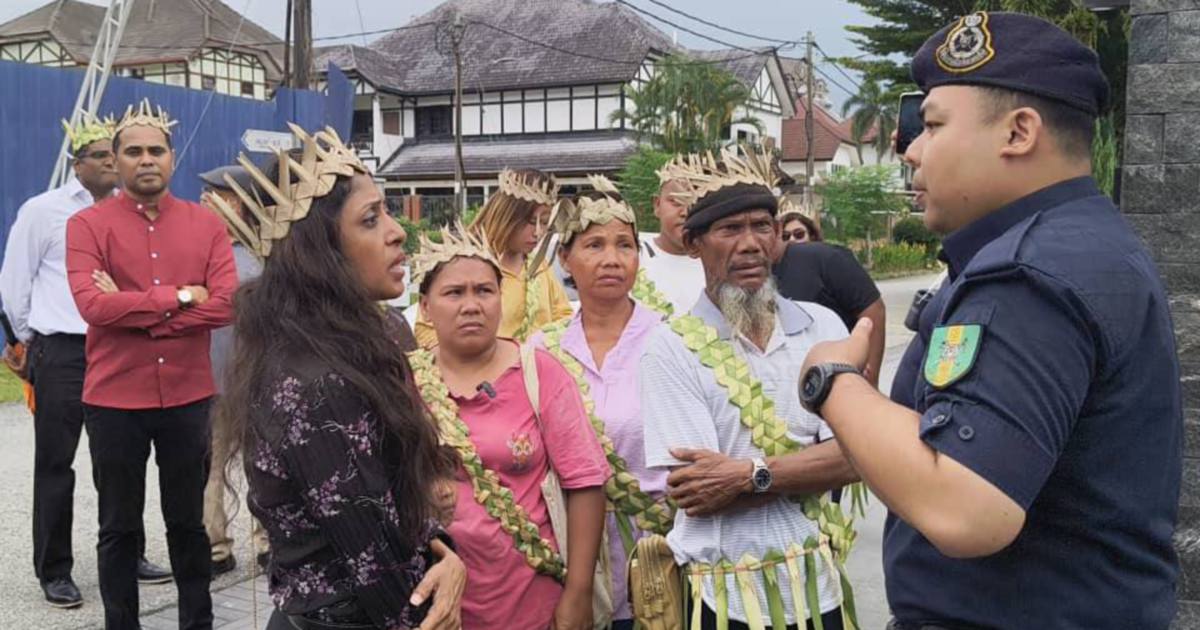
Orang Asli families in Kampung Sungai Cot, Maran, are cautiously optimistic after Prime Minister Datuk Seri Anwar Ibrahim pledged to bring their ancestral land grievances directly to the Pahang state administration. The commitment, made during an engagement with community representatives, signals a willingness to prioritise indigenous land rights at the federal level—an issue that has festered for years without meaningful government intervention.
The Kampung Sungai Cot dispute represents a microcosm of broader tensions between indigenous communities and state land authorities across Peninsular Malaysia. The Orang Asli, recognised as the peninsula's original inhabitants, have historically faced systematic marginalisation in land recognition and resource allocation. When territorial claims clash with state development agendas or private interests, indigenous families often lack the legal framework and political influence to defend their positions effectively. The Maran case exemplifies how these disputes can drag on indefinitely when federal and state governments fail to coordinate on indigenous policy.
Prime Minister Anwar's intervention carries particular weight because it reflects a federal commitment to engage with indigenous concerns through formal channels. By agreeing to escalate the matter to Pahang, he has essentially elevated the dispute from a local grievance to an inter-governmental issue requiring high-level resolution. This procedural shift is significant: it suggests the matter will receive scrutiny beyond the state bureaucracy that may have previously deprioritised it, and it implies federal accountability in monitoring outcomes. For the Kampung Sungai Cot families, this represents their strongest institutional pathway to justice in years.
The history of such disputes reveals how administrative neglect compounds over time. When state governments prove unresponsive to indigenous land claims, communities exhaust local remedies and turn to media attention, civil society advocacy, and political petitions—exactly the pathway that brought Kampung Sungai Cot's case to the Prime Minister's attention. This pattern indicates structural weaknesses in how Malaysia handles indigenous land governance. There are no dedicated federal mechanisms with enforcement power to resolve state-level disputes involving Orang Asli territories, leaving communities dependent on political goodwill rather than enforceable rights.
The significance of this development extends beyond one village. Malaysia's indigenous populations comprise several distinct groups, each with complex territorial histories predating colonial administration. The Orang Asli specifically inhabit fragmented territories across the peninsula, many of which lack formal legal recognition. When federal leadership acknowledges these disputes merit direct state-level engagement, it implicitly validates the principle that indigenous land claims deserve serious governmental consideration. Other Orang Asli communities facing similar disputes will likely interpret this as an opening to escalate their own grievances through similar channels.
From a Southeast Asian perspective, Malaysia's handling of indigenous land rights reflects broader regional challenges. Neighbouring countries like Thailand, Indonesia, and the Philippines grapple with comparable tensions between state territorial authority and indigenous customary rights. Malaysia's approach—characterised by constitutional recognition of Orang Asli status but limited practical protections for ancestral lands—mirrors patterns seen elsewhere in the region. Prime ministerial intervention, while valuable, highlights the absence of systematic mechanisms that would make such disputes routine rather than requiring political elevation.
The practical implications for Kampung Sungai Cot hinge on what specific actions the Prime Minister's office takes and how Pahang responds to federal overtures. Previous government promises to indigenous communities, while well-intentioned, have sometimes stalled during implementation due to conflicting departmental interests, budgetary constraints, or shifting political priorities. The community will need concrete movement—formal land surveys, negotiation timelines, and government-mandated mediation—to translate the Prime Minister's assurance into tangible progress. Without such follow-through mechanisms, even high-level promises risk becoming symbolic gestures.
The dispute also reflects competing land-use philosophies that underpin Malaysian resource management. State governments often view indigenous territories through a development lens, prioritising agricultural expansion, infrastructure projects, and resource extraction. Indigenous communities, conversely, understand their ancestral lands through custodial and subsistence frameworks. Reconciling these perspectives requires not just political will but genuine institutional innovation—perhaps through co-management agreements, community consent protocols, or land-rights recognition statutes that state and federal authorities jointly endorse.
Looking forward, the Kampung Sungai Cot case could set precedent for how federal-state cooperation addresses indigenous grievances. If the Prime Minister's office establishes clear timelines, engages Pahang constructively, and works toward a settlement that acknowledges Orang Asli customary rights, it demonstrates a model applicable to other disputes. Conversely, if bureaucratic inertia returns and the matter drifts without resolution, it will vindicate long-standing criticisms that Malaysian governance treats indigenous concerns as peripheral to state interests.
For the families in Kampung Sungai Cot, Prime Minister Anwar's commitment represents a decisive moment. After years of activism and advocacy yielding little result, federal-level attention offers genuine hope. However, seasoned observers of indigenous rights in Malaysia understand that political promises, however senior their source, require sustained pressure and institutional follow-through to become reality. The community's challenge now lies in maintaining momentum, holding officials accountable, and ensuring that federal interest translates into concrete land recognition and resource security for their ancestral territory.

