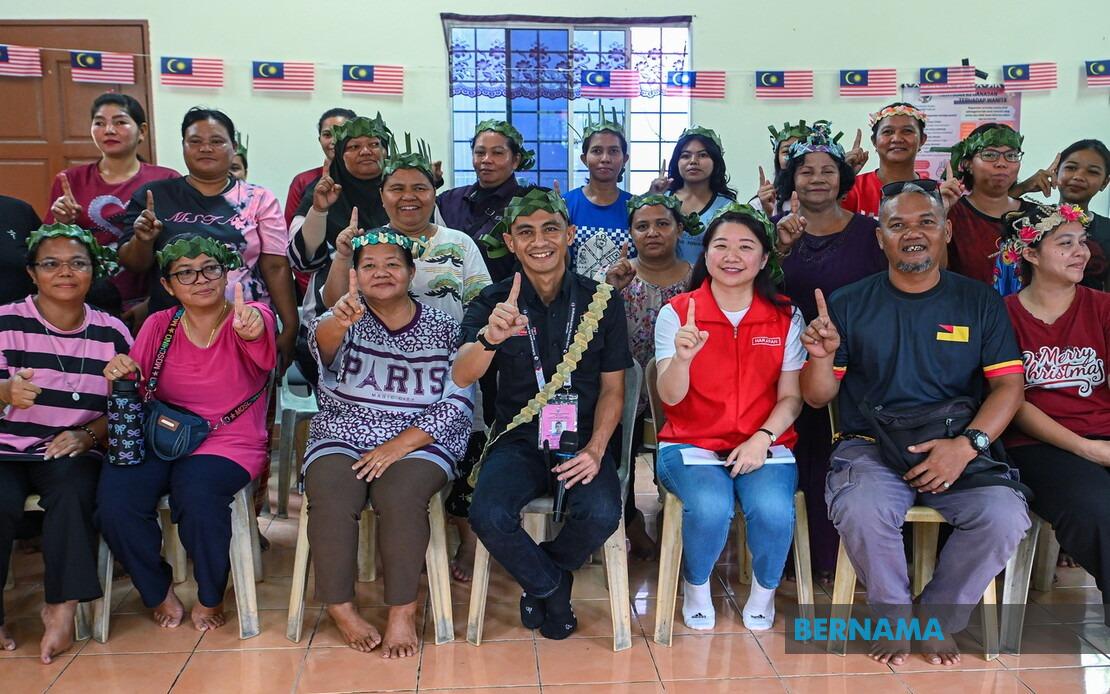
Datuk Ahmad Faez Abdul Razak, Pakatan Harapan's candidate for the Labu state seat, has centred his electoral campaign around tangible improvements for the Orang Asli community, vowing to tackle longstanding infrastructure deficits and create sustainable income pathways should voters grant PH the mandate in the upcoming Negeri Sembilan state election. His commitment emerged during an engagement at Kampung Orang Asli Tekir, where he emphasised that indigenous development represents not merely campaign rhetoric but a foundational pillar of his legislative agenda.
The candidate's platform addresses multiple interconnected challenges facing the settlement of 796 residents. Critically, Ahmad Faez has pledged to escalate the customary land question affecting Kampung Orang Asli Tekir to the State Legislative Assembly, recognising that tenure security remains foundational for economic stability and community investment. Alongside this institutional advocacy, he has outlined a concrete infrastructure programme encompassing road rehabilitation and internet connectivity expansion—deficiencies that simultaneously constrain educational opportunity and market access for local enterprises.
Education and skills development emerge as strategic pillars within Ahmad Faez's broader vision. He has argued that the Orang Asli youth demographic possesses untapped potential requiring targeted support mechanisms to acquire marketable competencies and establish independent income streams. This framing reflects broader recognition within development discourse that generational poverty cycles depend partly on skills gaps and educational access disparities, particularly in rural and marginalised settings where formal opportunities remain constrained.
Economic diversification strategies constitute another substantive component. Ahmad Faez has identified handicraft production as a particularly promising avenue, suggesting that enhanced marketing channels and distribution networks could substantially elevate household incomes. The candidate has additionally proposed introducing contemporary agricultural methodologies, specifically fertigation systems, to augment productivity and stabilise farming as a reliable livelihood option. These initiatives reflect a technocratic approach to rural development that couples traditional economic activities with modern production techniques.
The candidate's engagement record carries significance within this electoral context. Ahmad Faez has underscored his presence within the constituency across the preceding two years, framing this sustained contact as evidence of genuine commitment transcending purely electoral cycles. He has explicitly rejected the narrative of politicians appearing only during campaign seasons, positioning consistent community engagement as a marker of credibility and accountability. This rhetorical positioning gains particular resonance in contests where voter scepticism regarding politician follow-through on promises remains elevated.
Village chief Nasir Musil has publicly validated Ahmad Faez's engagement pattern, confirming his regular visits and assistance provision to residents. Nasir has simultaneously articulated community priorities, emphasising that infrastructure advancement and economic elevation represent essential prerequisites for improved living standards. He has also flagged a persistent challenge rarely highlighted within mainstream electoral discourse: stray cattle constituting genuine safety hazards to motorists—a practical concern reflecting the rural character of constituencies where such issues remain unresolved across multiple electoral cycles.
The electoral landscape in Labu involves a three-way contest that structures meaningful choice around competing political visions. Ahmad Faez faces incumbent Mohamad Hanifah Abu Baker of Parti Pribumi Bersatu Malaysia (Bersatu) and Siti Nur Umaira Hasim representing Barisan Nasional (BN). This configuration means Ahmad Faez's first electoral contest will occur in a fractured competitive environment, potentially altering traditional voting patterns and requiring targeted outreach to specific demographic segments and geographic zones within the constituency.
The timing considerations for indigenous community development also warrant attention. Orang Asli populations have historically experienced marginalisation within electoral cycles, with specific grievances frequently deprioritised once polling concludes. Ahmad Faez's framing of Orang Asli advancement as a core platform commitment—rather than peripheral consideration—potentially reflects broader evolution within Malaysian political competition, where parties increasingly recognise indigenous constituencies as politically consequential rather than peripheral.
Infrastructure investments represent particularly significant commitments within rural development frameworks. Road connectivity deficiencies directly constrain market access, emergency service responsiveness, and educational opportunity. Internet connectivity expansion addresses contemporary digital divides that determine competitiveness within knowledge economies and constrain access to information resources, online employment opportunities, and educational platforms. These infrastructure priorities thus function as foundational prerequisites for broader economic participation.
The customary land question carries constitutional and developmental implications extending beyond Kampung Orang Asli Tekir. Securing tenure clarity enables communities to make long-term investments, access credit based on property collateral, and exercise genuine economic agency. Ahmad Faez's pledge to escalate this matter within state legislative forums signals recognition that individual community grievances require institutional engagement and legislative attention, positioning the candidate within a development paradigm emphasising systematic rather than purely charitable interventions.
For Malaysian voters evaluating candidates across indigenous constituencies, Ahmad Faez's platform invites assessment regarding implementation capacity and resource mobilisation capability. Development commitments require fiscal resources, administrative coordination, and sustained political will beyond single electoral cycles. The candidate's previous engagement pattern provides one evidentiary benchmark, though ultimate success depends upon post-electoral resource allocation and institutional priority-setting within state governance frameworks.
The Negeri Sembilan state election proceeds toward polling on August 1, following early voting scheduled for July 28. Labu voters will navigate choices involving competing development visions and candidate track records within contexts where indigenous community advancement remains variably prioritised across political platforms and electoral cycles.

