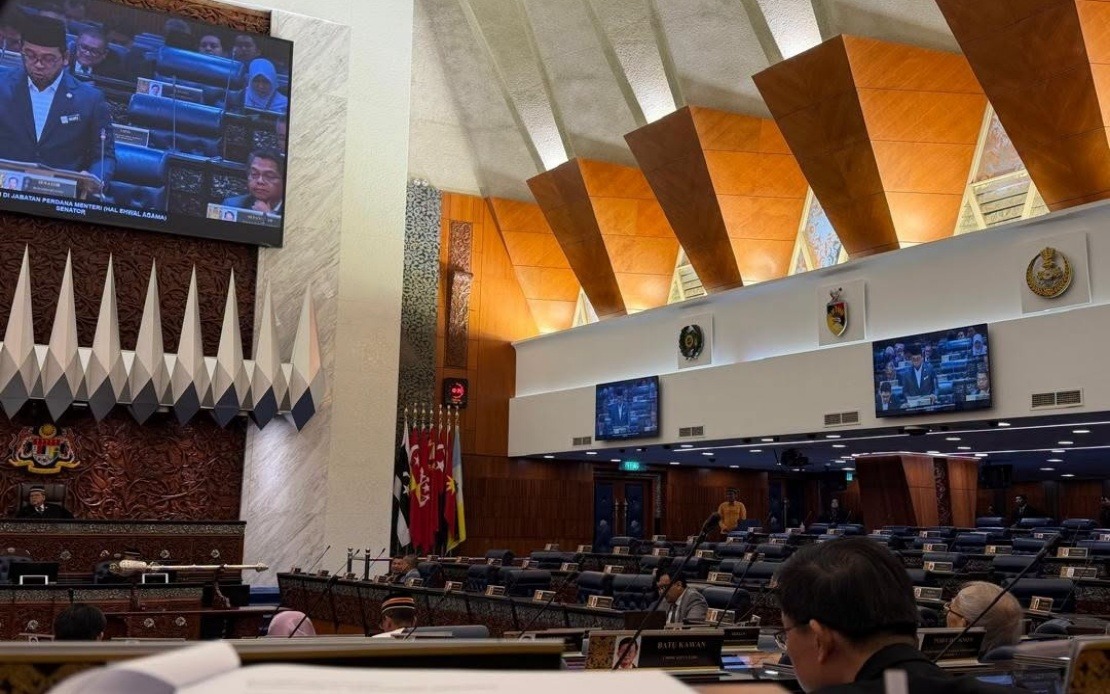
The opposition's departure from parliament on August 11 during a special sitting to discuss the Royal Commission of Inquiry report on Lembaga Tabung Haji has reignited accusations of political theatrics, with government lawmakers arguing the move undermines the seriousness of scrutinizing the state-backed pilgrimage fund's management. Datuk Seri Dr Zaliha Mustafa, chairman of the MADANI Government Backbenchers Club, characterized the walkout as a missed opportunity for substantive parliamentary oversight and suggested it revealed the opposition's true priorities.
The parliamentary session was convened specifically to allow Minister in the Prime Minister's Department for Religious Affairs Dr Zulkifli Hasan to present findings from the RCI investigation into Tabung Haji, an institution managing deposits and facilitating hajj pilgrimages for approximately 1.3 million Malaysian Muslims. The briefing represented a rare formal parliamentary engagement with a comprehensive review of one of Malaysia's largest faith-based financial entities, carrying significant implications for millions of Muslim Malaysians who entrust their savings to the organization.
Opposition members staged their exit before the ministerial presentation, protesting Speaker Tan Sri Johari Abdul's decision to proceed with the sitting despite the absence of Prime Minister Datuk Seri Anwar Ibrahim and Deputy Prime Minister Datuk Seri Fadillah Yusof, both undergoing medical treatment. Perikatan Nasional's chief whip, Datuk Seri Takiyuddin Hassan, had earlier proposed postponing proceedings given the absence of both senior leaders, a position some viewed as questioning the legitimacy of proceeding without the Prime Minister's physical presence.
Dr Zaliha's critique zeroed in on what she characterized as the opposition's rhetorical disconnect. She noted that opposition politicians have consistently positioned themselves as guardians of Islamic principles and Muslim welfare, yet opted to abstain from direct parliamentary engagement when presented with the formal venue to interrogate, challenge, and debate each specific RCI finding. This framing reframes the walkout not merely as a procedural protest but as a strategic retreat from substantive accountability mechanisms.
The PKR vice-president and Sekijang MP emphasized that parliament provided the appropriate institutional forum for opposition lawmakers to contest disputed findings or government responses through factual argumentation and evidence-based debate. She suggested that if opposition parties harbored concerns about RCI conclusions or wished to defend any party mentioned in the report, they possessed the parliamentary platform to articulate those positions directly. The exclusion of such engagement, she implied, weakened the democratic function of parliamentary scrutiny.
Dr Zaliha's intervention highlights the political sensitivity surrounding Tabung Haji governance issues in Malaysia. The pilgrimage fund's management touches upon multiple constituencies simultaneously—Muslim religious identity, financial stewardship, government accountability, and hajj accessibility. Any parliamentary review of its operations inevitably attracts intense scrutiny from religious constituencies and heightened political interest. The opposition's absence from debate thus carries symbolic weight beyond typical legislative proceedings, potentially signaling to Muslim voters either principled resistance or, as government figures argue, political calculation over genuine engagement.
The substance of the RCI inquiry itself carries considerable weight for Malaysian Islamic institutions. Tabung Haji operates with government backing but manages private depositor funds, creating a complex governance structure vulnerable to both financial mismanagement and perception of religious institution oversight failures. Parliamentary examination of RCI findings represents an opportunity to restore public confidence in the institution's stewardship and demonstrate accountability to the millions of Muslims whose savings remain invested with Tabung Haji.
Dr Zaliha's rhetorical challenge—asking publicly what the opposition genuinely seeks from the Tabung Haji matter—frames the walkout as a political misstep that invites voter skepticism. By choosing parliamentary absence, opposition members surrendered the opportunity to shape public understanding of RCI findings, cross-examine government interpretations, propose alternative remedial measures, or defend positions through the official record. These are substantial legislative tools unavailable outside the chamber.
The timing of the walkout, occurring precisely before formal presentation of the RCI report, amplifies perceptions of strategic rather than principled opposition. Had dissenting lawmakers remained to contest the briefing, challenge government responses, and propose alternative approaches, the outcome would present as substantive disagreement. Instead, the empty opposition benches during ministerial remarks read, from government's perspective, as avoidance of accountability engagement—potentially damaging the opposition's electoral positioning among Muslim voters who prioritize tangible governance improvements over political symbolism.
For Malaysian readers, the parliamentary episode illuminates persistent tensions between institutional governance and political theater. Tabung Haji's stability matters concretely for millions managing hajj savings and pilgrimage dreams. The RCI investigation presumably identified governance vulnerabilities requiring remedy. Parliament's role involves scrutinizing those findings and holding government accountable for implementation. When opposition lawmakers absent themselves from this process, they effectively cede the narrative-setting function to government voices, regardless of their substantive objections to RCI conclusions or government responses.
The medical circumstances surrounding the Prime Minister and Deputy Prime Minister's absence warrant consideration. Opposition concerns about parliamentary legitimacy when senior leaders cannot attend carry procedural merit, yet walking out entirely rather than participating while noting their absence represents a different strategic choice. The decision to boycott rather than engage conditionally suggests the opposition prioritized symbolic protest over legislative participation.
Moving forward, how the opposition characterizes this parliamentary episode—whether as principled refusal to legitimize a flawed process or as a missed opportunity for meaningful oversight—will shape public perception. The Tabung Haji matter remains substantively important regardless of parliamentary theatrics. Muslims with deposits in the institution deserve transparent governance, proper management, and demonstrated accountability. Parliamentary debate, despite inevitable political coloration, remains the appropriate mechanism for addressing such governance concerns systematically.

