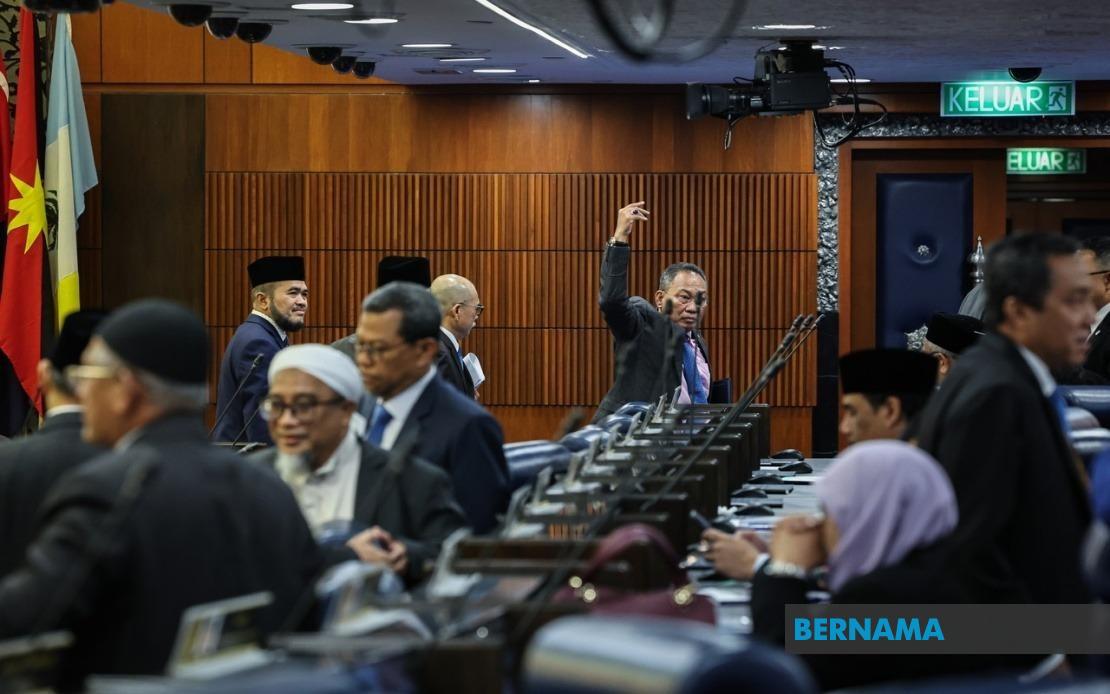
The opposition's withdrawal from yesterday's Dewan Rakyat sitting to discuss the Tabung Haji Royal Commission of Inquiry report represents a missed opportunity for substantive legislative scrutiny, according to prominent academic analysts who warn the decision may undermine confidence in Parliament's ability to protect the interests of the nation's Islamic pilgrimage fund and its millions of account holders.
Perikatan Nasional lawmakers, led by Opposition Leader Datuk Seri Hamzah Zainuddin, absented themselves from both the ministerial briefing and subsequent debate. The opposition's chief whip Datuk Seri Takiyuddin Hassan and party chairman Datuk Seri Dr Samsuri Mokhtar were among those who departed, with Takiyuddin initially proposing postponement citing the absence of Prime Minister Datuk Seri Anwar Ibrahim and Deputy Prime Minister Datuk Seri Fadillah Yusof, both receiving medical treatment.
Assoc Prof Dr Mazlan Ali from Universiti Teknologi Malaysia contends that the walkout strategy contradicts the fundamental legislative function of holding government to account. He argues that remaining engaged with the parliamentary process would have permitted the opposition to interrogate the RCI's findings directly, raise concerns specific to depositors' welfare, and create an official parliamentary record of accountability. The minister tasked with delivering the briefing, Dr Zulkifli Hasan from the Prime Minister's Department (Religious Affairs), possessed sufficient authority and expertise to address questions within his portfolio concerning Tabung Haji's management and the RCI's recommendations for institutional restoration.
The RCI report itself detailed significant governance and operational deficiencies spanning 2014 to 2020, findings that demand rigorous examination by elected representatives who answer to constituents. Tabung Haji serves approximately 10 million depositors who entrust their savings to an institution central to Malaysia's Muslim community. These account holders, Mazlan suggests, have reasonable expectations that their parliamentary representatives—whether government or opposition—will pursue thorough questioning rather than abandon the legislative arena over ceremonial considerations regarding ministerial attendance.
Mazlan further observes that insisting on the Prime Minister's personal presence constitutes a misreading of parliamentary convention and practical governance. The presence of a relevant minister adequately fulfils the government's obligation to answer before Parliament; the identity of the specific minister matters less than the institution's capacity to deliver explanations on the matter at hand. Anwar's hospitalisation should warrant compassion rather than become grounds for parliamentary abdication, particularly when the substantive issues affecting millions of Malaysians remain unresolved.
Dr Nazreena Mohammed Yasin, a senior lecturer in the Social Sciences Department at Universiti Tun Hussein Onn, reinforces this analysis by emphasising that parliamentary debate functions as the institutional mechanism through which legislators discharge their accountability responsibilities. The Dewan Rakyat provides the formal platform where MPs can scrutinise government findings, demand clarification, and ensure answers are recorded, thereby embedding accountability within official proceedings accessible to the broader public. This procedural dimension proves essential for citizen confidence in governmental operations.
The debate itself carries direct implications for public policy implementation. Decisions flowing from the RCI's investigation—whether concerning governance restructuring, financial remediation, management personnel, or operational reforms—require legislative visibility and opposition input to strengthen their legitimacy and effectiveness. Without opposition engagement, the legislative process loses a crucial counterweight that tests proposals, identifies potential pitfalls, and ensures diverse constituencies feel heard within the decision-making apparatus.
Nazreena stresses that accountability to Parliament operates independently of any single minister's attendance; rather, the system's integrity depends upon continuous opposition participation in evaluating government responses to major inquiries. The parliamentary mechanism functions properly only when both government and opposition deploy their respective institutional roles—one proposing policy responses and one demanding justification. When either side withdraws, the system's capacity to protect public interest suffers measurably.
The broader implications for institutional confidence warrant consideration. Opposition participation in parliamentary scrutiny demonstrates to citizens that elected representatives, regardless of factional alignment, prioritise substantive governance over procedural point-scoring. The Tabung Haji matter involves millions of ordinary Malaysians whose retirement savings and pilgrimage aspirations depend upon institutional stability and competent management. When opposition lawmakers abandon the parliamentary chamber, they risk appearing indifferent to these depositors' legitimate concerns—a perception that could erode public trust in institutions already under scrutiny following the RCI's unfavourable findings.
This episode reflects broader questions about how Malaysian Parliament functions as a check on executive power. The institution's credibility depends partly on opposition willingness to engage substantively with government positions, even when broader political tensions exist. Boycotts privilege symbolic victories over substantive victories for constituents. The opposition's absence from yesterday's proceedings means critical questions about Tabung Haji's future remain unasked in the official record, accountability gaps persist, and the institution's millions of account holders lose their elected representatives' voice at a pivotal institutional moment.
Moving forward, analysts suggest that parliamentary effectiveness in Malaysia requires opposition recognition that engagement—even from positions of disagreement—strengthens rather than weakens their role. The RCI report now stands with government responses unexamined by opposition scrutiny, a gap that undermines Parliament's fundamental constitutional function of maintaining equilibrium between executive power and representative accountability.

