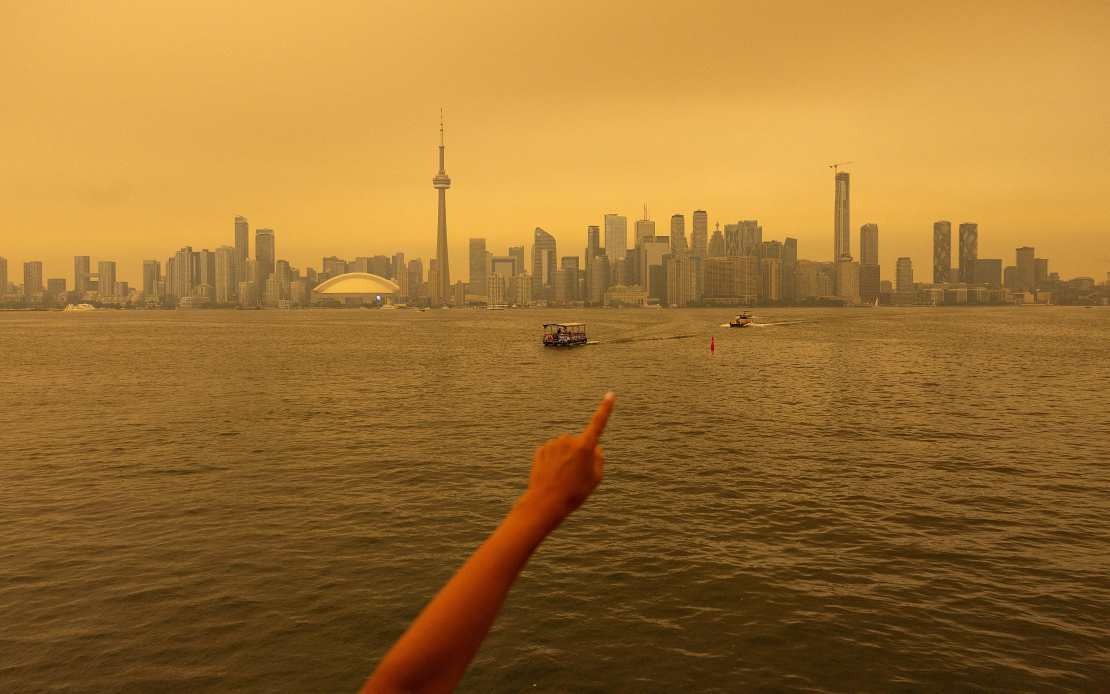
Wildfires spreading rapidly across northwestern Ontario have transformed Canada's two largest metropolitan areas into hazardous zones, with Toronto and Ottawa experiencing some of the worst air quality recorded globally in recent days. The unprecedented pollution event has prompted health warnings from authorities and forced significant disruptions to transportation infrastructure, highlighting the far-reaching consequences of uncontrolled forest fires for urban populations and critical supply chains across North America.
The scale of the air quality crisis became apparent on Wednesday when Toronto registered what meteorologists described as the poorest air quality among major world cities. Environment Canada's Air Quality Health Index classified conditions in the city as "very high risk," a designation that carries serious implications for vulnerable populations including children, elderly residents, and those with respiratory conditions. Ottawa simultaneously issued its own air quality alerts as smoke particles accumulated in the atmosphere, exacerbated by unusually humid weather that trapped pollutants near ground level and created the distinctive yellow haze that blanketed the region.
The situation developed as more than 100 active fires continued their advance through the sparsely populated but expansive forests of northwestern Ontario. The scale of the wildfire outbreak forced emergency officials to order evacuations from multiple communities in the affected zone, relocating residents to safer areas away from immediate danger. Meteorologists indicated that prevailing wind patterns would likely sustain the hazardous conditions for several additional days, suggesting that major urban centres would remain under air quality stress well into the following week.
Perhaps most striking was a dramatic incident that emerged on social media platforms late Monday evening, documenting a Canadian National freight train surrounded by intensely burning wildfire near Armstrong, Ontario. The footage, recorded by crew members aboard the locomotive, captured towering walls of flame consuming forested areas on both sides of the tracks while casting an ominous red glow throughout the train's cab. The video circulated widely across digital networks before CN officially confirmed its authenticity on Wednesday, acknowledging that all personnel aboard had been evacuated safely despite the dangerous circumstances.
The incident prompted Canadian National to announce a temporary halt to all train operations across the affected section of its network. This suspension carries implications beyond the immediate safety concerns, as disruption to rail freight services can cascade through supply chains across North America. The railway's decision underscores the severity of conditions on the ground and reflects prioritisation of worker safety over operational continuity, a prudent stance given the unpredictable nature of wildfire behaviour.
For Malaysian readers and Southeast Asian observers, the Ontario wildfire crisis offers instructive parallels to transboundary air pollution phenomena familiar to the region. Just as transboundary haze from Indonesian forest fires periodically degrades air quality across Malaysia, Singapore, and Brunei, the Canadian situation demonstrates how large-scale environmental disasters can swiftly overwhelm urban air quality management systems and force emergency public health measures. The speed with which Toronto's Air Quality Health Index deteriorated to "very high risk" status underscores the challenges cities face when confronted with pollution sources beyond their direct control.
The meteorological conditions that prolonged the smog crisis in Ontario also resonate with regional experience. The combination of high humidity trapping smoke particles near ground level mirrors mechanisms that intensify transboundary haze in Southeast Asia during the dry season. Both scenarios highlight how weather patterns and atmospheric conditions interact with pollution sources to create public health emergencies that demand rapid governmental response and cross-border coordination.
Canadian authorities face mounting pressure to address both the immediate air quality emergency and longer-term questions about wildfire management and climate resilience. The frequency and intensity of such events has increased noticeably in recent years, prompting discussion about whether existing firefighting resources and forest management practices remain adequate for emerging climate realities. The disruption to rail transportation also raises questions about infrastructure vulnerability to climate-related hazards and the necessity for enhanced contingency planning.
The incident involving the Canadian National train also serves as a stark reminder of the human stakes involved when industrial operations encounter environmental extremes. Rail workers operating in regions affected by active wildfires face genuine peril, and the successful evacuation in this instance represents a fortunate outcome that might not be guaranteed in all scenarios. Enhanced protocols for monitoring fire conditions and triggering precautionary shutdowns of operations in high-risk areas may become necessary as wildfire seasons become increasingly severe and unpredictable.
Looking ahead, Canadian environmental officials indicate that current weather patterns will sustain the hazardous conditions through the coming days, even as firefighting efforts continue throughout northwestern Ontario. Residents in Toronto and Ottawa have been advised to limit outdoor activities, keep windows closed, and utilise air filtration systems where available. The emerging crisis has prompted broader conversations about climate change adaptation, forest management, and the urgent need for coordinated responses to environmental emergencies that transcend traditional jurisdictional boundaries.

