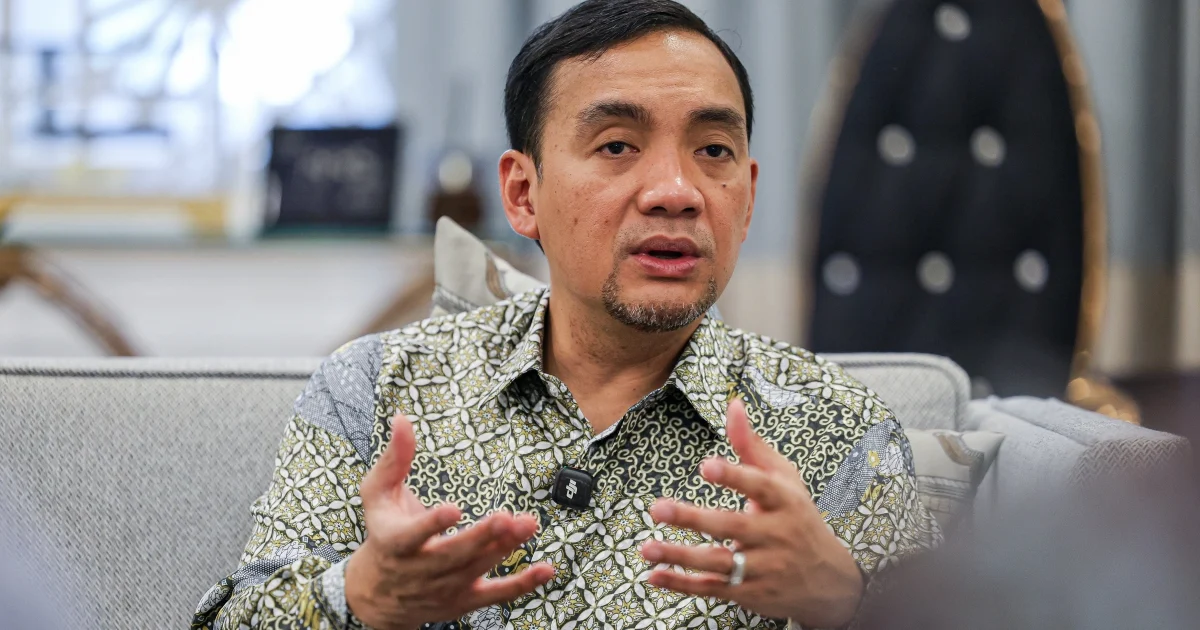
Caretaker Johor Menteri Besar Datuk Onn Hafiz Ghazi has firmly rejected allegations made by Datuk Dr Mohd Puad Zarkashi, disputing the suggestion that he had stated the Johor palace had issued a direct command for the dissolution of the state assembly. The assertion by Mohd Puad, which circulated following recent political developments in the southern state, appears to have touched a sensitive nerve within government circles, prompting an immediate and forceful response from the caretaker administration.
The dispute centers on the precise characterization of the palace's involvement in the decision to dissolve the Johor state assembly, a move that triggered the recent general election cycle in the state. Terminology matters considerably in Malaysian constitutional politics, where the distinction between a palace recommendation, an endorsement, and a direct order carries significant weight. Onn Hafiz's pushback suggests he views the characterization of events as fundamentally misrepresenting the constitutional process that led to the assembly's dissolution.
This disagreement reflects broader tensions within Johor's political landscape, where questions about the proper role of the monarchy in state governance have become increasingly fraught. The palace plays a constitutionally defined role in state affairs, but the exact nature of that role—particularly in matters relating to the dissolution of legislative bodies—remains a subject of interpretation and, occasionally, dispute among political actors. The timing of Mohd Puad's comments and Onn Hafiz's rebuttal suggests these are not merely academic constitutional matters but rather intensely practical political concerns affecting the current transition period in the state.
Mohd Puad Zarkashi, whose political background and current standing within Johor's political ecosystem may influence how his claims are received, made assertions that Onn Hafiz characterizes as inaccurate. The caretaker Menteri Besar's denial carries weight given his position overseeing the state during the interregnum before new elections conclude and a fresh administration takes office. His denial carries the implicit suggestion that Mohd Puad either misunderstood what was said or is deliberately misrepresenting the facts for political advantage.
The mechanics of dissolving a state assembly in Malaysia's constitutional framework require careful navigation of state and federal constitutional provisions. The Sultan of Johor, as a constitutional monarch, possesses certain prerogatives in this realm, but these operate within defined parameters. The tension between describing the palace's role as giving an "order" versus framing it as providing constitutional consent or endorsement speaks to deeper questions about how power operates in Malaysian federalism. For observers tracking Johor politics, this distinction illuminates how state-level political actors interpret their relationship with the throne.
The assertion that Onn Hafiz had blamed the palace for the assembly's dissolution, if accurate, would represent a notable shift in political communication. Malaysian political convention typically involves elected leaders taking public responsibility for significant decisions, even when constitutional roles of the monarchy are invoked as justification. The suggestion that Onn Hafiz might have attributed the decision primarily to palace directive rather than to executive initiative could be read as attempting to deflect political responsibility. This may explain why the caretaker administration felt compelled to issue a swift clarification.
For Malaysian politics observers, particularly those monitoring Johor's trajectory post-election, this episode raises questions about continuity and coherence in state governance messaging. Caretaker administrations occupy an inherently ambiguous position—they possess governmental authority yet lack democratic legitimacy until elections conclude. How caretaker leaders characterize their actions and decisions during this period can influence both immediate political dynamics and the historical record of how the transition was managed. Onn Hafiz's active engagement in refuting Mohd Puad's characterization suggests the caretaker Menteri Besar views the accuracy of this account as important to his political standing.
The broader context of Johor's recent political movements adds texture to this disagreement. The state has experienced significant political turbulence, with the assembly dissolution representing a major juncture in its governance. The terms upon which that juncture occurred—who initiated the process, what role various constitutional actors played, and how the matter was framed publicly—all carry consequences for understanding the state's political culture. Johor's position as Malaysia's second-largest state by population and as a traditionally significant political force means that how governance questions are resolved there can influence broader national patterns.
This dispute also touches on questions of political accountability and transparency in how Malaysian state governments communicate about major constitutional actions. When political figures offer different accounts of the events leading to significant governmental decisions, it creates space for public confusion and political contestation. Onn Hafiz's denial attempts to close such space, insisting on a particular version of how the assembly dissolution came about. Whether public discourse accepts his characterization or finds Mohd Puad's framing more compelling may depend partly on accumulated trust and partly on additional evidence or statements from other political actors involved in the process.
The immediate political significance of this exchange centers on the credibility and standing of the caretaker administration during the interregnum period. Onn Hafiz must maintain sufficient political standing to manage state affairs effectively until elections conclude and new leadership takes office. Allegations that he has misrepresented his role or that of the palace could undermine that standing. His forceful rejection of Mohd Puad's claims represents an attempt to maintain clarity about executive accountability and constitutional roles during a sensitive transition period in Johor's governance.

