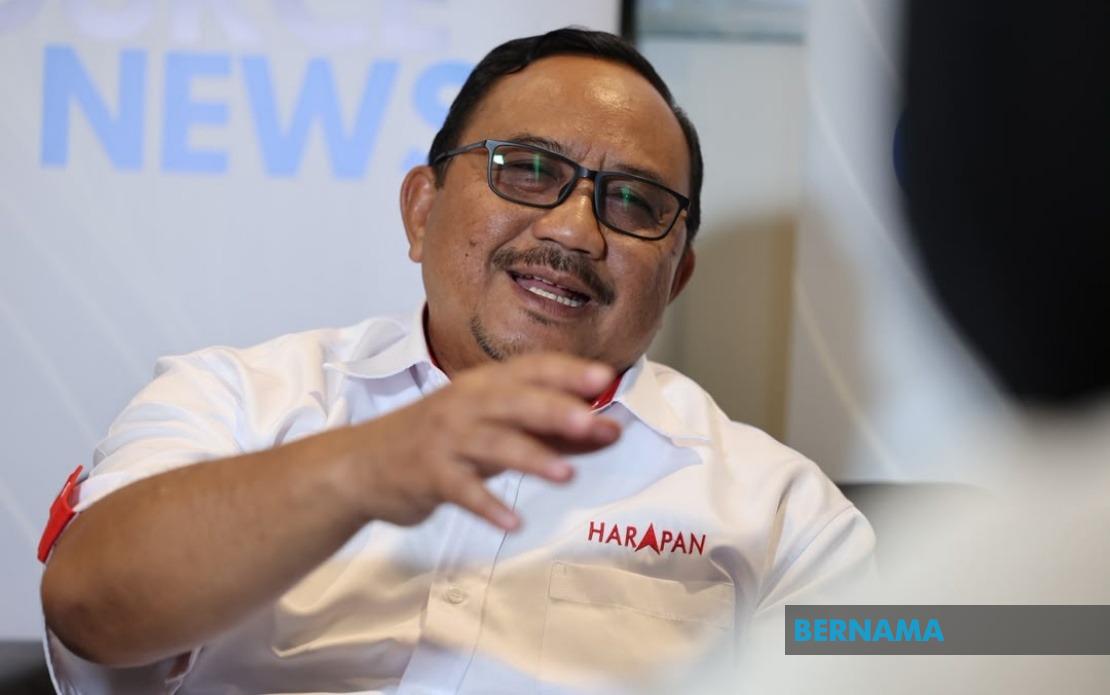
As Johor's state election looms on July 11, Batu Pahat MP Onn Abu Bakar has unveiled plans to tackle a persistent problem affecting rural communities across his constituency: the digital divide. The Pakatan Harapan candidate for the Senggarang seat has submitted a proposal to the Academy of Sciences Malaysia for a Wireless Bridging System project designed to restore proper internet connectivity to seven neighbourhoods that currently suffer from severely degraded mobile signals.
The initiative represents a direct attempt to address what residents in these areas experience daily—connections so weak that they struggle to maintain even one or two bars of signal strength. Onn's proposal, filed under the Science, Technology and Innovation Ministry, requests an initial budget allocation between RM100,000 and RM200,000, positioning the endeavour as both financially modest and practically focused. The project will leverage the research capabilities and technical expertise of Universiti Tun Hussein Onn Malaysia, establishing a partnership that brings academic rigour to solving a community infrastructure challenge.
Seven specific locations have been identified as priority areas requiring intervention. These include Jalan Kampung Sungai Keluang Darat, Jalan Kampung Parit Kadir, Jalan Kampung Parit Seri Bahrom, Kampung Punggur Darat, Sri Merlong, Simpang 6, and the vicinity of Seri Bahrom Mosque. The selection reflects detailed mapping of connectivity failures within the Senggarang state constituency, underscoring that the problem is not random but concentrated in identifiable communities that have been systematically excluded from Malaysia's digital infrastructure expansion.
Onn characterises this effort as rooted in a broader commitment to ensuring no resident remains marginalised in the digital era. The language echoes national digital development ambitions, yet grounds them in the practical reality of seven neighbourhoods where poor connectivity constrains educational opportunity, business participation, and access to essential online services. His emphasis on research-backed solutions through UTHM suggests an approach that moves beyond simple rhetoric toward technical implementation, even if that implementation remains conditional on securing official approval and funding.
The political context matters significantly here. Onn's position as a sitting MP provides him with direct channels to leverage existing government relationships with agencies such as the Malaysian Communications and Multimedia Commission and the Communications Ministry. This institutional advantage allows him to frame the Senggarang proposal within established bureaucratic pathways rather than as an outsider's plea. For voters evaluating candidates in a three-cornered race that also includes Mohd Yusla Ismail of Barisan Nasional and Datuk Mohd Rashid Hasnon of Perikatan Nasional, the demonstration of concrete infrastructure planning carries tangible weight.
The Wireless Bridging System technology itself is not theoretical. UTHM's Electrical and Electronic Engineering Faculty Professor Muhammad Ramlee Kamarudin confirmed that the project proposal reached MOSTI in February and underwent formal presentation in early March, indicating it has cleared initial bureaucratic scrutiny. More compellingly, the technology has already demonstrated viability in rural Sabah. The university successfully deployed a WBS system in Kampung Simbuan Tulid, Keningau, where it has proven capable of delivering stable and reliable internet access to communities previously dependent on weak commercial network coverage. That project will remain under continuous supervision and research evaluation until 2027, suggesting UTHM treats rural connectivity interventions as long-term commitments rather than election-cycle gestures.
The broader challenge that Senggarang represents extends beyond this single constituency. Multiple villages throughout the Batu Pahat area continue struggling to secure adequate 4G and 5G network coverage despite Malaysia's national push toward fifth-generation wireless infrastructure. This pattern reflects how commercial telecommunications providers often prioritise urban and economically productive areas, leaving rural pockets to rely on fragmented coverage. A wireless bridging system effectively becomes a compensatory technology—not a replacement for commercial networks, but a supplement that fills gaps where market incentives alone prove insufficient.
For Malaysian readers, particularly those in states and federal territories where rural broadband access remains inconsistent, the Senggarang proposal illustrates both the possibilities and limitations of technological solutions to infrastructure inequality. The modest budget request and university partnership model offer a replicable template that does not require massive capital investment. Yet the very fact that securing approval remains uncertain after months of processing suggests that implementation capacity within MOSTI and related agencies may itself be a constraint. The project's success or failure will provide meaningful data about whether the government's digital infrastructure ambitions translate into actual rural service delivery.
Senggarang's electoral dynamics add another layer of interest to this infrastructure proposal. The constituency forms one of three state seats within Onn's parliamentary division, alongside Rengit and Penggaram. The three-cornered contest pits a sitting federal legislator with ministry connections against established Barisan Nasional machinery and a Perikatan Nasional challenger. In such competitive environments, infrastructure pledges carry electoral significance—they demonstrate not merely concern for constituent welfare but also credible capacity to execute. Onn's ability to point toward a formal proposal, university partnerships, and existing technological precedent distinguishes this from generic campaign promises.
As voters prepare for July 11 balloting, with early voting scheduled for July 7, infrastructure and digital access will likely feature in discussions across Johor's state constituencies. The Wireless Bridging System proposal represents a particular candidate's concrete commitment to addressing a specific, measurable problem affecting identifiable communities. Whether this commitment ultimately translates into implemented infrastructure or remains confined to proposal documents will reveal much about governmental responsiveness to rural digital inclusion priorities—an issue of increasing importance throughout Southeast Asia as economies accelerate their digital transformation.

