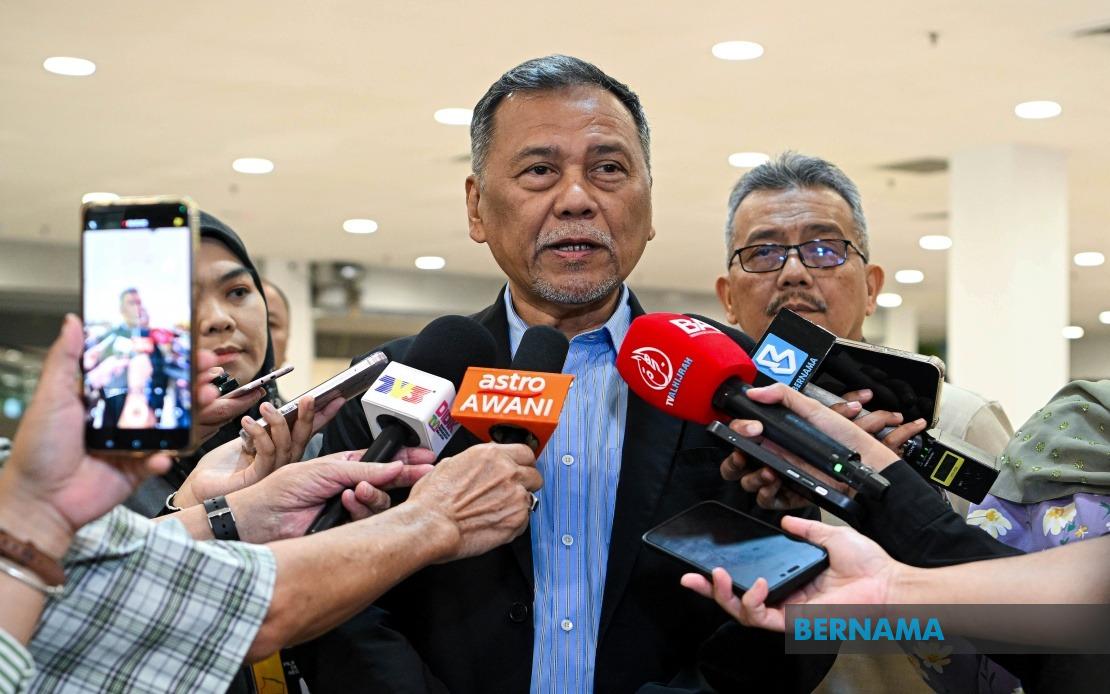
The Negeri Sembilan state election is gathering momentum as the Election Commission reported brisk sales of nomination forms, though the actual candidate turnout remains modest just hours before the crucial nomination deadline. Election Commission chairman Datuk Seri Ramlan Harun disclosed in Seremban that 464 forms had been distributed, signalling considerable interest across the 36 state constituencies. However, the number of serious contenders who have formally committed by submitting their deposit payments—standing at 70—reveals a significant gap between those who purchased forms and those genuinely prepared to contest the August 1 polling day.
The disparity between form sales and deposit payments underscores the practical challenges facing candidates navigating electoral procedures. Ramlan appealed to prospective candidates to complete their financial commitments without delay, stressing that waiting until the final hours could create operational difficulties for the commission. With the deposit deadline coinciding with the nomination process itself tomorrow, the EC faces potential congestion as candidates scramble to finalise their candidacy. This timing reflects the compressed schedule governing Malaysia's state electoral cycle, where candidates must move quickly from announcement to formal registration.
The commission's preparations reflect a sophisticated, large-scale organisational undertaking. A total of 761 Election Commission officers will be stationed across eight nomination centres positioned strategically throughout the state's eight parliamentary constituencies. This represents a significant deployment of resources and personnel to manage what is typically an intense, high-pressure day in any electoral cycle. Ramlan indicated that full rehearsal sessions had been conducted at all nomination centres across Negeri Sembilan to identify and address potential bottlenecks, demonstrating the EC's commitment to preventing the chaos that sometimes characterises nomination days in Malaysian elections.
A notable administrative shift distinguishes this election from recent precedent. Unlike the Johor state election, which organised nomination centres by individual state constituencies, Negeri Sembilan has adopted a consolidated approach centring on parliamentary boundaries. This centralised model aims to streamline coordination whilst accounting for geographic and logistical considerations unique to the state. For candidates and their supporters, the change means fewer nomination venues but potentially greater distances to travel, depending on their constituency's location relative to the assigned parliamentary centre.
Security and conduct concerns feature prominently in the EC's pre-nomination messaging. Ramlan cautioned political parties and their supporters against provocative behaviour, emphasising that maintaining harmony throughout the process remains essential to democratic integrity. The reminder reflects Malaysia's electoral culture, where nomination day occasionally witnesses heated exchanges between rival camps. Political parties have been warned to comply strictly with regulations and avoid common electoral offences during the campaign period. Candidates are encouraged to arrive early to avoid congestion, a practical measure designed to reduce tension and maintain orderly proceedings.
The electoral franchise for this state election encompasses a substantial cross-section of Negeri Sembilan's population. As of June 4, 2026, the updated electoral roll registered 889,490 eligible voters, comprising 867,151 ordinary voters alongside 16,884 military personnel and their spouses, and 5,455 police personnel entitled to vote early. This composition reflects Malaysia's constitutional provisions allowing uniformed service personnel special voting privileges, a practice that has occasionally generated debate regarding equitable access to the ballot. Early voting is scheduled for July 28, providing these groups five days to exercise their franchise before the general poll.
The context leading to this election involves the dissolution of the Negeri Sembilan State Legislative Assembly on June 5 following the consent of the Yang Dipertuan Besar, Tuanku Muhriz Tuanku Munawir. This procedural step initiated the electoral calendar, setting in motion a chain of events culminating in tomorrow's nominations. The dissolution, whilst routine constitutionally, marked the beginning of active political manoeuvring as parties began candidate selection processes and campaign preparations.
Political dynamics in Negeri Sembilan carry implications for the broader Malaysian political landscape. In the 2023 state election, Pakatan Harapan secured 17 of 36 seats, establishing the framework for the incumbent administration. Barisan Nasional won 14 seats, whilst Perikatan Nasional captured five seats. These numbers reflect a competitive three-way contest where no coalition enjoyed an overwhelming majority, making individual constituency margins potentially decisive in determining post-election government formation. Any significant shifts in these distributions could reshape coalitional mathematics and potentially signal broader trends in voter sentiment across the peninsula.
The candidate pipeline appears somewhat subdued at this juncture, with only 70 confirmed registrations. This figure likely reflects the early stage of the formal process rather than indicating weak candidate enthusiasm. Experienced observers recognise that many candidates delay deposit submission until the final deadline, viewing early payment as unnecessary. Therefore, the gap between the 464 forms sold and 70 deposits received should not be interpreted as definitive evidence of overall candidate numbers. Tomorrow's nomination process will clarify the genuine turnout and provide the first substantive indication of party strategies and resource allocation across constituencies.
As Negeri Sembilan moves into its election cycle, the period between nomination and polling day will witness intensive campaigning across the state's diverse constituencies. Urban areas around Seremban and Nilai present different challenges and opportunities compared to rural constituencies like Temiang and Lobak. Parties will need to calibrate their messaging and resource deployment accordingly to maximise electoral impact. The compressed timeline between nomination and polling—approximately two weeks—leaves little room for extended campaign development, placing a premium on existing party machinery and volunteer mobilisation.
The Election Commission's readiness demonstrates institutional capacity to manage contemporary electoral demands. The rehearsal sessions, officer deployment strategy, and administrative restructuring all point toward an organisation learning from recent electoral experiences and implementing improvements. However, election day experiences often reveal unforeseen challenges that rehearsals cannot fully anticipate. The true test of EC preparedness will emerge during tomorrow's nomination process itself, when hundreds of candidates, party officials, and supporters converge simultaneously at eight separate locations across the state.

