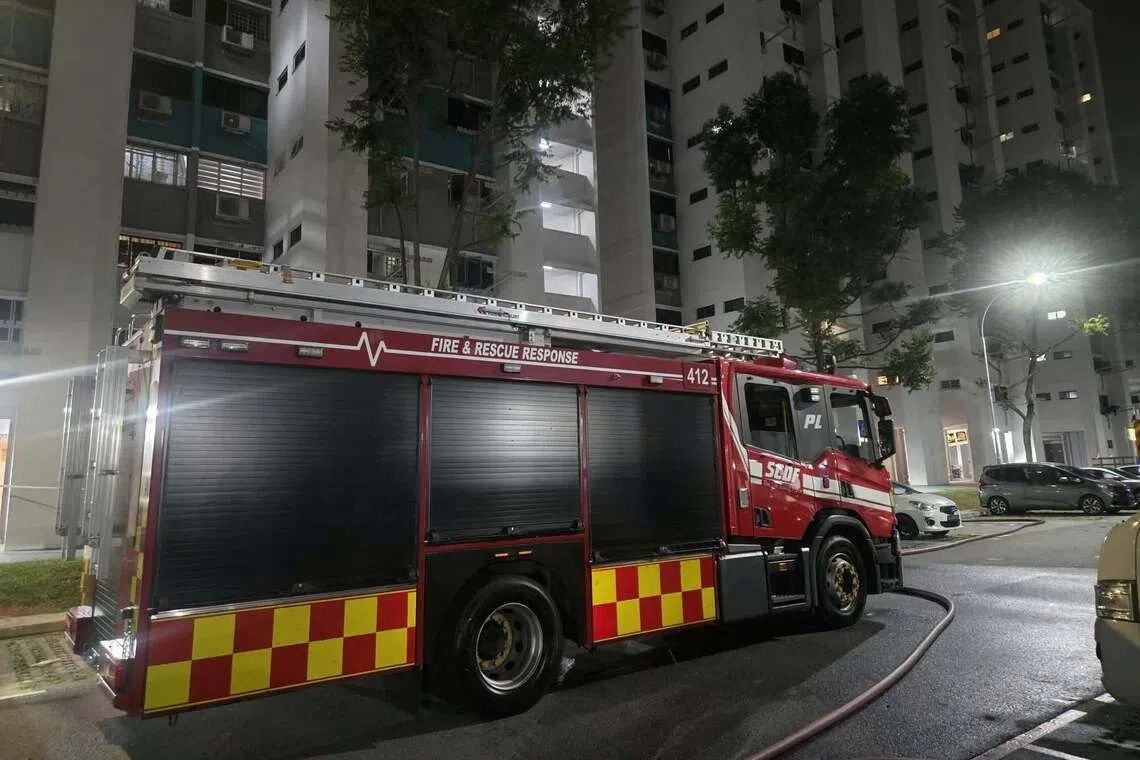
A residential fire in Singapore's Jurong East district claimed one life in the early morning hours of August 16, prompting authorities to evacuate 50 people from the affected housing block. The Singapore Civil Defence Force (SCDF) received an alert regarding the blaze at Block 339 Jurong East Avenue 1 at 3:55am, responding quickly to contain what would become a tragic incident. Upon arrival, firefighters encountered black smoke billowing from a third-floor unit, where the flames had consumed items in the living room area.
Rescue teams forced their way into the affected unit and discovered an unresponsive individual within. Emergency medical personnel assessed the condition at the scene and confirmed the person deceased, though the victim's identity and age remain undisclosed at this stage. The rapid response of the SCDF prevented the fire from spreading to neighbouring units, though the scale of evacuation—affecting half a hundred residents—underscores the serious threat posed by such incidents in densely populated public housing estates. Investigators are currently examining the circumstances that led to the outbreak, with the cause remaining unknown pending completion of their preliminary inquiries.
This tragedy arrives amid a concerning pattern of fatal residential fires sweeping through Singapore's Housing and Development Board estates. Just over two weeks prior, on July 28, a separate fire erupted in a flat at Block 39 Circuit Road during morning hours, resulting in the death of a 70-year-old resident. The frequency of such incidents suggests underlying risks within the public housing stock that warrant urgent attention from both authorities and residents alike. The tight clustering of these emergencies has prompted heightened scrutiny of fire safety protocols across HDB developments.
The pattern intensified with another fatal incident on July 31, when flames broke out on the eighth floor of Block 309 Clementi Avenue 4. That fire claimed a 65-year-old man's life whilst injuring two firefighters who battled the blaze—a sobering reminder that these emergencies endanger not only residents but also emergency personnel. The injuries sustained by the firefighters highlight the unpredictable nature of residential fires and the hazardous conditions that first responders regularly face when entering burning units. These professional casualties add another dimension to the public health crisis emerging from the spike in HDB fires.
Additionally, a fifth-floor unit at Block 684 Race Course Road became engulfed in flames on August 3, necessitating hospitalisation of five people aged between 55 and 88 years old. Among those victims was an 88-year-old male resident who initially survived the immediate fire but succumbed to injuries two days later on August 5. His death brought the toll from that particular incident to the severe category, with the extended age range of victims suggesting that elderly residents may face disproportionate vulnerability during such emergencies. The delayed mortality in this case also emphasises that fire-related injuries can have serious long-term health consequences beyond the immediate danger.
Taken together, these four fatal incidents within a span of roughly three weeks represent an alarming escalation in residential fire fatalities across Singapore's HDB landscape. Each case reflects different circumstances and locations, yet the cumulative impact underscores systemic challenges that demand comprehensive investigation and remedial action. Authorities face mounting pressure to identify common risk factors—whether related to electrical systems, cooking practices, maintenance standards, or resident awareness—that might explain the cluster. The involvement of multiple blocks across different constituencies suggests the problem may not be localised but rather reflective of broader vulnerabilities across the HDB stock.
The Jurong East incident particularly demands scrutiny given that living room fires, as opposed to kitchen fires from cooking accidents, may indicate different hazard sources such as faulty appliances, electrical faults, or smoking-related incidents. Understanding whether items in living rooms pose elevated fire risks in HDB environments could inform targeted public safety campaigns. Furthermore, the timing at 3:55am raises questions about whether residents were asleep when the fire broke out, potentially reducing their response time and ability to evacuate safely—a critical factor in the outcome of residential fires.
The evacuation of 50 residents, whilst preventing additional casualties, also reflects the vulnerability of multi-unit residential buildings where fire can threaten entire blocks simultaneously. In HDB estates where thousands of families live in close proximity, a single unit fire becomes a neighbourhood emergency. This reality underscores the importance of robust fire suppression systems, regular maintenance, and resident education programs. The SCDF's rapid response likely prevented a much larger tragedy, yet the question remains whether preventative measures upstream could have averted the incident altogether.
For Malaysian readers and regional observers, Singapore's experience offers cautionary lessons. Malaysia's own public housing estates, including Rumah Mampu Milik and various state housing schemes, house millions of residents in similar high-density configurations. The spike in Singapore's HDB fires suggests that older residential stock, ageing electrical infrastructure, and density-related challenges are not uniquely Singaporean problems but rather regional concerns requiring proactive attention. Authorities across Southeast Asia should examine whether similar risks exist within their own housing portfolios and consider whether enhanced fire safety standards, regular inspections, and public awareness campaigns are adequate to prevent tragedy.
The investigation into the Jurong East fire's cause will be closely monitored by policymakers and fire safety professionals throughout the region. Should the inquiry reveal systemic issues—such as widespread electrical defects or inadequate fire suppression capabilities—it could trigger more stringent regulatory responses across Singapore and possibly inform best practices elsewhere. Conversely, if the fire results from isolated human error or individual negligence, it may prompt renewed emphasis on resident behaviour modification and community engagement. Either way, the mounting toll of fatal fires serves as a stark reminder that residential safety cannot be taken for granted, regardless of a nation's development level or infrastructure quality.

