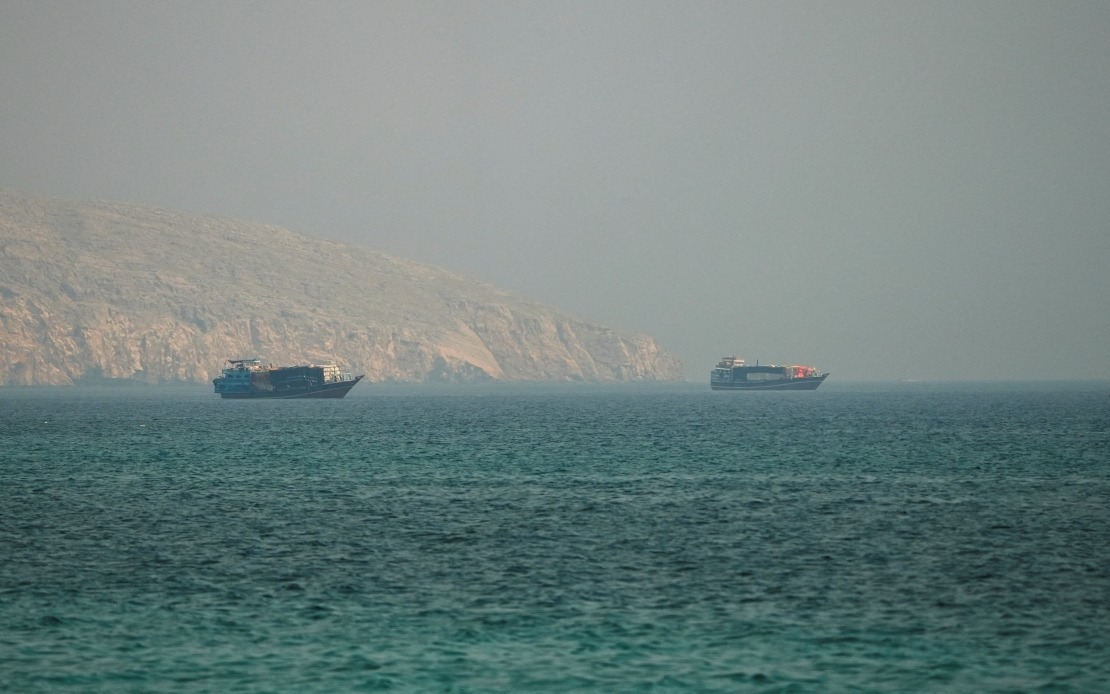
Oman has publicly stated its opposition to imposing compulsory transit fees on vessels traversing the Strait of Hormuz, instead advocating for voluntary contributions toward navigational support services, according to remarks delivered at the International Maritime Organisation Council session in London this week. An Omani delegate made the position clear during the 137th IMO Council meeting, held from July 6 to 10, reaffirming the sultanate's commitment to the internationally recognised principle of transit passage and refusing to back schemes that would effectively function as mandatory tolls on global shipping.
The Omani position gains significance following reports that the country had circulated a proposal to the United States and several Western nations, outlining an alternative approach whereby shipping companies would have the option to contribute voluntarily toward port services and navigational facilities rather than face binding toll obligations. This diplomatic initiative appears designed to address growing tensions over maritime revenue collection in one of the world's most strategically vital waterways, through which roughly one-third of all seaborne traded oil passes annually.
The structural model underpinning Oman's proposal draws explicitly from existing arrangements in the Strait of Malacca and Singapore, two of Asia's busiest maritime corridors where voluntary contribution systems have long provided funding for navigational infrastructure and safety measures without imposing regulatory barriers or rigid tariff structures. This reference point holds particular relevance for Malaysia and the broader Southeast Asian region, as both straits operate under frameworks that balance revenue generation with the principle of unimpeded passage, a balance that has generally satisfied international shipping interests and coastal states alike.
Oman's measured approach stands in marked contrast to the increasingly polarised positions adopted by other regional and international actors regarding the Strait of Hormuz. During the same IMO Council session, the United Arab Emirates joined several other countries in formally submitting a proposal that explicitly condemned what they characterised as transit tolls that Iran has allegedly imposed on vessels navigating the waterway. This escalation reflects mounting concern among Gulf Cooperation Council members and their Western partners over Iran's efforts to generate revenue or exercise control over maritime traffic passing through its territorial waters.
Iran's response to these accusations came through a separate proposal submitted to the IMO, in which Iranian officials asserted that their government has maintained ongoing consultations with Oman regarding the administration and management of the Strait of Hormuz in accordance with established international maritime law and applicable domestic regulations. The Iranian statement notably emphasised the bilateral nature of these discussions and suggested that such coordination mechanisms represent the proper and legally grounded approach to the strait's governance, implying that unilateral action or international criticism lacks legitimacy.
The emergence of Oman as a potential mediator or alternative framework architect reflects the country's unique geopolitical position and historical role as a maritime trading nation. Strategically located at the mouth of the Persian Gulf yet maintaining careful diplomatic distance from the region's deepest rivalries, Oman has long cultivated relationships across the Gulf and beyond. The sultanate's proposal for voluntary contribution arrangements essentially attempts to split the difference between Iran's desire to derive economic benefit from transiting vessels and the international shipping community's insistence on freedom of navigation and predictable transit conditions.
For Malaysian stakeholders and broader Southeast Asian interests, Oman's invocation of the Malacca Strait model carries substantial implications. The voluntary contribution framework that has governed traffic through the Strait of Malacca has survived decades of debate about toll mechanisms and revenue-sharing without devolving into the kind of coercive collection systems that appear to have provoked international concern in the Gulf. This suggests that well-designed voluntary systems can generate meaningful income for coastal state maritime infrastructure while preserving the operational confidence that international shipping requires to function efficiently.
The international maritime community's receptiveness to Oman's proposal will likely depend on whether such voluntary arrangements include meaningful enforcement mechanisms and transparent accounting, alongside genuine voluntariness in participation. The Malacca and Singapore model succeeds partly because contributions to port state control, navigational aids, and safety systems genuinely support services that benefit all users. Any Strait of Hormuz arrangement would need to demonstrate comparable beneficiary value to gain acceptance from major shipping interests and maritime insurers.
The broader context of these negotiations extends beyond technical maritime governance into questions of regional power dynamics and sanctions enforcement. Western nations have pursued sophisticated strategies to constrain Iranian oil exports and revenue generation, and any arrangement that facilitates Iranian collection of maritime fees risks becoming entangled in these geopolitical conflicts. Oman's proposal appears designed partly to depoliticise the revenue question by framing contributions as payments for genuine services rather than assertions of political authority.
The 137th IMO Council session, convening major shipping nations, port authorities, and maritime experts, provided an appropriate forum for these competing proposals precisely because it exists to establish international norms and standards that transcend individual national interests. The council's traditional consensus-based approach means that any resolution regarding Strait of Hormuz arrangements would likely need to accommodate multiple perspectives, including Iran's sovereignty concerns, Western demands for open passage, and Oman's pragmatic interest in regional stability.
Looking ahead, the prospects for implementing Oman's voluntary contribution model depend significantly on whether Iran views such arrangements as consistent with its own interests and whether Western powers consider them sufficient to ensure unobstructed maritime commerce. The diplomatic groundwork appears to be progressing through proper international channels, with Oman maintaining its commitment to working with the IMO and member states to preserve secure sea lanes, protect maritime safety, and sustain the resilience of global supply chains that every nation depends upon, including Malaysia and its Southeast Asian neighbours whose trade flows pass through multiple strategic chokepoints.

