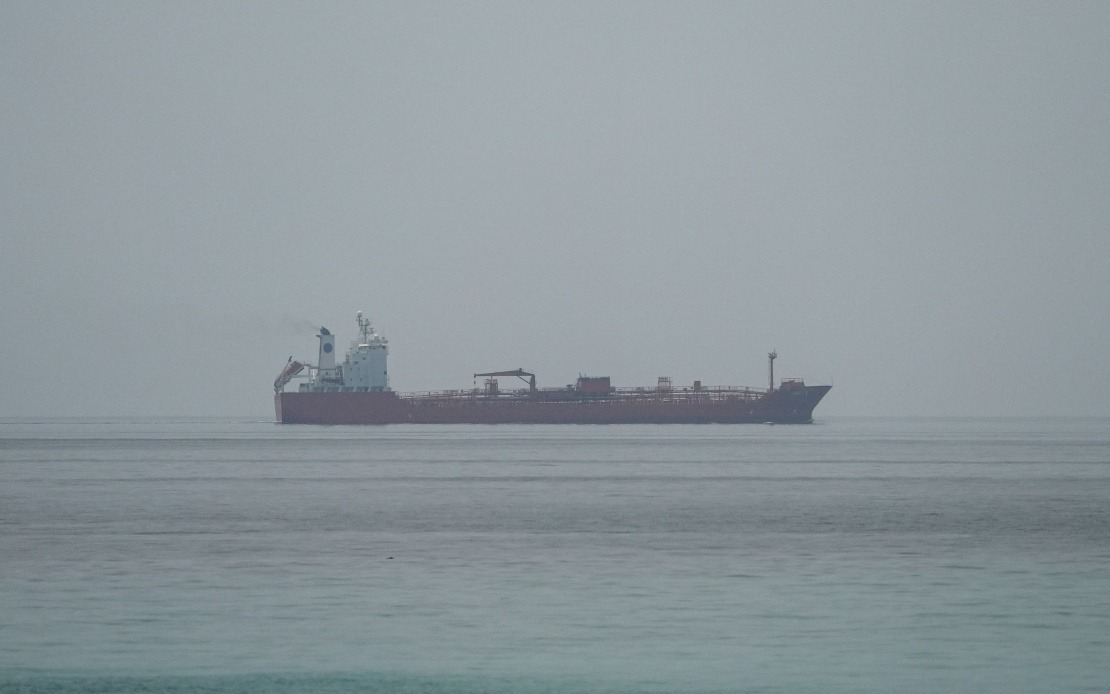
Oman has thrown its weight behind the recently concluded memorandum of understanding between Iran and the United States, with Omani Foreign Minister Badr Albusaidi pledging that future maritime arrangements governing the Strait of Hormuz will remain free of transit fees. The declaration came during a joint ministerial gathering between the Gulf Cooperation Council and Washington held in Bahrain on Thursday, underscoring the sultanate's pivotal diplomatic role in one of the world's most strategically sensitive regions.
As a coastal nation directly adjacent to the Strait of Hormuz, Oman occupies a uniquely influential position in mediating regional disputes and fostering stability in the Persian Gulf. Albusaidi framed his country's backing for the Iran-US accord as rooted in this geographic responsibility, emphasizing that Muscat views itself as having a special obligation to champion international maritime security initiatives. His remarks reflected Oman's consistent approach of balanced engagement with both Western powers and regional actors—a diplomatic strategy that has long distinguished the sultanate within the GCC framework.
The commitment to toll-free passage carries substantial implications for global energy markets and international commerce. The Strait of Hormuz remains one of the world's most critical chokepoints, with approximately one-third of all seaborne traded oil passing through its waters annually. Any disruption or imposition of restrictive fees could reverberate across global petroleum pricing and supply chains, affecting economies from Asia to Europe. Oman's explicit reaffirmation of free transit thus represents more than symbolic solidarity—it constitutes a concrete assurance to the international community that this vital waterway will remain accessible under the terms established by international maritime law.
Albusaidi grounded Oman's position in established legal frameworks, specifically referencing the UN Convention on the Law of the Sea and international precedent. This legalistic framing demonstrates Muscat's effort to position its stance not as partisan support for either Iran or the United States, but rather as adherence to universally recognized principles governing international waters. Such careful language reflects the delicate balancing act required of regional mediators, particularly given the historically fraught relationship between Washington and Tehran.
The Iran-US memorandum of understanding, which entered into force on June 18 following electronic signatures by Iranian President Masoud Pezeshkian and US President Donald Trump, represents a significant diplomatic breakthrough after months of escalating tensions. The accord encompasses fourteen substantive points addressing multiple conflict zones and security concerns, including provisions to halt hostilities across several fronts, particularly involving Lebanon, alongside the critical reopening of the Strait of Hormuz and the lifting of the US naval blockade constraining Iranian maritime commerce.
This agreement materialized following a dangerous sequence of regional escalations. In late February, the United States and Israel conducted military strikes against Iran, triggering retaliatory Iranian attacks directed at Israel and regional nations hosting American military installations. The cycle of tit-for-tat military action threatened to spiral into broader conflict, making third-party mediation essential. Pakistan's diplomatic intervention proved instrumental in facilitating the negotiations that ultimately produced the understanding, highlighting the importance of respected neutral parties in regional dispute resolution.
Oman's public endorsement carries particular weight given its historical role as the Gulf's quintessential neutral power. Unlike other GCC members, Muscat has maintained diplomatic relations with Iran throughout periods when tensions with Washington ran high, and it has traditionally resisted pressure to align exclusively with either camp. This positioning has enabled Oman to serve as an informal back-channel and mediator, roles it has leveraged effectively during previous crises. The sultanate's statement therefore functions not merely as regional commentary but as a signal that even the most cautiously neutral actor views the Iran-US understanding as beneficial for broader stability.
The broader context of GCC-US consultations reveals ongoing Western engagement with the Arabian Peninsula despite shifting regional dynamics. The council and Washington maintain regular dialogue channels focused on security coordination, political alignment, and economic partnership. These institutional mechanisms reflect recognition that Gulf stability remains foundational to international energy security and broader geopolitical balance. The Bahrain meeting thus constituted one node in an extensive network of diplomatic engagement aimed at preventing further deterioration in a region prone to sudden escalation.
For Malaysia and other Southeast Asian nations, developments in the Persian Gulf carry direct relevance. Many ASEAN economies depend on stable crude oil supplies transiting through the Strait of Hormuz, making any disruption to shipping patterns consequential for regional energy security and manufacturing competitiveness. Malaysia's own experience as a maritime trading nation with substantial Strait of Malacca transit concerns creates natural empathy for Oman's emphasis on maintaining free passage through critical waterways. The principles Albusaidi articulated—respect for international maritime law and opposition to arbitrary restrictions on transit—mirror the frameworks that protect shipping lanes throughout Southeast Asia.
Looking forward, the sustainability of the Iran-US understanding will depend substantially on regional actors maintaining commitment to the stated principles. Oman's public pledge regarding fee-free transit represents a check on potential future attempts by any party to use control of the strait as leverage. By anchoring the commitment in international law rather than temporary political arrangements, Albusaidi sought to elevate the guarantee beyond the vicissitudes of diplomatic relations, effectively placing it within the architecture of global maritime norms that transcend individual state preferences.
The convergence of the Iran-US accord with Oman's reaffirmation of maritime principles suggests that despite profound regional tensions, common recognition persists regarding the necessity of maintaining functional international shipping networks. This consensus, even if fragile, provides some foundation for hope that the current diplomatic opening might lead toward more durable regional stability. Whether the memorandum of understanding proves transformative or merely represents a temporary pause in deeper structural competition remains uncertain, but Oman's explicit backing suggests at least that the agreement commands support among influential regional mediators whose interests lie in sustained peace.

