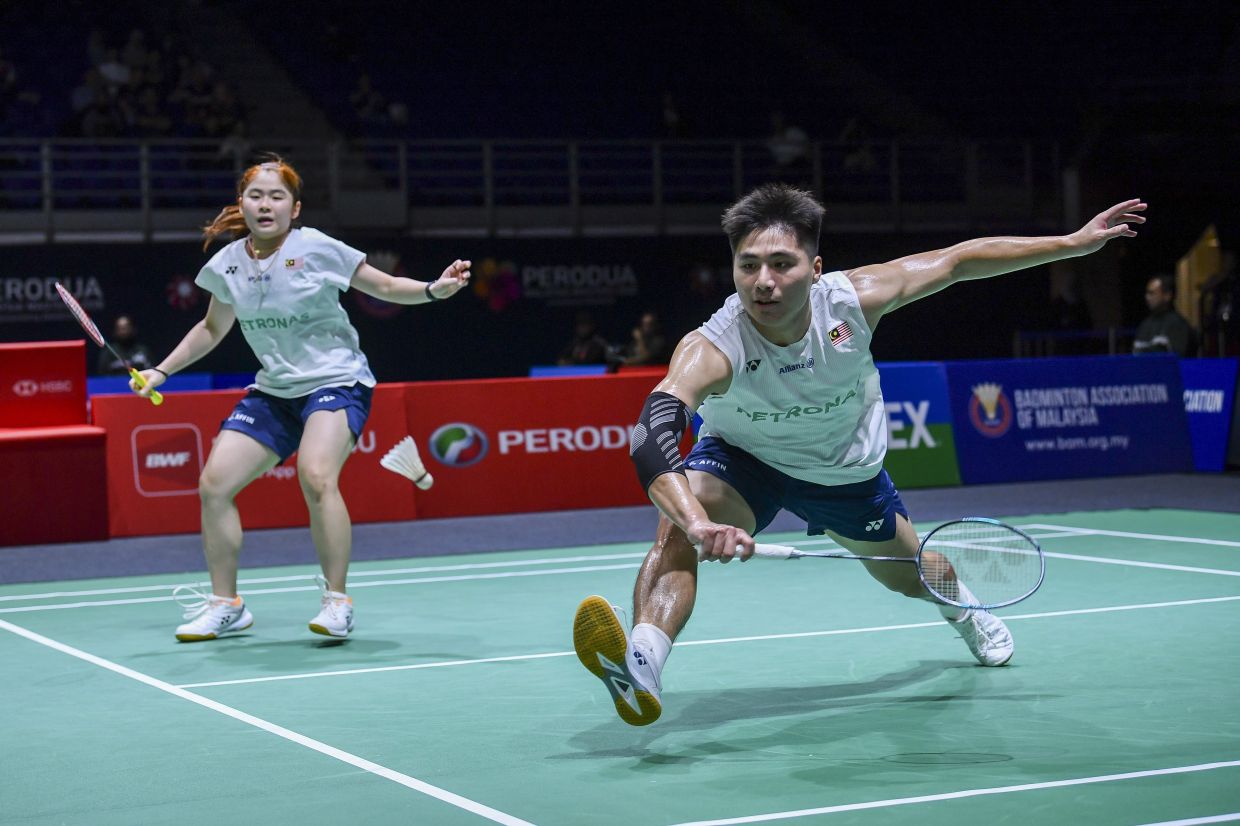
Jimmy Wong's return to the Badminton Association of Malaysia in April has reinvigorated the 23-year-old mixed doubles player's pursuit of Olympic glory. The national shuttler, who has settled back into the national setup after his spell away, is now channelling his focus towards qualifying for the 2028 Los Angeles Olympics alongside partner Cheng Su Yin. His measured optimism reflects both his determination to achieve this career milestone and his understanding of the demanding journey that lies ahead.
The pathway to Olympic qualification requires strategic progression through the international rankings. Currently positioned at 118th globally, Wong and Su Yin have set a clear intermediate target: breaking into the top 32 by the end of 2024. This ranking threshold carries significant practical importance, as it would grant them access to prestigious Super 750 and Super 1000 tournaments—elite-level competitions that offer crucial ranking points and exposure to the world's best pairings. The mathematics of badminton advancement means that this ranking milestone represents far more than a number; it symbolises entry into the stratified world of top-tier competition where Olympic qualification becomes feasible.
Wong's confidence stems partly from the calibre of coaching expertise now available to him. Working under Nova Widianto, the mixed doubles coach who brings invaluable experience as an Olympic silver-medallist and former world champion, has fundamentally altered Wong's development trajectory. The Indonesian coach's mentorship extends beyond technical refinement of strokes and positioning; Widianto has become instrumental in helping Wong navigate the mental and tactical complexities that separate competent players from Olympic-level competitors. This coaching elevation represents a crucial advantage for Malaysian badminton's Olympic ambitions, positioning Wong within a high-performance ecosystem previously unavailable to him.
The partnership between Wong and Su Yin has demonstrated promising early signs of chemistry and complementary skill sets. In their limited tournament exposure so far—four competitions since joining forces—the pair have already produced results that captured attention. Most notably, their upset victory against world number one Feng Yanzhe and Huang Dongping in the opening round of the Singapore Open last month showcased their capacity to compete against elite opposition. This breakthrough, though followed by elimination in the second round, established that the partnership possesses the technical capabilities and mental resilience to threaten established powerhouses.
Wong's philosophical approach to goal-setting demonstrates maturity beyond his years. Rather than overwhelming himself with cascading targets that could precipitate anxiety and diminished performance, he has deliberately chosen to maintain focus on immediate execution. This psychological strategy—concentrating on delivering maximum effort in each individual match rather than fixating on distant Olympic qualification—reflects lessons learned through badminton's unpredictable competitive environment. Such mental discipline proves especially valuable in mixed doubles, where momentum, confidence, and communication between partners fluctuate rapidly across rallies and matches.
Communication within the Wong-Su Yin partnership has emerged as a genuine strength. Mixed doubles badminton, where court positioning and tactical decision-making require constant coordination between partners, places premium value on players who can maintain clarity under pressure. Wong's acknowledgment that he and Su Yin communicate effectively suggests they have established the kind of non-verbal understanding that allows rapid adjustment to opponents' strategies and environmental variables such as shuttle conditions and court dimensions.
Yet Wong remains candidly aware of developmental areas requiring attention. Rather than basking in their Singapore Open achievement, he has identified specific technical and tactical aspects of their game demanding refinement. This honest self-assessment, coupled with the guidance available from Widianto's expertise, creates conditions for continuous incremental improvement. In elite badminton, where margins between ranking positions narrow considerably at higher levels, such relentless focus on marginal gains accumulates into meaningful progression.
The broader context of Malaysian badminton makes Wong's pursuit particularly significant for the nation's Olympic strategy. As the sport remains central to Malaysia's international sporting identity, developing credible contenders across multiple categories strengthens the country's medal prospects in Los Angeles. Mixed doubles, historically one of Malaysia's stronger disciplines, represents a category where investment in emerging talent like Wong can yield returns at the Olympics. The pairing's potential contribution extends beyond personal achievement to national representation and prestige.
Wong's journey also illustrates the importance of institutional support systems within BAM. The decision to enhance coaching capacity through experienced international mentors like Widianto reflects an organisational commitment to creating competitive environments that can produce Olympic-calibre athletes. Such investments in infrastructure, expertise, and support mechanisms remain essential if Malaysia intends to maintain relevance in badminton's increasingly competitive global landscape.
As Wong and Su Yin pursue their top-32 ranking objective through the remainder of the year, their progress will serve as a barometer for Malaysian mixed doubles' Olympic readiness. Success would validate both the partnership's potential and BAM's strategic approach to athlete development, while establishing the foundations necessary for competitive performance at Los Angeles. Meanwhile, Wong's balanced perspective—ambitious yet grounded, focused yet flexible—suggests the psychological resilience required to navigate badminton's demanding path to Olympic qualification.

