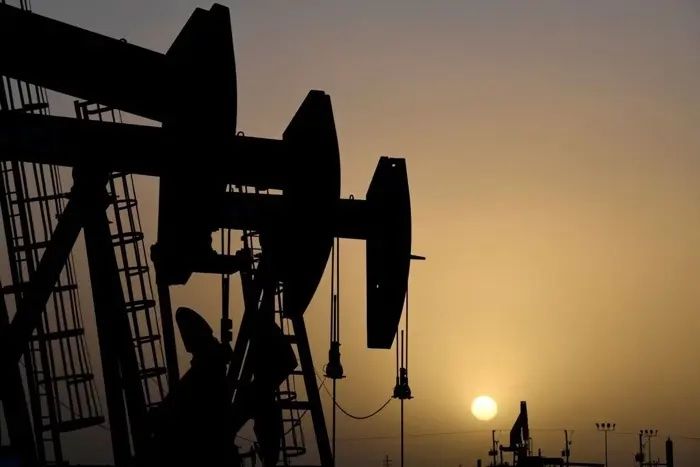
Crude oil futures surged on Friday following renewed military escalation between the United States and Iran across the Gulf region, with both sides trading increasingly aggressive strikes that threaten critical energy infrastructure and vital shipping corridors. Brent crude advanced 70 cents to settle at $84.93 a barrel—a 0.83 percent gain—while West Texas Intermediate crude rose 81 cents to $79.76, recovering losses from the previous trading session. The momentum reflected broader concerns about supply disruptions, with both benchmark contracts posting substantial weekly gains of approximately 12 percent, marking what appears to be a continuation of upward pressure in global energy markets.
The primary catalyst for Friday's price movement stemmed from a significant deterioration in US-Iran relations, marked by a unilateral resumption of American military operations. After a memorandum of understanding had successfully suspended active hostilities for the preceding month, the United States launched two substantial waves of air strikes on Wednesday targeting Iranian positions along the nation's southern coastline, followed by additional bombardment on Thursday. The US Central Command confirmed that American forces commenced "a new wave of strikes against Iran for the sixth consecutive night to further degrade Iranian military capabilities" at 1800 GMT, demonstrating a sustained commitment to the campaign. These strikes represent the first major escalation since the informal ceasefire collapsed, signalling a fundamental shift in the military calculus between the two powers.
Iran responded in kind with its own barrage of missiles and unmanned drones aimed at US military installations positioned throughout neighbouring countries, including a recently expanded air base in Jordan. Meanwhile, Qatar's defence ministry reported that it successfully intercepted an Iranian missile attack on Friday morning, though the operation resulted in collateral damage—the interior ministry confirmed that shrapnel from the interception wounded a child. These tit-for-tat exchanges, occurring across multiple fronts and countries, underscored the destabilising nature of the current standoff and the risk of unintended escalation affecting civilian populations and regional stability.
Beyond immediate military confrontation, the market's price acceleration reflected deepening concerns about potential disruptions to two critical energy transit points. The Strait of Hormuz, which funnels a substantial portion of global oil exports, faces renewed vulnerability from the deteriorating security situation and the frozen diplomatic channels between Washington and Tehran. More critically, Iranian leadership has reportedly instructed its Houthi allies in Yemen to maintain heightened readiness to completely close the Red Sea shipping route should the United States expand its strikes to include Iranian power infrastructure, according to three sources briefing Reuters. This conditional threat introduces an additional layer of supply-chain risk that markets had largely priced out during the ceasefire period.
Tim Waterer, chief market analyst at KCM Trade, characterised the current environment as a "dual-risk scenario" in which multiple potential disruption points simultaneously threaten global energy supplies. He specifically highlighted "the potential threat of the Red Sea becoming another major supply disruption point" as a complicating factor that keeps a geopolitical premium embedded within both Brent and WTI benchmark contracts. This premium reflects market participants' assessment that energy prices must incorporate a buffer for tail-risk scenarios involving prolonged closure of either the Strait of Hormuz or the Red Sea, both of which would force tankers on much longer routing through the Suez Canal or around the Cape of Good Hope, dramatically increasing transportation costs and delivery times.
The International Energy Agency, normally cautious in its public pronouncements, signalled genuine alarm about the trajectory of events. Fatih Birol, the organisation's Executive Director, stated during a Thursday appearance at a Council on Foreign Relations event in Washington that energy security remains "a critical issue" warranting sustained attention. More pointedly, Birol expressed personal concern about the medium-term outlook, stating "We should be worried, and I am worried, if the situation does not improve in the next few weeks." Such candid language from a senior international energy official carries weight with market participants and policymakers, as the IEA typically bases its assessments on detailed analysis of supply vulnerabilities and geopolitical risk factors.
For Southeast Asian energy importers, particularly Malaysia, Singapore, and Indonesia, the price movements carry significant implications. These nations depend substantially on stable crude imports to fuel their economies and power generation infrastructure. A sustained elevation in oil prices raises input costs for petrochemical industries, increases transportation expenses across supply chains, and potentially fuels broader inflationary pressures. Conversely, the region's energy trading hubs benefit from price volatility through increased trading volumes, with Singapore's refining complex particularly positioned to capitalise on wider international price spreads.
The technical analysis provided by IG analysts suggested that West Texas Intermediate crude could potentially test the mid-$80s price range if it maintains support at mid-$70s levels. This assessment implies that traders expect continued upward pressure in the near term, though a substantial breakdown below crucial support levels could reverse the current bullish momentum. The combination of fundamental supply-chain risks and technical buying created a self-reinforcing dynamic that continued to push prices higher throughout Friday's session.
Looking ahead, the trajectory of this conflict will likely determine whether current price levels prove sustainable or merely represent temporary spikes in a broader sideways market. A cessation of hostilities similar to the previous memorandum could swiftly deflate the current geopolitical premium. Conversely, an expansion of strikes to include Iranian energy infrastructure—thereby triggering Houthi actions against Red Sea shipping—would validate market pessimism and potentially drive crude substantially higher. The International Maritime Organization and regional shipping associations are monitoring developments closely, with contingency planning already underway for potential alternative routing should the Red Sea route become untenable.

