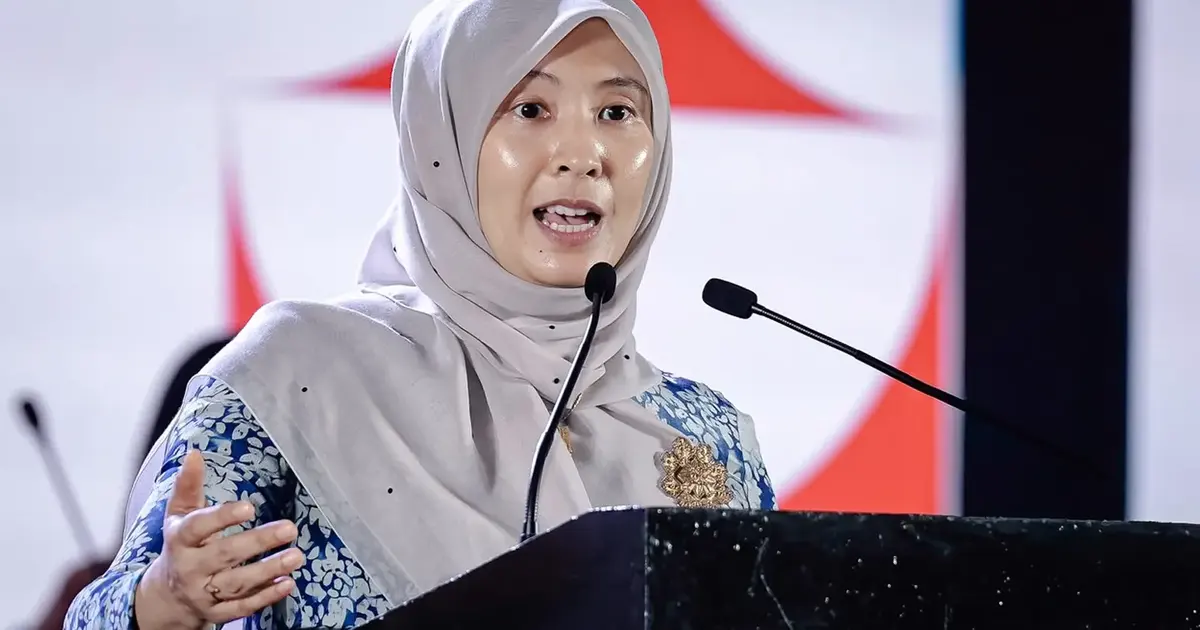
Nurul Izzah Anwar has moved to distance herself from mounting criticism regarding her performance in the 2023 general election, her bid for the PKR deputy presidency, and the subsequent leave of absence she took from that position. The Permatang Pauh MP sought to deflect the mounting pressure by suggesting that political figures cannot hope to satisfy every voice within their constituency or party structure, a stance that reflects broader tensions within Parti Keadilan Rakyat at a critical juncture for the coalition government.
The deputy president's comments arrive as the party continues to grapple with internal dynamics following the previous general election, during which PKR faced considerable headwinds. Nurul Izzah's own electoral performance sparked discussion within political circles and among observers monitoring the ruling coalition's cohesion. Her subsequent decision to contest the deputy presidential position represented an attempt to consolidate influence within the party machinery, yet this move itself became subject to debate among PKR members and external commentators.
The departure from her deputy president role, though temporary in nature, generated fresh questions about her political trajectory and the pressures she has faced. Rather than engage directly with each criticism, Nurul Izzah adopted a philosophical approach, acknowledging that the political arena inevitably produces disagreement. This rhetorical strategy suggests an attempt to transcend individual controversies by invoking broader principles about the nature of democratic participation and leadership.
For Malaysian readers, Nurul Izzah's situation illuminates the complexities within PKR, which remains central to the Pakatan Harapan coalition and Malaysia's current governance structure. The party, once positioned as a reform vehicle challenging the previous administration, now navigates the complications of wielding government power whilst maintaining internal consensus. The deputy president's challenges reflect these structural tensions, as party members debate direction, strategy, and the credentials of emerging leaders.
Nurul Izzah's inheritance of her position came with particular expectations within PKR's base. As the daughter of Anwar Ibrahim, the party president and Prime Minister, she entered a uniquely constrained political space where her actions carry amplified significance. Success and failure alike become filtered through the lens of family political dynasty, an observation that contextualises both the intensity of support she commands and the acuity of criticism directed her way.
The GE15 outcome proved disappointing for PKR across multiple constituencies, with various factors—from internal organisation to external campaign effectiveness—drawing scrutiny. Nurul Izzah's personal electoral result merged with these broader party dynamics, generating discussion about whether the Permatang Pauh seat remained secure or whether demographic and political shifts had weakened what once appeared a stronghold. Her subsequent positioning within party structures seemed partly designed to address questions about her political standing and future role.
Her sabbatical from the deputy presidency, whilst described as temporary, raised eyebrows within political establishment circles. Such absences, ostensibly for personal or health-related reasons, occasionally mask deeper political calculations or responses to factional pressures. The timing and duration of such breaks often communicate subtle messages to both supporters and opponents regarding the individual's confidence level and political capital within their party.
Nurul Izzah's deflection strategy—suggesting that universal approval represents an impossible standard—contains both strength and limitation as a political response. On one hand, it invokes a legitimate principle that political leadership inherently involves making decisions that alienate segments of one's constituency. On the other, it risks being perceived as dismissive of substantive criticism or questions about competence and strategy, particularly when directed toward issues of electoral performance or organisational effectiveness.
The broader context matters significantly for understanding these intra-PKR dynamics. With the coalition government navigating complex economic circumstances, regional security considerations, and a divided opposition landscape, any internal PKR instability carries implications extending beyond the party itself. The coalition's stability and effectiveness depend partly on resolving leadership questions and maintaining morale across affiliated organisations and constituencies.
Looking forward, Nurul Izzah's political trajectory will merit close monitoring, particularly regarding her return to full deputy presidential duties and her role in PKR's strategic direction. Whether her sabbatical represents a temporary withdrawal or signals longer-term repositioning remains unclear. Her handling of current criticism and reconstruction of her political narrative will substantially influence her influence within PKR and the coalition more broadly.
The episode also reflects Malaysia's ongoing evolution as a political democracy, where figures from prominent political families face heightened scrutiny precisely because their prominence creates elevated expectations. Nurul Izzah's insistence that political leadership cannot please everyone captures a universal truth, yet also reminds observers that individual political actors ultimately prove accountable for their actions and results, regardless of structural constraints or systemic limitations. Her future effectiveness will depend on converting philosophical acknowledgement into tangible political performance.

