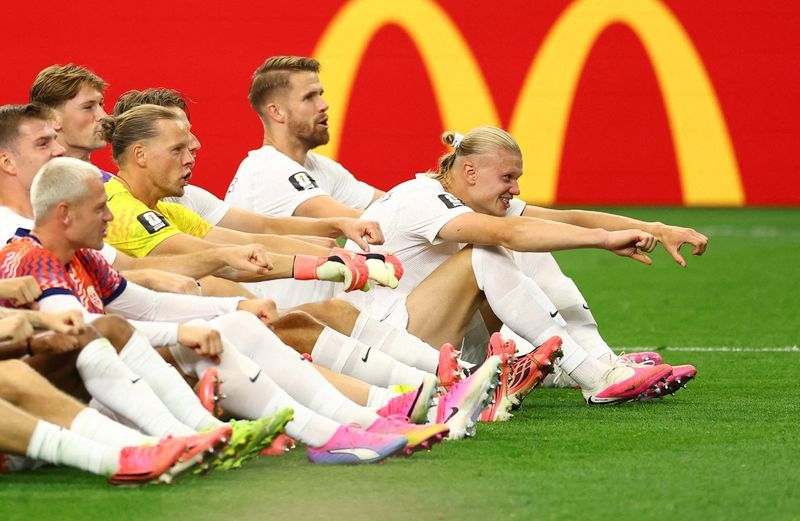
Norway's long-awaited return to the World Cup finals ended in disappointment on Saturday when England defeated them 2-1 after extra time in their Miami quarter-final, yet manager Stale Solbakken's squad leaves the tournament having fundamentally altered perceptions of Scandinavian football and inspired an entire nation after two decades of absence from the sport's greatest stage.
The Norwegians' journey from 28 years in the wilderness represented more than a sporting milestone; it symbolised a resurgence in a country determined to shake off an outdated reputation for direct, physically dominant play. Their pre-tournament photoshoot capturing players as Viking seafarers proved emblematic of a team embracing cultural identity whilst simultaneously competing with the world's elite through technical excellence and tactical sophistication.
Erling Haaland emerged as the tournament's breakout star, his prolific finishing and magnetic personality captivating audiences across North America. The forward's trademark tongue-in-cheek humour and devastating efficiency on the pitch transformed him into a global phenomenon, whilst his connection with captain Martin Odegaard demonstrated the depth of quality coursing through the Norwegian setup. Together with Solbakken's measured leadership, these figures embodied a new Nordic football philosophy grounded in confidence without arrogance.
Norway's group stage performance justified the elevated expectations surrounding their participation. Progressing beyond the initial phase represented merely the baseline achievement for a squad that had qualified in commanding fashion, with Haaland's goal-scoring prowess proving instrumental throughout qualification. However, the Norwegians transcended these modest targets by dismantling Ivory Coast 2-1 in the knockout round, with Haaland's clinical double-strike opening possibilities of an improbable deep run.
Their stunning 2-1 victory over Brazil in the last 16 constituted the tournament's most intoxicating moment for Norwegian supporters, suggesting that the Scandinavian underdogs might accomplish the unfathomable and reach the final itself. The performance exposed Brazil's vulnerabilities and demonstrated that Norway possessed the tactical intelligence and individual brilliance to compete with traditional powerhouses. Fans dared imagine an unprecedented climax to their fairytale resurrection.
The intensity exacted a considerable physical price, however. Facing England in the quarter-final, fatigue visibly accumulated in the legs of Haaland and Odegaard as the match extended beyond ninety minutes. Despite establishing a one-goal advantage, the Norwegians surrendered their lead when Jude Bellingham scored twice, illustrating how the demands of elite international football wear upon even exceptional athletes. Their exit, whilst painful, reflected the relentless toll of competing at the tournament's highest level rather than any fundamental shortcoming.
Solbakken's characteristically understated assessment that "the summer of '26 has been fairly OK" masks a deeper satisfaction with how his players performed and conducted themselves on the global platform. His measured temperament, mirrored in the squad's demeanour, contrasts sharply with the intensity and drama that typically surrounds major tournaments. This distinctly Norwegian composure—the ability to maintain perspective whilst competing fiercely—has become the team's calling card.
Beyond the immediate tournament results, Norwegian football's underlying trajectory points towards sustained competitiveness. Bodo/Glimt's consistent success in European club competitions, accumulating over recent seasons, demonstrates that a broader football culture now produces technically accomplished players capable of competing against continental rivals. This achievement signals a fundamental transformation from the nation's historical reliance upon physicality and work ethic towards a model emphasising possession-based football, creative problem-solving, and individual technical development.
The trio of Solbakken, Odegaard, and Haaland collectively projects an unshakeable self-belief about Norwegian capabilities without descending into hubris. These figures possess the rare quality of laughing at themselves whilst remaining absolutely serious about winning, a balance that has resonated with international audiences and elevated the team's profile far beyond typical Scandinavian representation in global football narratives.
Solbakken's reflection that "many players now believe they belong in the company we have in this World Cup" encapsulates the psychological legacy of this tournament for Norwegian football. The squad's performance has fundamentally altered how both domestic and international observers assess Norwegian potential. The notion that Scandinavian players can match the world's best—once considered presumptuous—has transitioned into reasonable expectation.
As the Norwegians depart Miami, their quarter-final exit obscures the deeper significance of their return to this stage. They have demonstrated that absence from the World Cup need not define a nation's football trajectory permanently. Instead, strategic development, cultural pride channelled productively, and the cultivation of world-class individual talent can resurrect a programme and position it as a genuine competitor amongst football's traditional powers.
For Malaysian and Southeast Asian observers, Norway's trajectory offers an instructive lesson about football development beyond the immediate pursuit of tournament success. The Scandinavian investment in youth systems, the emphasis upon technical sophistication over physical dominance, and the integration of cultural identity into sporting narratives represent approaches that regional federations might profitably examine. Norway's week-long disappearance from the world stage will be far less memorable than the impression they have indelibly left upon global football consciousness.

