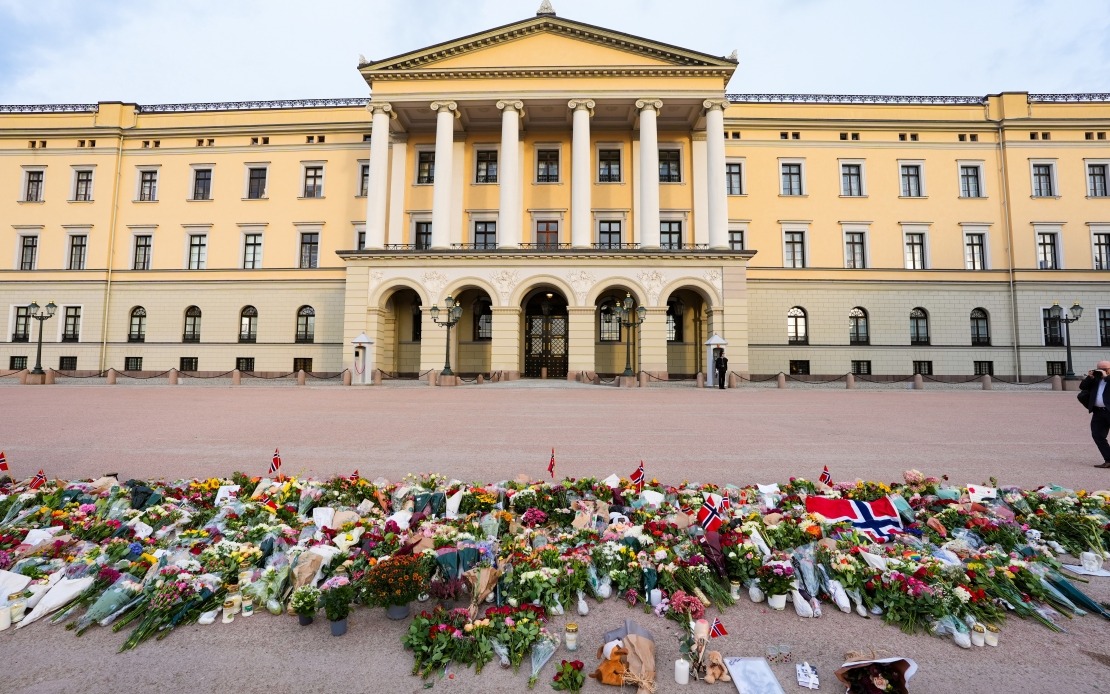
King Harald V of Norway died on Friday morning at the National Hospital in Oslo, marking the end of an era spanning more than three decades on the Scandinavian throne. The 89-year-old monarch passed away peacefully at 6.35 am local time, according to an announcement from the Royal Palace. His death concludes a remarkable reign that began in January 1991 and established him as Europe's oldest and longest-serving reigning monarch at the time of his passing.
The monarch's final days unfolded following his admission to the Oslo hospital on August 17 for a routine medical examination. What began as a standard health check revealed complications requiring extended inpatient care. Palace officials subsequently disclosed that Harald had been undergoing cortisone treatment to manage hemolytic anemia, a blood disorder characterized by the premature destruction of red blood cells. This condition had triggered fluid accumulation throughout his body, complicating his overall clinical picture during his hospitalization.
Harald's health trajectory shifted dramatically when he contracted a bacterial infection within his bloodstream, as reported by Norwegian public broadcaster NRK. This secondary infection accelerated his decline and ultimately proved insurmountable despite medical intervention at one of Norway's leading healthcare facilities. The combination of his underlying blood disorder and the subsequent bacterial complication created a cascade of medical challenges that ultimately overwhelmed his system.
Following constitutional succession procedures established in Norway's legal framework, Crown Prince Haakon immediately assumed the monarchy upon his father's death. Unlike many European nations, Norway maintains a streamlined transition process without coronation ceremonies. Instead, the new king faces procedural requirements including an extraordinary Council of State meeting at the Royal Palace, where government officials will formally receive him and his new royal regnal name will be publicly announced.
The constitutional succession represents a significant moment in Norwegian governance, as the nation moves forward with a new generation at its helm. Crown Prince Haakon, who has spent decades preparing for this role through royal duties and public service, now becomes the reigning monarch under Norway's system of constitutional monarchy. The formal oath-taking before parliament, required under the Norwegian Constitution, will follow the initial palace proceedings.
Harald's 33-year reign witnessed substantial transformations across Norwegian society and international relations. When he ascended the throne following his father King Olav V's death in 1991, Norway was consolidating its position as an independent nation with significant offshore oil wealth and growing global influence. Throughout his tenure, the king served as a stabilizing constitutional figurehead while Norwegian society navigated technological advancement, economic prosperity, and evolving social values.
As Europe's oldest reigning monarch at the time of his death, Harald held a position of particular distinction among the continent's royal families. His longevity on the throne and advancing age had increasingly prompted discussions within Norwegian media and political circles about succession timing and the generational transition. The peaceful nature of his passing, coupled with the clear constitutional procedures for succession, ensured continuity in Norway's system of government.
The symbolism of his death carries weight beyond Scandinavia, reflecting broader patterns of generational change within European royal institutions. Several other European monarchies have recently experienced or anticipated significant transitions, making Harald's passing a notable marker in the continent's evolving political landscape. For regional observers in Southeast Asia, Norway's smooth succession demonstrates how constitutional monarchies manage transitions through established legal frameworks rather than political upheaval.
Norway's media and public institutions have begun the customary period of national reflection following the death of a long-reigning monarch. The lowering of the royal flag to half-staff at the palace signalled the nation's transition into a period of collective mourning, with state ceremonies and commemorative events anticipated in coming days. International dignitaries and representatives from allied nations are expected to pay respects during this period.
The transition to King Haakon's reign occurs at a complex moment for Norway and the broader Nordic region. With Russian military aggression in Ukraine reshaping European security considerations and energy markets experiencing volatility, the new monarch inherits a nation grappling with its strategic positioning and humanitarian responsibilities. The continuity provided by constitutional succession ensures that Norway's governance structures and international commitments remain uninterrupted during this period of leadership transition.
Harald's legacy encompasses not only his record tenure but also his representation of modern constitutional monarchy in a democratic society. Throughout his reign, he maintained strong popular support while respecting parliamentary authority and democratic institutions—a balance that has characterized Norwegian royal tradition. His passing marks a natural conclusion to a significant chapter in Nordic history while establishing the framework for his successor to chart Norway's course in coming years.

