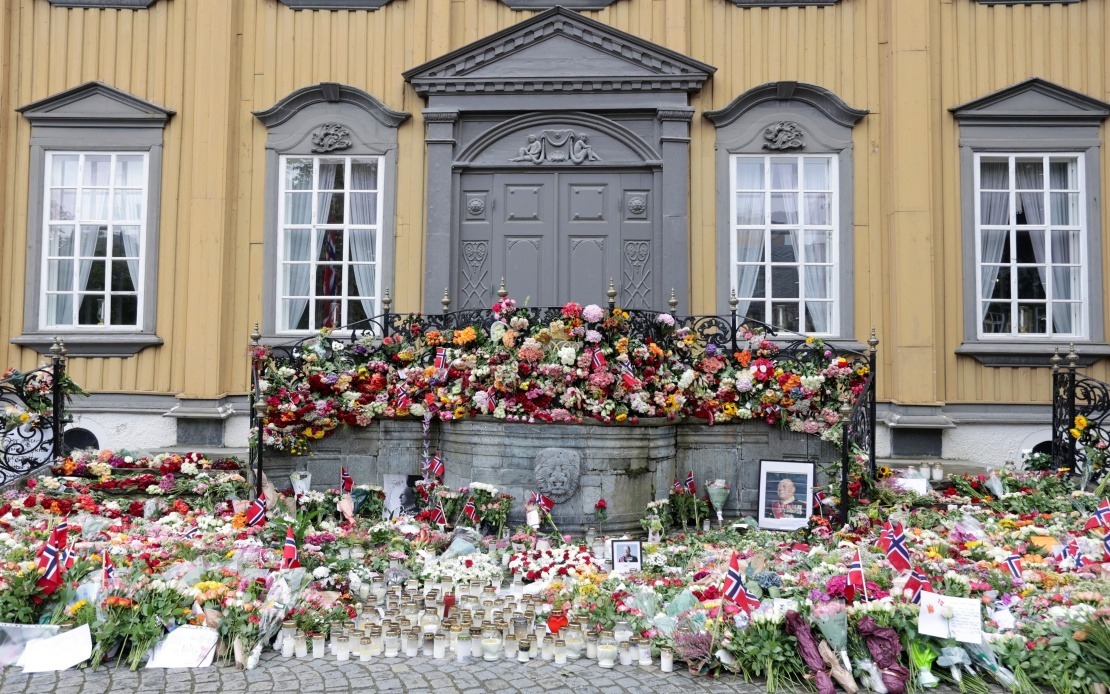
Across Norway, the nation came together on Sunday to pay respects to King Harald V, the Nordic kingdom's longest-reigning monarch who passed away on Friday at the age of 89. The Royal House confirmed that a state funeral will be conducted on September 9, marking an end to the formal mourning period that has gripped the Scandinavian nation since his death was announced. The succession occurred smoothly under Norway's established constitutional framework, with Harald's eldest son, 53-year-old Crown Prince Haakon, immediately ascending to become King Haakon VIII.
Memorial services took place simultaneously in churches and cathedrals nationwide, drawing tens of thousands of mourners who gathered to reflect on the late sovereign's seven decades of service to the Norwegian people. The spontaneous outpouring of public grief underscored the deep affection Norwegians held for their departed king, whose reign had become woven into the fabric of national identity. From small rural parishes to the grand cathedral in Oslo's city centre, communities organised solemn ceremonies that allowed citizens from all walks of life to participate in collective remembrance.
The scene outside Oslo's Royal Palace captured the emotional intensity of the nation's mourning. Visitors and well-wishers created impromptu memorials with flowers, candles, and handwritten cards that covered the palace grounds, transforming the formal residence into a living tribute. Such displays of public affection revealed the personal connection many Norwegians felt toward their king, whose approachable demeanour and dedication to duty had earned him widespread respect across generations.
King Harald V had occupied the throne since 1991, presiding over a period of significant economic growth driven largely by North Sea oil revenues and the development of Norway's sovereign wealth fund—now the world's largest. His reign witnessed Norway's evolution from a relatively modest Nordic nation into a global economic powerhouse, with one of the world's highest standards of living and most robust social welfare systems. The stability of his leadership had provided continuity during this transformative period, allowing Norway to navigate the complexities of globalization while maintaining its distinctive cultural identity.
The new King Haakon VIII represents a generational transition for the Norwegian monarchy at a moment when many European royal houses are grappling with questions about relevance and modernization. At 53, he brings decades of preparation to the role, having served as Crown Prince since birth and participating in official duties throughout his father's long tenure. His ascension occurs without constitutional controversy or institutional strain, reflecting the maturity of Norway's parliamentary democracy and the orderly nature of succession in constitutional monarchies.
For Malaysia and other Southeast Asian nations with strong respect for monarchical institutions, Norway's transition offers observations on how traditional forms of governance can endure within modern democracies. While Malaysia's own succession system differs—operating through an elected conference of rulers rather than hereditary primogeniture—both systems share a commitment to institutional continuity and constitutional procedure. The Norwegian example demonstrates how respect for constitutional rules, even during moments of national grief, strengthens democratic legitimacy rather than undermining it.
The funeral scheduled for September 9 will likely draw international dignitaries, including members of various European royal families and world leaders, reflecting Norway's prominent position in global affairs. The ceremony will provide an opportunity for the nation to celebrate Harald's accomplishments while formally welcoming his successor. Such state occasions serve ceremonial functions beyond their immediate purpose, reinforcing bonds of kinship among European nations and reaffirming shared values around constitutional governance and democratic institutions.
King Haakon VIII's accession marks the beginning of a new chapter for Norwegian governance, though observers note the remarkable continuity embedded in the transition. Many senior government officials and advisers who served under Harald will continue their roles, ensuring institutional memory and policy consistency during the changeover. The new monarch has indicated his commitment to maintaining the progressive values and social policies that characterise modern Norway, positioning the kingdom to address contemporary challenges including climate change, technological disruption, and demographic shifts.
The death of King Harald V resonates beyond Norway's borders as a poignant reminder of the passage of time for those who remember post-World War II Europe's reconstruction. His reign coincided with the Cold War's end, the establishment of the European Union, and the digital revolution—periods that fundamentally reshaped the continent. In reflecting on his long stewardship, Norwegians and observers worldwide have recognized a life dedicated to service, duty, and the maintenance of their nation's cherished values during an era of unprecedented transformation.

