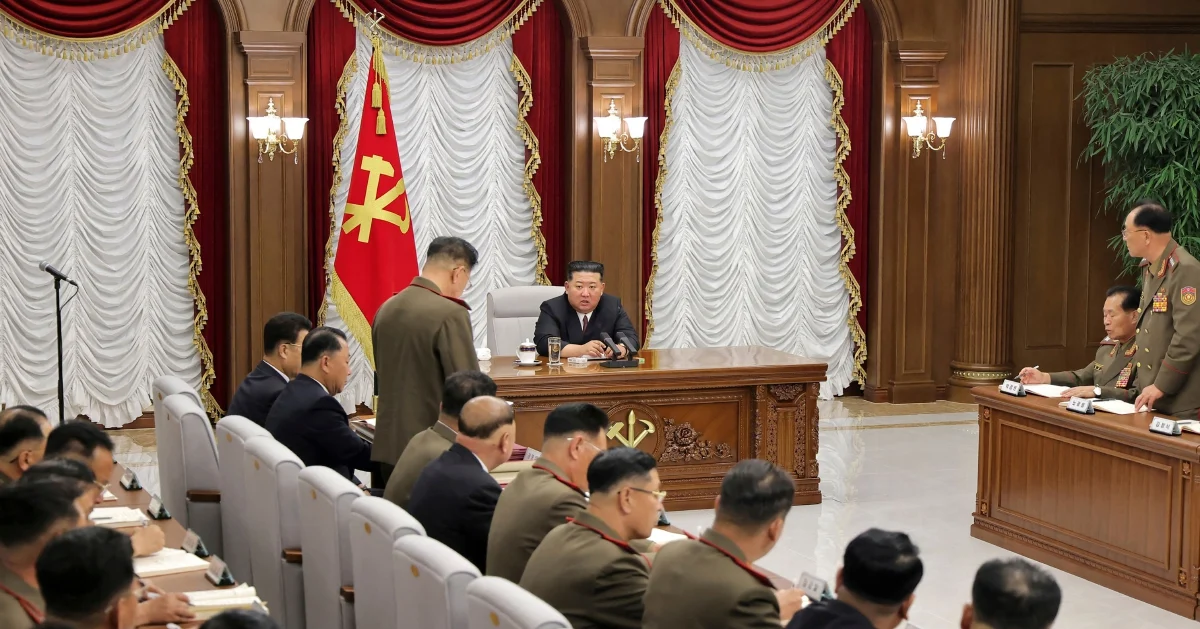
In a rare public show of anti-corruption action, North Korean leader Kim Jong Un has stripped a high-ranking military official of his position within the ruling party, citing serious allegations of graft and bribery. The measure, disclosed through official state media early Saturday, represents an unusual moment of transparency regarding disciplinary matters within Pyongyang's typically opaque power structures.
The identity of the dismissed official remains undisclosed in available reports, though the promotion of such cases through state media suggests the leadership views the matter as sufficiently significant to warrant public acknowledgment. By characterizing the official's conduct as a "political crime" rather than a simple administrative oversight, Kim Jong Un has framed corruption not merely as misconduct but as a fundamental betrayal of party principles and revolutionary ideology.
For regional observers and analysts monitoring North Korean politics, such public denouncements carry particular weight. Unlike many authoritarian regimes where power struggles play out silently behind closed doors, Pyongyang occasionally uses state media to signal broader campaigns or policy priorities to both domestic and international audiences. The explicit labeling of corruption as a political transgression suggests the leadership may be attempting to reinforce party discipline at a time when economic pressures and international isolation have strained institutional cohesion.
This incident also illuminates the ongoing tension between North Korea's military establishment and civilian party apparatus. The armed forces command considerable resources and autonomous authority within North Korean society, managing everything from economic enterprises to border security. When senior military figures face removal over corruption allegations, it frequently reflects deeper questions about accountability and resource distribution within these fiercely guarded institutions.
The timing of this disclosure carries additional significance given North Korea's broader geopolitical context. As the regime continues navigating international sanctions while simultaneously pursuing military modernization, leadership credibility depends partly on projecting an image of internal order and competent governance. Public anti-corruption actions, while ostensibly addressing rule-breaking, also serve propaganda functions by demonstrating that even senior figures remain subject to party authority.
Bribery and corruption within North Korean military circles typically involve the diversion of state resources, allocation of privileged access, or illicit dealings with foreign entities. Given the regime's tight control over all commercial activity, such infractions represent direct theft from state coffers and potential security vulnerabilities. Military officials commanding significant personnel and equipment enjoy opportunities unavailable to ordinary citizens, making oversight of their conduct a persistent governance challenge.
Historically, purges and removals within North Korea's power structure have occasionally preceded broader political realignments or shifts in policy direction. While a single corruption case may not indicate imminent systemic change, it nonetheless reflects ongoing efforts to maintain party cohesion and enforce hierarchical control. The public nature of this particular action distinguishes it from many internal party matters that typically remain concealed from external view.
For Malaysia and other Southeast Asian nations, developments within North Korea's internal politics merit monitoring primarily for their implications regarding regional military behaviour and diplomatic engagement patterns. A leadership preoccupied with internal discipline may exhibit different negotiating positions or strategic choices than one facing institutional confidence crises. Understanding such dynamics provides useful context for regional states managing their own security interests and diplomatic relationships across the broader Asian geopolitical landscape.
The efficacy of such anti-corruption actions in actually curbing graft remains questionable. While removing individual officials from office serves symbolic purposes, systemic corruption typically reflects broader institutional cultures and incentive structures. Without comprehensive institutional reforms addressing root causes of illicit behaviour, individual punishments may accomplish limited substantive change, serving primarily as demonstrations of authority and ideology.
As North Korea continues adapting to sustained economic pressures and technological isolation, institutional strength matters increasingly for regime stability. The decision to publicize this particular corruption case suggests leadership confidence in party discipline mechanisms, or alternatively, an effort to project such confidence to domestic and international audiences. Either interpretation indicates that North Korean authorities view the maintenance of internal party cohesion as a priority worthy of public messaging.
The broader implications for North Korea's governance trajectory remain unclear from a single incident. Nevertheless, the public invocation of "political crime" language signals that leadership perceives corruption not simply as individual moral failing but as systemic threat meriting formal party response. How consistently such enforcement occurs, and whether it expands to address larger structural issues, will prove more revealing indicators of genuine anti-corruption commitment versus tactical political theatre.

