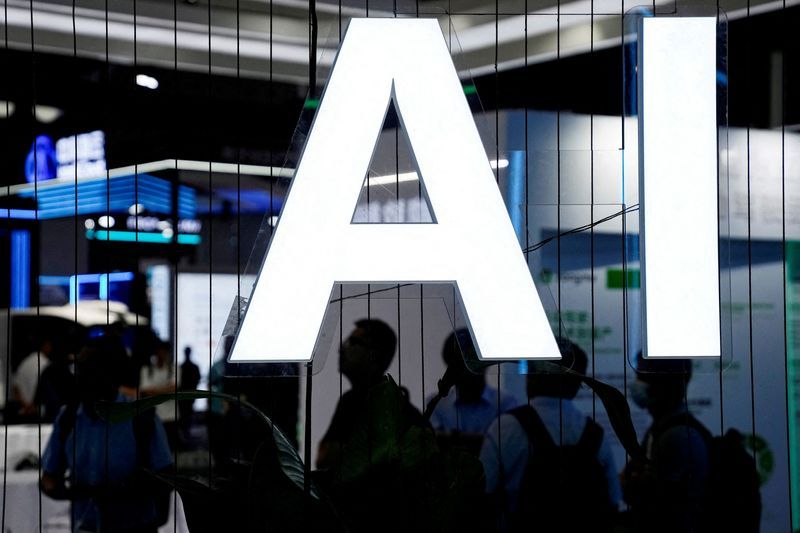
A coalition of more than 200 researchers and economists, including 15 Nobel Prize winners and senior figures from the world's leading artificial intelligence companies, has issued a stark warning to policymakers and technology leaders: the economic disruption caused by AI requires immediate institutional and policy responses before it is too late. The statement, released on Monday, represents an unusually broad alliance of Nobel laureates, researchers from OpenAI, Anthropic and Google, and independent academics calling for coordinated action on one of the defining economic challenges of this decade.
The signatories contend that artificial intelligence represents an economic transformation of unprecedented scale and speed—potentially more disruptive than the Industrial Revolution, but compressed into a far shorter timeframe. Unlike previous technological breakthroughs such as steam power, electricity and computers, which allowed societies decades to adjust labour markets, business practices and social institutions, the AI revolution may grant the world only several years to prepare. This temporal compression creates what the group characterises as an acute policy emergency, where delayed action risks cascading economic and social consequences that could prove difficult to reverse.
Anton Korinek, a professor at the University of Virginia who played a leading role in organising the initiative, distilled the group's core concern with striking clarity: "Steam, electricity, and computers each gave societies decades to adapt. AI may give us only a few years. We cannot improvise our strategy and institutions in the middle of the transformation; waiting for certainty means arriving too late." Korinek, who joined Anthropic's economic research team in March, coordinated the statement alongside fellow economists Erik Brynjolfsson, Ajay Agrawal and Tom Cunningham, amplifying their call through a carefully assembled group of prominent voices.
The statement explicitly calls for deeper research into AI's multifaceted economic consequences, recognising that policymakers currently lack sufficient evidence-based understanding to craft effective responses. Beyond research, the experts demand that governments and institutions begin constructing the policy frameworks and organisational structures needed to ensure that AI's benefits are broadly distributed across society while mitigating acute risks. Chief among these risks is large-scale job displacement across sectors, a concern that extends from routine cognitive work to increasingly sophisticated professional roles. The statement tacitly acknowledges that without proactive policy intervention, the technological gains from AI could concentrate wealth and opportunity among a narrow slice of society.
The signatories represent a striking cross-section of expertise and institutional authority. Sarah Friar, OpenAI's chief financial officer, has placed one of the leading AI laboratories behind the statement, signalling that at least some within the private sector recognise the need for regulatory guardrails. Jeff Dean, Chief Scientist at Google DeepMind, brings the weight of the search giant's AI research arm to the initiative. Jack Clark, a co-founder of Anthropic, and members of the economic research team at the Claude chatbot maker have similarly committed their institutional credibility to the cause. This private sector participation carries particular significance: it suggests that leading AI companies are themselves concerned about the trajectory of AI development and are willing to acknowledge that market forces alone will not adequately address the social and economic consequences of their own technologies.
The Nobel laureates endorsing the statement further elevate its intellectual authority and political salience. Michael Spence, Daron Acemoglu and Simon Johnson—all recipients of the Nobel Prize in Economic Sciences—have lent their names to the initiative, bringing decades of accumulated knowledge about economic systems, institutional design and technological change. Their participation signals that the world's most distinguished economists regard AI as a legitimate concern requiring the kind of serious policy attention normally reserved for major macroeconomic crises or systemic financial risks. This Nobel-level endorsement makes it politically more difficult for governments to dismiss or deprioritise the statement's recommendations.
For Malaysia and Southeast Asia, the statement carries particular relevance. The region's economies are heavily dependent on both manufacturing and business process outsourcing sectors that are particularly vulnerable to AI-driven automation. With unemployment rates already elevated in some countries and youth joblessness a persistent concern, the prospect of accelerated job displacement through AI raises urgent questions about workforce retraining, social safety nets and educational reform. The region's policymakers, already stretched thin managing pandemic recovery and inflation, now face pressure to develop AI economic strategies in parallel with other priorities, yet without the institutional capacity that larger developed economies may possess.
The statement's core argument—that societies need institutional and policy preparation before AI transformation reaches critical mass—resonates with long-standing economic theories about the lag between technological innovation and social adaptation. History suggests that societies that anticipate technological disruption and prepare institutional responses fare better than those caught flat-footed. The Industrial Revolution, cited by the experts as a cautionary example, devastated artisanal workers and created severe social instability in regions that failed to adapt; conversely, societies that invested in education and built inclusive institutions managed transitions more successfully. The current statement essentially argues that humanity has a narrow window to avoid repeating the worst outcomes of previous technological transitions.
The call for research, policy development and institutional innovation is notably non-prescriptive about specific solutions, which likely reflects the genuine uncertainty about how AI will unfold economically. Experts disagree on whether AI will primarily augment human labour (making workers more productive) or substitute for it wholesale. They debate whether AI's productivity gains will be distributed broadly or concentrated among capital owners and the most highly skilled workers. These disagreements make universal policy recommendations difficult, yet the signatories argue that even amid uncertainty, action is necessary: waiting for perfect information guarantees arriving too late.
The statement also implicitly critiques the current regulatory environment, where AI policy remains fragmented across jurisdictions and largely reactive rather than anticipatory. The European Union's AI Act represents one of the few sustained attempts at comprehensive regulation, yet it focuses primarily on safety and fairness rather than economic impact. Most other major jurisdictions lack coherent AI policy frameworks altogether, or pursue narrowly defined regulatory goals that do not address labour market or distributional concerns. The statement suggests that policymakers must shift from managing isolated risks to building comprehensive institutional responses.
Looking forward, the statement's political weight will depend partly on whether it catalyses concrete policy action or remains largely symbolic. Governments in developed nations possess the fiscal and administrative capacity to launch major initiatives on AI economic policy, though political will remains uncertain. Developing economies, including those in Southeast Asia, face more acute resource constraints and may struggle to implement comprehensive responses without international support or technology transfer. The statement thus carries an implicit appeal for wealthy nations to share the institutional knowledge and financial resources necessary for global adaptation to AI's economic consequences.

