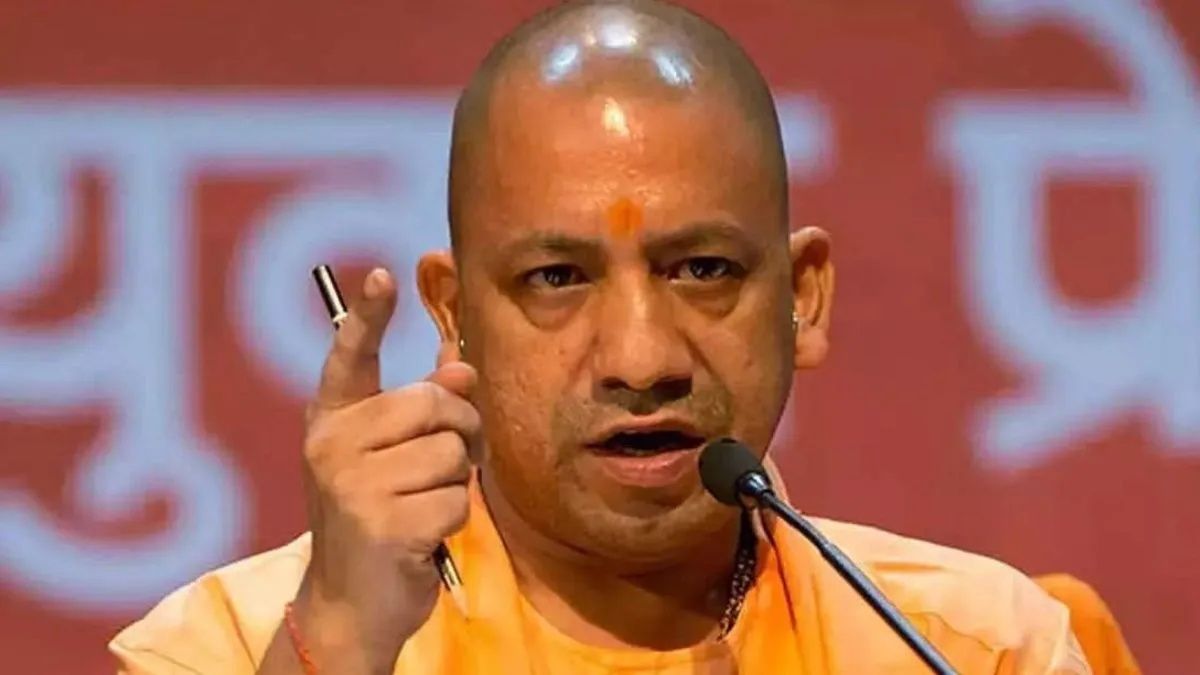
Uttar Pradesh Chief Minister Yogi Adityanath has drawn a hard line on the unfolding donation theft scandal at the Ram Janmabhoomi Teerth Kshetra in Ayodhya, asserting that deliberate attempts to undermine religious sentiments will be met with decisive governmental action. Speaking at a public event in Deoria on Friday, where he laid foundation stones and inaugurated development projects, the Chief Minister responded to the filing of the first FIR in the matter by emphasising that investigations will proceed swiftly and that accountability will extend to all involved parties, regardless of their standing or position.
The controversy centres on alleged misappropriation of donations made by devotees at the newly constructed Ram Temple in Ayodhya. Following receipt of a Special Investigation Team (SIT) report into the allegations, Adityanath said the state government has initiated formal action and will continue to do so with rigour. His emphasis on separating truth from falsehood suggests the government's determination to maintain the sanctity and credibility of the temple's financial operations, an institution that carries profound symbolic importance for Hindu believers across India and beyond.
Adityanath's statement represents more than a routine administrative response to financial impropriety. The Chief Minister framed the controversy within a broader political narrative, positioning it as an extension of long-standing disagreements between the Bharatiya Janata Party-led government and opposition parties—particularly the Indian National Congress and the Samajwadi Party—over the temple's construction and religious significance. This contextualisation reveals how even governance issues around the Ram Temple become intertwined with India's contentious religious and political landscape, where opposing visions of secularism, faith, and national identity collide.
The Chief Minister's invocation of Ayodhya as a symbol of national faith and Sanatan Dharma reflects the philosophical framework underpinning the Bharatiya Janata Party's political programme. For supporters of the BJP, the Ram Temple's completion represents not merely a religious achievement but a vindication of Hindu cultural identity and a correction of historical grievances. Adityanath's assertion that Ayodhya embodies shared faith across India attempts to elevate the temple beyond sectarian boundaries, though such framing remains deeply contested in India's plural society.
In his address, Adityanath deployed pointed criticism of opposition parties, recounting their historical positions on the temple's construction and invoking broader allegations of anti-Hindu governance. He referenced Congress's alleged denial of Ram's historical existence and described the Samajwadi Party's approach to the temple movement as obstructionist, noting their courtroom battles and deployment of legal resources against the temple's construction. Such retrospective arguments, while politically potent among the Chief Minister's supporters, also highlight how contemporary governance issues become entangled in India's deeper historical and cultural debates.
The Chief Minister extended his criticism by cataloguing what he characterised as anti-religious policies during opposition-governed periods, mentioning restrictions on the Kanwar Yatra, Krishna Janmotsav celebrations, and alleged instigations during Durga Puja festivities. He specifically referenced the Lar riot, implying a pattern of communal mismanagement by previous governments. These allegations, whether accepted or disputed depending on political perspective, underscore the deep mistrust between ruling and opposition camps regarding religious affairs and minority protection—a tension that periodically flares during governance crises.
Yet beyond the political theatre, the donation theft case itself carries practical implications for temple administration and public confidence in religious institutions. Temples across India manage substantial financial resources from devotee contributions, and allegations of misappropriation strike at the heart of institutional trustworthiness. For millions of believers who travel to Ayodhya and contribute financially to the temple's operations and expansion, questions about fund management represent a tangible betrayal of their devotion and generosity. The Chief Minister's insistence that investigations will be thorough and impartial directly addresses these concerns.
The invocation of the SIT report signals an intention to conduct investigations through supposedly neutral professional mechanisms rather than through politically charged police procedures. This approach aims to lend credibility to outcomes, though critics often question whether special investigation teams can truly operate independently when appointed by and reporting to governments with obvious political interests. The Chief Minister's appeal to opposition parties to cease making political statements during the investigation suggests awareness that the case could spiral into mutual recriminations if both sides treat it as an arena for partisan point-scoring.
Adityanath's warning against testing the patience of Ram devotees carries an implicit threat that public sentiment could mobilise if political opposition to the government's response coalesces. Given India's history of temple-related political mobilisations, this reference, though framed as a cautionary appeal, touches on raw nerves regarding communal stability. The Chief Minister appears to be signalling that further questioning of the temple's integrity or government responses could provoke organised religious backlash.
For Southeast Asian observers and the Indian diaspora community in Malaysia and the region, this case illustrates how India's major religious institutions remain politically contested despite economic modernisation and constitutional secularism. The Ram Temple's construction itself was celebrated by diaspora communities as a cultural milestone, but the donation controversy exposes the complexities of managing religious faith at institutional scale. The case also demonstrates how religious governance in India involves negotiating between competing political visions, each claiming authentic stewardship of sacred traditions.
The government's assertion that it will act on SIT recommendations while demanding that opposition parties cease political commentary essentially asks for a depoliticisation of what is inherently political—a dispute over institutional integrity touching on religious identity. Whether the investigation successfully navigates these treacherous waters while maintaining both transparency and communal peace remains uncertain. The Chief Minister's firm stance suggests the government will tolerate no questioning of its management of the investigation, even as calls for independent oversight may intensify if findings disappoint significant constituencies.
As the SIT continues its work, the case will likely remain a barometer of trust between India's government, religious institutions, and the broader public. For a nation where temples command cultural reverence and political significance in equal measure, how authorities handle alleged financial impropriety at Ayodhya's Ram Temple may resonate far beyond the specifics of this particular scandal, shaping perceptions of governmental competence and religious institutional integrity across the subcontinent.

