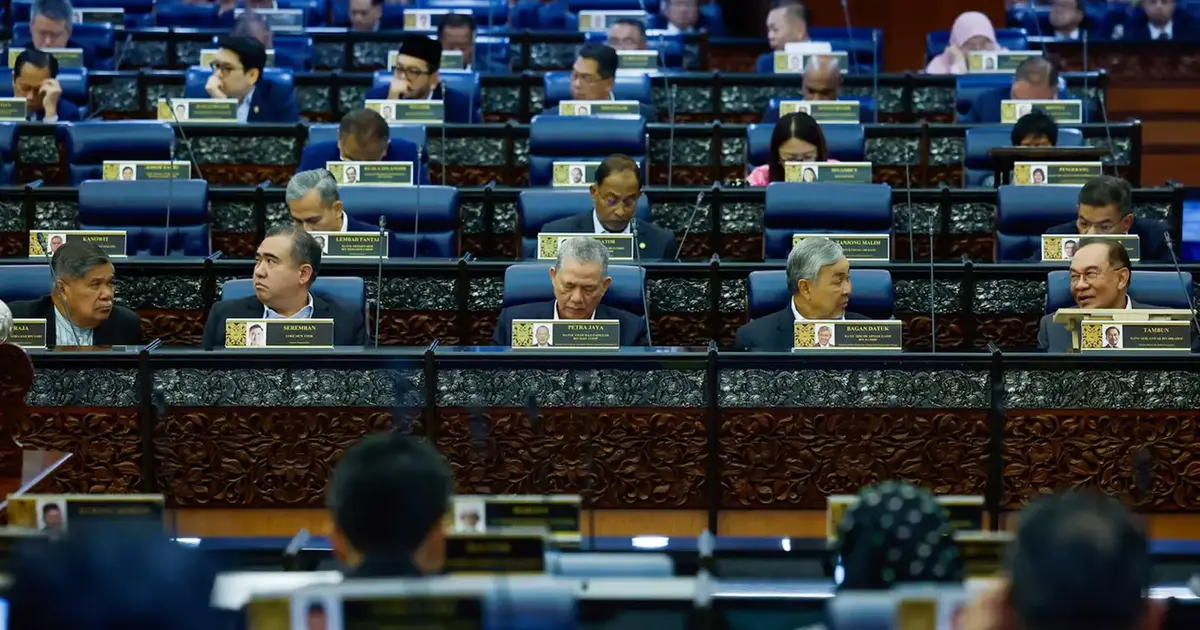
The question of whether Malaysia's government can sustain itself if the Democratic Action Party withdraws from the ruling coalition has been addressed by a senior PKR official, who dismisses concerns that such a departure would automatically require Parliament's dissolution. Saifuddin Shafi Muhammad, the deputy secretary-general of Parti Keadilan Rakyat, has provided reassurance to coalition partners and observers tracking the stability of the current administration, asserting that the mathematical composition of the government bloc permits such a scenario without triggering institutional crisis.
This statement arrives against a backdrop of periodic tensions within the ruling alliance, where coalition harmony has occasionally appeared fragile. The People's Alliance government, formed following the 2022 general election, has navigated various internal disagreements and shifting political dynamics since its inception. While the exact mathematics of parliamentary arithmetic remains crucial to understanding Malaysia's political stability, Saifuddin's comments suggest the administration possesses sufficient flexibility to accommodate changes in its composition.
The clarification carries significance for both the DAP and the broader coalition ecosystem. For the DAP, which has historically positioned itself as a champion of Chinese-Malaysian interests and progressive governance, the remarks offer perspective on its current political leverage and the conditions under which it might exercise strategic choices regarding continued participation in government. The party has served as an important component of the ruling alliance, holding ministerial positions and contributing parliamentary votes to sustain the government's majority.
PKR's position in this matter reflects its role as a coalition mediator and the party most directly aligned with Prime Minister Anwar Ibrahim's political project. The party has consistently advocated for stability and cohesion within the ruling bloc, recognising that fractionalisation would undermine its governance capacity and electoral viability. By publicly stating that DAP's departure need not trigger dissolution, Saifuddin appears to be managing expectations and reducing the perceived stakes of any potential disagreement, thereby potentially defusing tensions before they escalate.
For Malaysian political observers, the statement illuminates the actual strength of the current government configuration. Malaysia's parliamentary system requires a simple majority of 112 seats among 222 MPs to sustain a government. The ruling coalition's total strength, distributed across various partner parties including PKR, DAP, AMANAH, PAS, and others, provides a buffer that theoretically permits some fluctuation without immediate institutional breakdown. Understanding these numerical realities is essential for comprehending the stability matrix of contemporary Malaysian politics.
The implications extend to minority government scenarios and the practical functioning of Malaysian democracy. If the government could theoretically continue without DAP, this suggests an implicit recalibration of political priorities away from the inclusive multi-ethnic coalition model that initially formed the People's Alliance. Such a development would represent a significant structural shift, potentially favouring coalition partners with stronger rural and Bumiputera support bases, while reducing the parliamentary voice of urban and Chinese-Malaysian constituencies traditionally represented by the DAP.
However, Saifuddin's simultaneous assertion that DAP MPs will remain committed to the government bloc adds an important counterpoint. This dual messaging—technical feasibility combined with confidence in actual retention—appears designed to reinforce coalition unity while simultaneously establishing parameters for acceptable political behaviour. The PKR leader is essentially communicating that while the government possesses structural resilience, maintaining DAP participation remains the preferred and anticipated outcome.
The broader Southeast Asian context also warrants consideration. Regional governments have increasingly depended on delicate coalition arrangements to sustain parliamentary majorities, from Thailand's multiple alliance configurations to Indonesia's sprawling coalition politics. Malaysia's experience in managing multi-party coalitions offers lessons in compromise and negotiation, though the country's history also reveals the risks of coalition instability when underlying tensions are inadequately addressed. The PKR statement represents one data point in an ongoing conversation about how to maintain stability within diversity.
Looking forward, these remarks establish a framework for understanding potential coalition reconfiguration scenarios. Should disagreements between DAP and other coalition partners escalate over policy matters—ranging from economic priorities to social issues affecting particular ethnic or religious communities—the parties involved now possess clearer information about institutional consequences. This transparency can either encourage more constructive dialogue or, conversely, embolden parties who believe their departure would not fundamentally threaten government survival.
The statement also reflects evolving dynamics within Malaysian politics regarding the relationship between electoral mathematics and political legitimacy. While technical parliamentary majorities determine executive viability, the social and political legitimacy of government increasingly depends on perceived representativeness and inclusive coalition-building. This tension between numerical sufficiency and political desirability remains unresolved, shaping how Malaysian political actors navigate ongoing governance challenges.
For Malaysian businesses, civil society, and ordinary citizens, coalition stability represents an important element of the broader operating environment. Uncertainty regarding government survival can depress investment, complicate policy implementation, and divert political attention from substantive governance priorities toward internal coalition management. The PKR assurance, therefore, serves broader functions beyond internal party communication, potentially reducing market and institutional anxiety about administrative continuity.

