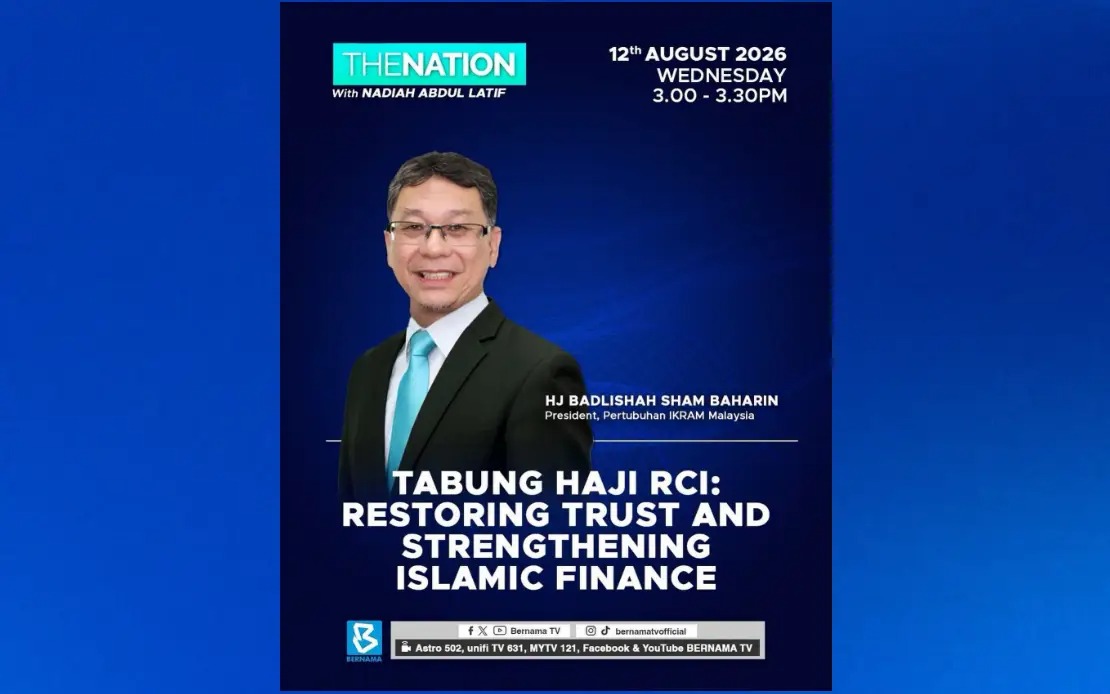
The debate over whether Malaysia needs another Royal Commission of Inquiry into Tabung Haji took a new turn this week when Pertubuhan IKRAM Malaysia, a leading voice on Islamic finance matters, argued against establishing a second probe into the pilgrimage fund's operations. IKRAM president Badlishah Sham Baharin contended that the ongoing investigations by authorities such as the Malaysian Anti-Corruption Commission provide sufficient oversight, and that proliferating RCIs would erode their standing as mechanisms reserved for the most serious state inquiries.
The push for a fresh RCI has gained momentum among elected representatives from both the ruling Barisan Nasional and opposition Pakatan Harapan, who want the government to investigate Tabung Haji's management during the 2021–2025 period. The existing RCI, which concluded its work in late July, examined only the 2014–2020 window, leaving a critical five-year gap that critics worry may have seen additional mismanagement go unexamined. This temporal limitation has become the focal point of parliamentary concern, particularly given the scale of losses already documented in the earlier period.
Badlishah's position reflects a broader philosophical tension within Malaysian governance: the question of when investigative commissions become tools of political theatre rather than genuine accountability mechanisms. He emphasised that establishing RCIs indiscriminately for various circumstances undermines their fundamental purpose and institutional weight. Instead, he advocated for reliance on existing prosecutorial and investigative bodies, which possess both the legal authority and technical expertise to pursue wrongdoing through formal legal channels. This approach, he suggested, would ensure that consequences for breaches actually materialise rather than remaining confined to a report's pages.
The latest figures disclosed during the Dewan Rakyat's special sitting on Tabung Haji underscore the gravity of the institution's predicament. Finance Minister II Datuk Seri Amir Hamzah Azizan revealed that the fund suffered losses totalling almost RM13 billion across fourteen problematic investments, with seven of these resulting in complete wipeouts. The breakdown shows RM10.2 billion absorbed by Malaysian taxpayers through a 2018 bailout executed via Urusharta Jamaah Sdn Bhd, whilst a further RM2.6 billion in impairment charges struck Tabung Haji's books between 2018 and 2025 for investments still under management. For a fund entrusted with the savings of nearly ten million Malaysian Muslim depositors, these figures represent a catastrophic failure of fiduciary responsibility.
Among the disasters documented, the Al-Rawda investment stands out as the most expensive single error. Between 2015 and 2017, Tabung Haji funnelled 1.4 billion Saudi riyals—approximately RM1.5 billion—to an intermediary for leasing rights to four hotels in Makkah and Madinah intended to house Malaysian pilgrims. The arrangement unravelled when Al-Rawda ceased rental payments in early 2019, culminating in Tabung Haji taking a full impairment loss of RM1 billion in 2024. This transaction exemplifies the kind of Byzantine financial structures and inadequate due diligence that allowed losses to metastasise across the fund's portfolio.
While opposing a new RCI, Badlishah Sham offered qualified support for an alternative proposal: the establishment of a multi-agency task force to scrutinise investments at elevated risk of loss and implement preventive measures. Such a body, operating on a continuing basis rather than as a time-limited inquiry, could potentially address the ongoing governance challenges at Tabung Haji without the ceremonial overhead and political grandstanding that sometimes accompany RCIs. He stressed the imperative of rigorous due diligence prior to any investment commitment, emphasising that grassroots-level scrutiny and adherence to ethical standards and proper procedures must become non-negotiable.
The proposition raises important questions for Malaysian policymakers about institutional design. Rather than launching discrete, exhaustive inquiries into past misconduct, a permanent inter-agency monitoring structure could embed continuous oversight directly into decision-making processes. This approach has potential appeal for a fund that must rebuild depositor confidence and demonstrate competent stewardship going forward. The experience of Tabung Haji suggests that even well-intentioned institutions can suffer catastrophic losses when investment decisions lack sufficient scrutiny and when intermediaries operate with minimal transparency or accountability.
Badlishah's comments on parliamentary conduct during the special sitting proved equally pointed, targeting opposition members who walked out during proceedings. He characterised the boycott as an abdication of duty, noting that elected representatives bear responsibility for representing the interests of nearly ten million fund depositors and providing essential checks on executive power. His rebuke carried particular weight given the stakes: these are public funds held in trust, and parliamentary oversight—however adversarial—remains a critical accountability lever. The suggestion that MPs debate contentious issues on social media rather than in the chamber itself struck him as emblematic of declining parliamentary standards.
The broader context for this debate extends beyond Tabung Haji itself into questions about how Malaysia regulates large financial institutions and manages systemic risk. The fund represents one of Southeast Asia's largest Islamic financial entities, with assets that touch millions of households. Its trajectory over the past decade—from respected custodian of pilgrimage savings to recipient of a massive government rescue—carries lessons about regulatory frameworks, board oversight, and investment governance applicable across Malaysia's financial sector. The RCI's findings, released on July 29, documented significant operational and management deficiencies between 2014 and 2020, with 25 recommendations issued, of which 75 per cent had been implemented by early August.
The question of whether a second RCI should investigate the subsequent five-year period hinges partly on whether subsequent management has genuinely corrected course. If the 2021–2025 period showed markedly improved governance and investment discipline, the case for a new inquiry weakens considerably. Conversely, if evidence emerges of continued misadventure or slow implementation of reforms, pressure for a fresh probe will likely intensify. The Ministry of Finance and Tabung Haji's own leadership face mounting pressure to demonstrate tangible change, not merely compliance with RCI recommendations on paper.
MACC investigations represent the avenue most favoured by Badlishah and, implicitly, by those who believe existing mechanisms suffice. The anti-corruption commission possesses investigative powers including subpoena authority and the ability to pursue criminal charges, advantages that RCIs do not possess. If the evidence supports it, MACC could theoretically refer cases to prosecutors for action against individuals or entities responsible for losses. This pathway offers genuine legal consequences, whereas RCI reports—historically—sometimes gather dust after their presentation to Parliament. The critical variable remains political will: whether successive governments will press MACC investigations to their legal conclusions or allow institutional inertia to limit accountability.
Moving forward, Malaysian stakeholders face a choice between two models of oversight: periodic, publicly visible commissions of inquiry that generate reports and recommendations, or ongoing inter-agency coordination backed by prosecutorial authority. Badlishah's argument essentially contends that the latter model, if executed with sufficient rigour, offers superior outcomes to multiplying RCIs. Whether the government and Parliament accept this logic will significantly shape how Malaysia approaches institutional accountability in the financial sector and whether Tabung Haji's depositors ultimately receive the answers and justice they deserve.

