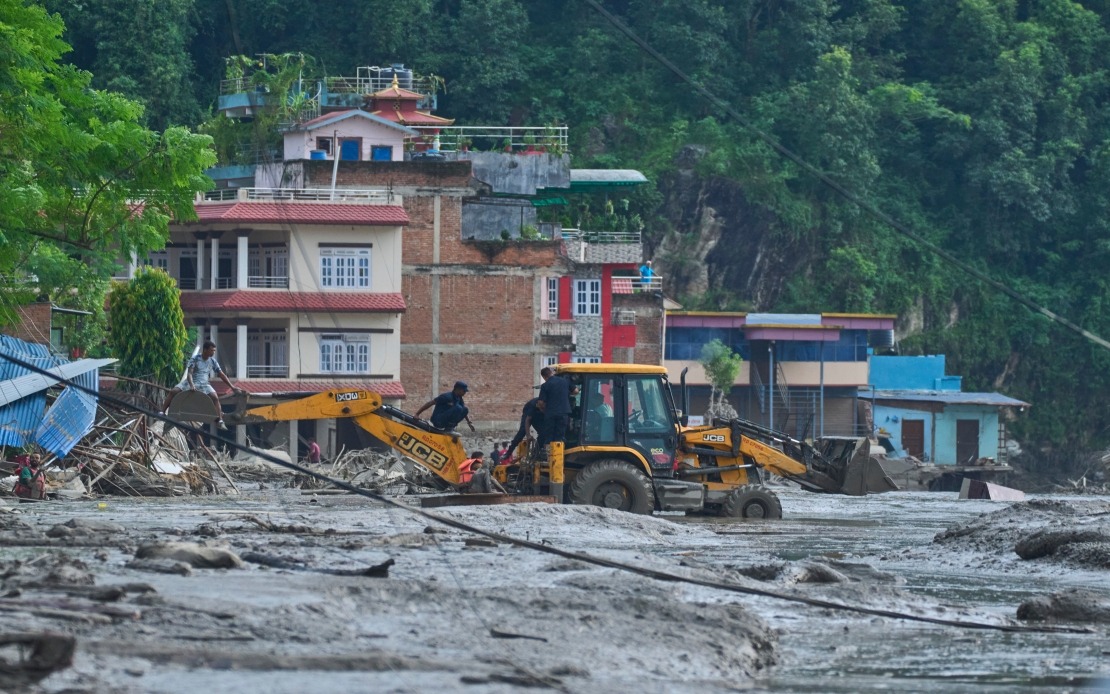
A humanitarian crisis is unfolding in Nepal's Rasuwa district following devastating flash floods that have claimed over 160 lives and left hundreds unaccounted for. Among those missing are nine South Koreans, intensifying Seoul's concern over its nationals caught in the disaster zone. The missing workers comprised six employees from Doosan Enerbility Co., a major plant construction firm, and three staff members of Korea South-East Power Co., a state-owned power generation enterprise. Both organisations were collaborating on hydropower development when the catastrophic flooding struck on Wednesday, trapping workers in one of Asia's most geographically challenging regions.
The scale of South Korea's involvement in the stricken area underscores the significant role that Korean companies play in Nepal's infrastructure development. Doosan Enerbility, a subsidiary of the Doosan Group conglomerate, has established itself as a key player in Asia-Pacific hydropower projects. Korea South-East Power, operating under state ownership, represents Seoul's strategic energy initiatives across the region. Together, these entities represent substantial Korean economic engagement in Nepal, extending beyond simple commercial transactions to include shared responsibility for worker safety and emergency response.
While nine remain missing, authorities confirmed that ten other Doosan employees who were stranded in the area have been located and are safe. This partial relief comes as approximately 200 foreign workers evacuated the construction site during the initial emergency. The evacuation operation itself demonstrates the speed at which international companies responded to escalating conditions, though the challenging terrain and sudden nature of flash flooding in mountainous regions left some workers unable to reach safety in time. The distinction between the rescued and missing groups highlights the unpredictable nature of natural disasters in high-altitude hydropower zones where weather patterns can shift dramatically.
Seoul's response has been swift and comprehensive. President Lee Jae Myung ordered government agencies to mobilise all available resources for search and rescue operations. The Foreign Ministry, working in coordination with national police and fire authorities, assembled a joint rapid response team scheduled to arrive in Kathmandu on Thursday. This multi-agency approach reflects Seoul's recognition that international disaster response requires diplomatic coordination, technical expertise, and emergency management capabilities working in concert. The team's composition—combining diplomatic, law enforcement, and rescue specialists—indicates that South Korea is treating this as both a humanitarian emergency and a diplomatic matter requiring engagement with Nepalese government structures.
Foreign Minister Cho Hyun articulated Seoul's priorities during an emergency response meeting held immediately after learning of the disaster. Beyond search and rescue operations, the government committed to supporting affected families, ensuring the safety of remaining South Korean personnel in Nepal, and preventing additional casualties. Cho's announcement that she would personally engage Nepal's foreign minister underscores the high-level diplomatic attention this crisis has received. This approach reflects established protocols for cross-border disaster response, where senior officials coordinate to ensure that rescue operations receive government-to-government support and necessary access to affected areas.
The corporate response has paralleled government action. Both Doosan Enerbility and Korea South-East Power established emergency response teams and prepared to dispatch field teams to the disaster site. This corporate mobilisation represents not merely damage control but a genuine commitment to worker welfare that extends beyond statutory obligations. Korean companies operating internationally face significant reputational consequences from worker casualties, creating alignment between corporate interests and humanitarian imperatives. Their coordination with government agencies suggests a clear understanding that effective rescue operations depend on seamless public-private cooperation.
The flooding itself represents one of Nepal's most severe natural disasters in recent memory. The Nepal-Tibet border region, where the deluge occurred, sits at high altitude with rapid snowmelt and monsoon precipitation patterns creating conditions for catastrophic flash floods. The fact that hundreds remain missing, predominantly foreigners, indicates that the disaster's impact extends well beyond the South Korean contingent. For Nepal's tourism and infrastructure sectors—both heavily dependent on foreign investment and expertise—such disasters underscore the climate and geological vulnerabilities that complicate development projects in the Himalayas.
For Southeast Asian nations and companies operating in similar mountainous terrain, the Nepal disaster carries cautionary implications. Many regional hydropower projects operate in comparable geographical and meteorological conditions. The incident highlights the necessity of enhanced preparedness protocols, improved weather monitoring systems, and robust evacuation procedures for foreign workers in high-risk zones. Companies and governments across the region will likely reassess their disaster management frameworks in light of how rapidly conditions deteriorated in Rasuwa district.
The rescue operation itself presents formidable logistical challenges. Nepal's infrastructure limitations, compounded by flood damage to transportation networks, complicate efforts to reach the affected zone. International rescue teams must coordinate with local authorities who may themselves be stretched thin managing broader relief operations. The South Korean government's decision to deploy its own team reflects both the urgency of the situation and recognition that local resources, however well-intentioned, may require supplementation with foreign expertise and equipment.
As rescue operations proceed, the humanitarian toll continues mounting. Beyond the immediate search for missing persons lies the complex work of supporting survivors, accounting for the deceased, and investigating how such preventable tragedies occur. For South Korea's government and companies, the coming days will determine both the human outcome and the longer-term implications for how Korean firms approach risk management in vulnerable geographical zones. The disaster serves as a sobering reminder that even major corporations with sophisticated operations remain vulnerable to nature's power, particularly in regions where development and extreme geography intersect.

