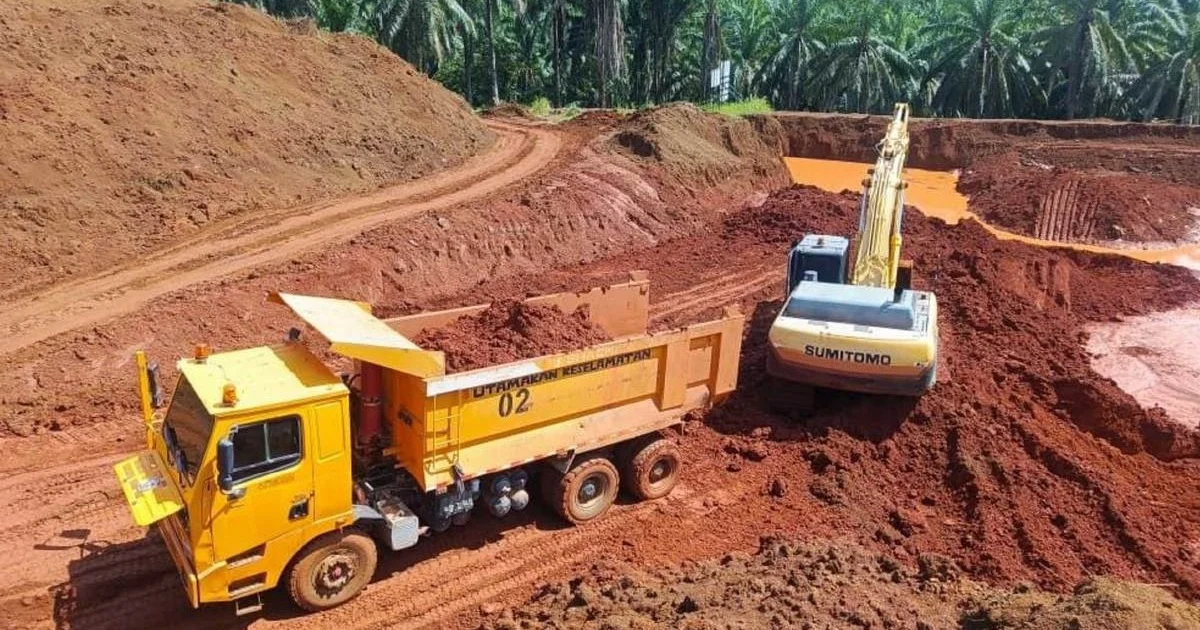
A coordinated enforcement operation in Kuantan has resulted in the arrest of nine people involved in illegal bauxite extraction, signalling intensified efforts by Malaysian authorities to combat unauthorised mining activities that continue to plague resource-rich regions across the country. The operation targeted a Felda plantation in Bukit Goh, where substantial quantities of illegally mined materials and equipment were recovered, representing a significant blow to criminal mining networks operating in Pahang.
The seizures made during the raid underscore the scale of illicit bauxite operations that persist despite regulatory oversight. Officers recovered approximately 10,000 tonnes of bauxite-bearing soil from the site, along with heavy machinery and transport lorries used in the extraction and haulage of minerals. The combined value of assets confiscated in the operation totals RM3.75 million, reflecting both the operational infrastructure and extracted materials involved in what authorities characterise as an organised extraction enterprise.
Bauxite mining has long represented a contentious issue within Malaysia's resource management landscape, particularly in Pahang where significant deposits exist. The aluminium ore, essential for global manufacturing chains, attracts both legitimate commercial interests and criminal operators seeking to circumvent licensing requirements and environmental safeguards. Illegal bauxite operations typically cause substantial environmental degradation, including soil erosion, water pollution, and landscape damage that can persist for years following extraction cessation.
The location of this operation at a Felda settlement raises particular concerns regarding land use regulations and the exploitation of agricultural holdings for unauthorised mineral extraction. Felda plantations represent designated areas for palm oil and rubber cultivation, and the incursion of mining operations indicates either deliberate circumvention of land protections or collusion between site operators and mining interests. Such incidents necessitate examination of oversight mechanisms at settlement level to prevent further encroachment of extractive industries into protected agricultural zones.
The nine individuals taken into custody face investigation under relevant mining and environmental legislation, though specific charges and judicial procedures remain subject to ongoing inquiries. The identities and alleged roles of those arrested have not been publicly detailed at this stage, though such operations typically involve hierarchical structures encompassing site managers, equipment operators, haulage coordinators, and administrative personnel managing the distribution network.
This enforcement action aligns with heightened regulatory attention directed toward illegal mining throughout Southeast Asia, where transnational criminal syndicates increasingly view mineral extraction as a high-return operation with manageable legal consequences relative to profits generated. Malaysian authorities have progressively expanded collaborative enforcement initiatives involving multiple agencies coordinating surveillance, intelligence gathering, and coordinated raids to disrupt supply chains rather than addressing only extraction sites in isolation.
The broader implications extend to Malaysia's reputation as a jurisdiction committed to environmental stewardship and sustainable resource management, particularly as the nation seeks to balance economic development imperatives with ecological preservation. International investors and trading partners increasingly factor environmental compliance into partnership decisions, making crackdowns on illegal mining components of Malaysia's broader commercial and diplomatic positioning.
For Southeast Asian neighbours and regional mining governance frameworks, Malaysian enforcement actions against bauxite extraction gangs provide reference points for operational methodologies and jurisdictional coordination. Indonesia, Vietnam, and other regional producers face comparable challenges in combating organised illegal mining, and cross-border intelligence sharing regarding trafficking routes, equipment suppliers, and distribution networks enhances collective enforcement capacity across the region.
The recovery of heavy machinery and transport equipment during raids proves particularly valuable in disrupting operational continuity, as replacement of excavation equipment and lorries represents substantial capital investment that criminal operators must reconstitute before resuming activities. Authorities across Southeast Asia increasingly target capital assets as leverage points for disrupting operations more effectively than relying solely on arresting replaceable personnel.
Future prevention of similar operations requires multi-layered approaches encompassing enhanced monitoring of Felda holdings, stricter penalties for mineral trafficking, technological solutions including satellite surveillance of extraction sites, and community engagement programs that reduce local participation in illegal mining ventures. Many rural communities near mining zones depend on income generated through either direct employment in illegal operations or provision of accommodation and logistical support, creating economic incentives that legal frameworks must address through alternative livelihood development.
The case also highlights continued vigilance required as global commodity markets create sustained demand for bauxite and other minerals, particularly given supply constraints in certain jurisdictions and increasing industrial demand from manufacturing-intensive Asian economies. Criminal networks adapt operational methodologies to evade detection, sometimes relocating operations between jurisdictions or fragmenting large-scale operations into smaller, less visible extraction nodes dispersed across multiple sites.
Authorities have indicated that investigations remain ongoing and additional criminal charges may be filed as evidence analysis continues. The seizure of equipment and materials will likely be processed through asset forfeiture procedures, with recovered value potentially directed toward environmental remediation of the affected plantation area or reallocation to enforcement and prevention initiatives.
Going forward, the Kuantan operation demonstrates that authorities possess capacity and commitment to pursuing organised illegal mining enterprises, though sustained effort and resource allocation remain essential for preventing recurrence and dismantling criminal infrastructure supporting bauxite extraction networks throughout Malaysia's resource-rich states.

