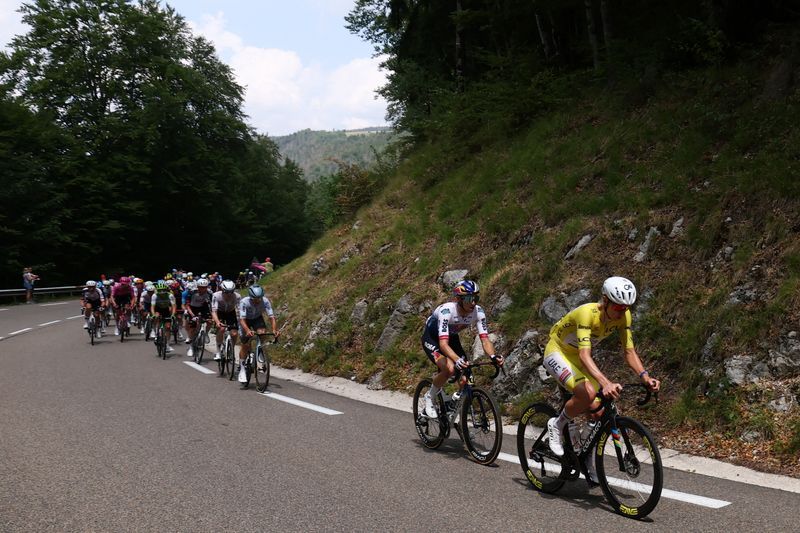
Jonathan Vaughters, the former professional cyclist who now leads the Cannondale-EF team, has entered the contentious debate surrounding early-morning doping controls at the Tour de France, contending that such testing protocols would have prevented the sport's prolonged blood-doping epidemic had they been implemented during the heights of cycling's darkest period. His intervention into the discussion carries considerable weight given his insider perspective on both the doping culture that plagued professional cycling and the reformed practices that now govern the sport.
The controversy erupted following unannounced anti-doping checks conducted during the pre-dawn hours ahead of the race's 15th stage, when leading competitors including race leader Tadej Pogacar and Jonas Vingegaard were roused from sleep for testing. The riders affected by these early-morning inspections subsequently voiced complaints regarding the disruption to their rest periods, with some arguing that the practice posed potential safety risks during subsequently scheduled mountain stages. This backlash prompted Vaughters to offer a counterargument grounded in the scientific realities of performance-enhancing substance detection.
Vaughters articulated his position through social media commentary, emphasizing that testing conducted at 2 a.m. represents one of the most effective methodologies for identifying peptide-based substances including EPO, human growth hormone, and testosterone when administered through micro-dosing regimens. His specific claim that implementation of such testing protocols in 2001 would have resulted in widespread suspensions across the peloton reflects the widespread nature of doping during that era. This assertion takes on particular significance when contextualized against the broader history of cycling's relationship with performance-enhancing substances.
The credibility of Vaughters' commentary derives substantially from his candid acknowledgment of his own complicity in the sport's doping systems. During his professional cycling career spanning the late 1990s and early 2000s, Vaughters competed as a teammate of Lance Armstrong on the U.S. Postal Service team while himself utilizing performance-enhancing drugs, particularly EPO. Rather than obscuring this history, Vaughters eventually became a cooperating witness in the U.S. Anti-Doping Agency's comprehensive investigation into Armstrong's systematic doping enterprise. His subsequent testimony contributed to USADA's determination that Armstrong had orchestrated the most technologically sophisticated and organizationally complex doping program in professional sports history, ultimately resulting in Armstrong's 2012 stripping of his seven Tour de France titles.
Following his retirement from competition, Vaughters demonstrated commitment to transforming professional cycling's ethical foundation by establishing what is now known as Cannondale-EF, an organization explicitly positioned as a champion of clean racing practices within a sport historically plagued by chemical enhancement. This institutional commitment to anti-doping enforcement lends additional weight to his current position advocating for aggressive testing methodologies. His evolution from doped competitor to reformed advocate represents a broader transformation within cycling toward embracing more rigorous and effective detection systems.
The specific complaints lodged by elite competitors against the early-morning testing protocols underscore the genuine tension between effective anti-doping enforcement and athlete wellbeing. Jonas Vingegaard, who underwent testing at 2 a.m., subsequently reported that the procedure cost him approximately 40 minutes of sleep before a crucial mountain stage during which he sustained a broken collarbone following a crash. Tadej Pogacar, tested at 5 a.m., indicated that he managed only four hours of sleep, while stage winner Remco Evenepoel characterized the testing practice as "inhuman." These complaints reflect legitimate concerns about the physical and psychological demands that professional cyclists already endure during the grueling three-week Tour competition.
Despite these athlete objections, the International Testing Agency, which administers doping controls on behalf of the Union Cycliste Internationale, maintained that night-time testing, while admittedly disruptive to recovery and rest, remains scientifically necessary in "limited and justified circumstances." This organization acknowledged the tension inherent in their position, recognizing that nocturnal testing creates genuine hardship for competitors while simultaneously insisting that effective anti-doping enforcement demands flexibility in testing timing. The agency's position reflects the scientific reality that certain performance-enhancing substances, particularly those in the peptide category such as EPO and human growth hormone, can clear an athlete's system within a matter of hours, creating a narrow detection window.
The efficacy problem that justifies night-time testing relates to micro-dosing methodologies that became increasingly sophisticated during cycling's blood-doping era. When elite cyclists distributed banned substances in small quantities across extended periods rather than administering large single doses, they could theoretically evade detection systems calibrated for daytime-only testing schedules. Anti-doping authorities have long recognized that predictable testing windows—particularly those confined to standard daytime hours—provide sophisticated athletes and their medical advisors with opportunities to calibrate administration timing to minimize detection risk. This cat-and-mouse dynamic between dopers and authorities explains why testing authorities increasingly view random, unpredictable timing as essential to effective detection.
Vaughters' contribution to this discussion adds a historically grounded perspective that extends beyond technical arguments about testing methodology. His direct experience with the sophisticated doping programs that dominated professional cycling during Armstrong's dominance provides credible testimony that effective anti-doping enforcement measures such as aggressive and unpredictable testing protocols would have fundamentally altered cycling's trajectory. Rather than permitting the sport to descend into the systematic, team-organized doping that characterized the 1990s and 2000s, the implementation of protocols capable of detecting micro-dosed substances would have created incentive structures that discouraged chemical enhancement across the professional peloton.
For Southeast Asian cycling enthusiasts and sports administrators, this debate carries implications for how emerging professional cycling competitions establish anti-doping standards and testing protocols. The tension between athlete welfare and effective enforcement represents a genuine dilemma that cycling governance bodies globally must navigate. Vaughters' position suggests that accepting some disruption to athlete comfort represents an acceptable trade-off for maintaining the sport's integrity, a position that reflects broader questions about whether sports should prioritize competitive fairness or individual competitor convenience during enforcement procedures.
The ongoing controversy also illustrates how cycling remains acutely conscious of its historical vulnerability to doping scandals. Unlike sports that moved past singular dominant figures or discrete eras of systematic cheating, cycling must continuously address questions about the legitimacy of contemporary competition when measured against the sport's compromised past. This hypervigilance regarding anti-doping enforcement, though occasionally producing uncomfortable practices such as pre-dawn testing, reflects the sport's determination to prevent recurrence of the institutional corruption that previously characterized professional cycling competition.

