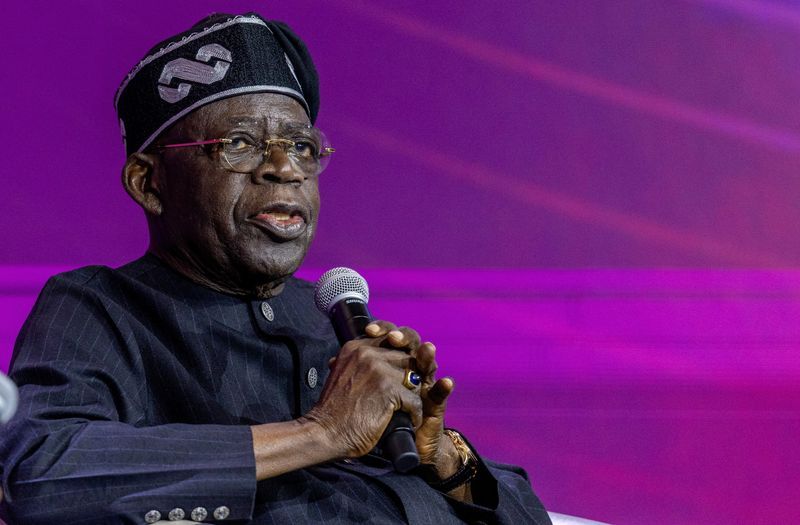
President Bola Tinubu has ordered Nigeria's Federal Competition and Consumer Protection Commission to investigate leading technology companies over suspected anti-competitive behaviour and unauthorised exploitation of journalistic material, marking a significant intervention in how digital platforms operate within Africa's most populous nation. The directive, announced on Monday, responds to formal complaints lodged by the Nigerian Press Organisation, which collectively represents newspaper proprietors, broadcast networks, journalists' unions and digital publishers across the country.
The inquiry will scrutinise the business practices of Meta, Alphabet, X and artificial intelligence platforms currently operating in Nigeria, with particular focus on how these corporations access, distribute and profit from news content created by local media organisations. The investigation represents a turning point for Nigeria's regulatory framework, positioning the competition authority to determine whether global tech giants are complying with local laws protecting intellectual property and fair market competition. This move aligns Nigeria with growing international concern about the relationship between technology companies and news publishers in the digital age.
At the heart of the investigation lie several specific allegations that reflect broader tensions playing out in developed markets. Regulators will examine whether these platforms exercise excessive market dominance, engage in anti-competitive practices that squeeze out smaller competitors, and unlawfully extract or commercialise copyrighted news and broadcast material without compensation to original creators. Particularly significant is the examination of whether journalistic content is being harvested and used to train generative AI systems without proper licensing or payment, a practice that has triggered regulatory responses globally.
The FCCPC stressed that its inquiry carries no presumption of guilt and has committed to giving all implicated parties adequate opportunity to respond to allegations and present their own evidence. This procedural reassurance aims to ensure the investigation meets international standards of fairness and transparency, though it also signals that the regulator is prepared to move beyond preliminary assessment into substantive enforcement action if wrongdoing is established. The tech companies named—Meta, Alphabet and X—have not yet publicly responded to requests for comment regarding the investigation.
Nigeria's regulatory action reflects a pattern emerging across continents where governments and media industries are demanding that technology platforms acknowledge the value of journalistic content within their business models. In South Africa, the country's competition authority achieved a landmark settlement last year whereby Google and YouTube agreed to a media support package valued at 688 million rand, equivalent to approximately $42 million, following a comprehensive market inquiry. This precedent demonstrates that African regulators possess both the authority and the will to extract meaningful concessions from dominant global platforms.
The international regulatory landscape provides instructive examples of how this matter can be resolved. France imposed a €500 million fine against Google in 2021 for conducting inadequate negotiations with news publishers and breaching regulations connected to how AI systems utilise publisher content, establishing a precedent for substantial financial penalties. Australia implemented a mandatory bargaining code requiring platforms and publishers to negotiate compensation, resulting in payment agreements that have redirected revenue toward news organisations. Canada has similarly established frameworks forcing technology companies to negotiate with media outlets, producing concrete funding arrangements for journalism.
For Malaysian observers, Nigeria's investigation carries implications for how Southeast Asian nations might approach the same issues. The region's media ecosystem depends heavily on digital distribution, yet many publishers struggle to monetise content as platforms capture advertising revenue and user attention. Tech companies justify their use of news content as beneficial exposure, but this argument rings hollow for struggling newsrooms that cannot sustain quality journalism on advertising scraps. Nigeria's action suggests that African countries are no longer willing to accept this arrangement unilaterally imposed by foreign corporations.
The investigation also illuminates the particular challenge posed by generative AI, which represents a qualitatively different threat than earlier search engine and social media practices. When AI systems train on journalistic content without permission or compensation, they commodify the professional expertise, reporting effort and editorial judgment that constitute a news organisation's competitive advantage. A system trained on thousands of articles can then generate summary content that serves the same informational function, making original journalism redundant in the eyes of readers and advertisers. This dynamic threatens not only publishers' revenues but their entire business case for employing journalists.
Nigeria's test case will reveal whether African regulators can effectively constrain technology company behaviour in ways that protect local publishers and democratic information ecosystems. A successful investigation could establish precedent for other African nations seeking leverage with platforms, particularly those in West Africa where Nigeria's regulatory action carries significant weight. Conversely, if the investigation stalls or produces only cosmetic commitments, it would signal that even determined national regulators lack sufficient power against globally integrated technology corporations.
The stakes extend beyond commercial disputes between publishers and platforms. Quality journalism requires sustainable business models, and when technology companies systematically capture the value generated by news content without compensation, they undermine the financial foundations supporting newsrooms and investigative reporting. In Nigeria and across Africa, where independent media faces pressure from political restriction and underfunding, allowing platforms to freely extract journalistic content represents a threat to democratic accountability and public information.
The investigation's scope—examining market dominance, anti-competitive conduct, content extraction, and AI training practices—suggests that Nigerian regulators have studied international experience and are prepared to challenge multiple dimensions of platform behaviour simultaneously. This comprehensive approach increases the likelihood that any settlement will address fundamental issues rather than only peripheral concerns. How Nigeria handles this matter will likely influence whether other African governments pursue similar investigations, potentially creating coordinated pressure that technology companies cannot easily dismiss as isolated regional grievances.

