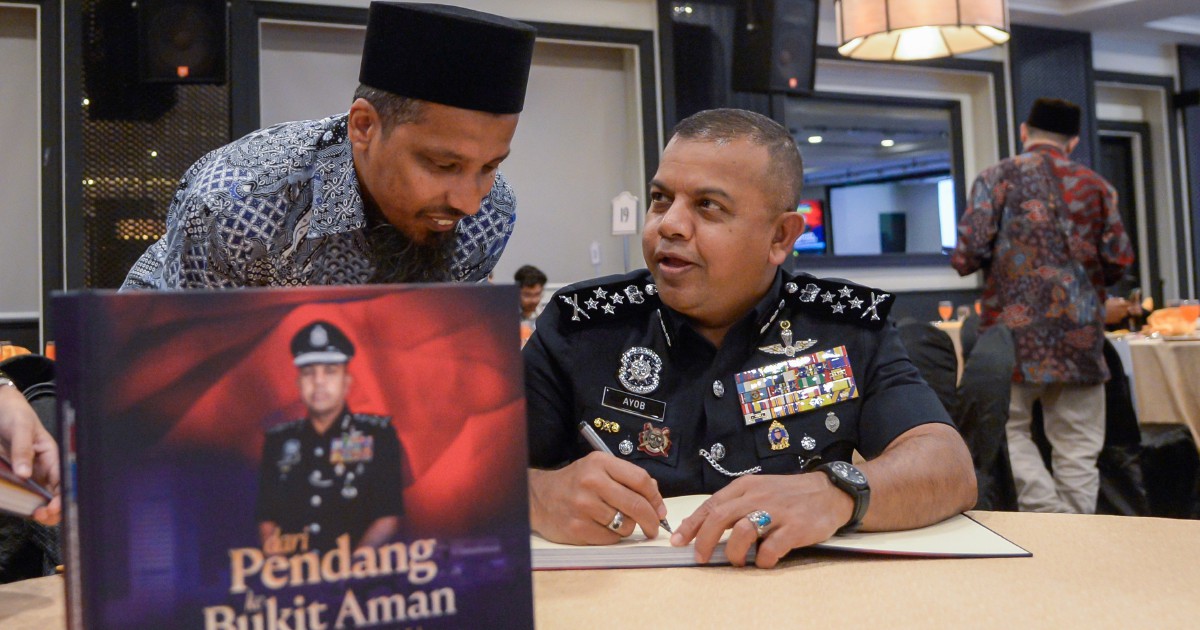
The investigation into what became known as the "Gang Nicky" case stands as one of the most consequential probes ever conducted by the Royal Malaysian Police's headquarters at Bukit Aman, according to Tan Sri Ayob Khan Mydin Pitchay, who served as deputy Inspector-General of Police during a critical period in Malaysia's law enforcement history. The former senior officer's reflection on the complexity and scale of the inquiry underscores the magnitude of resources, investigative expertise, and institutional focus that the police force dedicated to unravelling the criminal network centred around Nicky Liow.
The prominence Ayob Khan assigns to the case reflects broader shifts within Malaysian policing and the law enforcement response to transnational and organised crime during the era when he held senior command. Cases that earn such characterisation from former deputy heads of the nation's police force typically involve elements that transcend conventional criminal activity—whether through their international dimensions, the level of coordination required across multiple police units, or the political and social implications that rippled through public consciousness. The Gang Nicky investigation appears to have possessed several of these qualities, warranting sustained attention from leadership within Bukit Aman itself.
Understanding the historical context proves essential for Malaysian readers assessing law enforcement capacity and effectiveness. During the period when this investigation unfolded, the Royal Malaysian Police was simultaneously navigating operational challenges, modernising investigative techniques, and responding to evolving patterns of criminal enterprise. The willingness of former senior officers to publicly acknowledge the significance of particular cases suggests both professional pride in complex detective work and recognition that certain investigations shaped institutional practice and capability. For those monitoring policing effectiveness in Malaysia, such reflections from retired leadership offer insights into which criminal phenomena absorbed the greatest institutional resources and commanded sustained focus.
The Gang Nicky case, named after the central figure Nicky Liow, appears to have required sustained intelligence work, coordination between different police departments, and possibly liaison with international law enforcement partners. Networks operating under such designations typically involved multiple dimensions—whether drug trafficking, financial crime, human trafficking, or other forms of organised criminal activity that extended beyond single jurisdictions. The regional context matters considerably; Southeast Asia has long grappled with transnational organised crime syndicates that utilise Malaysia's strategic geographic position, commercial infrastructure, and financial systems as operational bases. An investigation significant enough to warrant former deputy IGP commentary likely involved elements affecting regional stability or international law enforcement cooperation.
Ayob Khan's public reflection carries particular weight given the seniority of his position within the police hierarchy. The deputy IGP role places officers at the apex of operational decision-making, responsible for overseeing major investigations, allocating resources across the entire force, and determining investigative strategy for cases of national significance. When such figures characterise a probe as among an organisation's largest, they typically possess comprehensive institutional memory regarding comparative case complexity, investigative duration, resource allocation, and eventual outcomes. This perspective differs substantially from frontline investigator assessments, reflecting instead the grand strategic importance the case held within the broader law enforcement landscape.
For Malaysian readers and regional observers, the significance of the Gang Nicky investigation extends beyond its immediate criminal context. Cases that consume substantial police resources, gain attention from senior leadership, and prompt reflections years after their conclusion often possess implications for understanding organised crime patterns, criminal methodology evolution, and the effectiveness of law enforcement responses. The investigation methodology developed during such major probes frequently influences subsequent police operations, establishing protocols and practices that become embedded within institutional culture. Understanding which cases occupied this status provides windows into how Malaysia's police force adapted to emerging criminal threats during the relevant period.
The timing of Ayob Khan's reflections carries additional relevance. Former senior officials' willingness to discuss significant cases publicly, particularly those involving organised crime networks, typically emerges only after sufficient time has passed, legal proceedings have concluded, and public disclosure poses minimal operational risk. His characterisation of Gang Nicky as "one of Bukit Aman's biggest cases" therefore likely emerges from a settled historical moment, permitting candid assessment without jeopardising ongoing investigations or compromised sources. This context helps explain why such reflections, while potentially appearing routine, actually represent carefully calibrated contributions to public understanding of Malaysian law enforcement history.
For those tracking police capability and institutional development, Ayob Khan's commentary serves as an informal marker identifying which cases merit deeper historical scrutiny. Researchers, policymakers, and observers seeking to understand how Malaysian law enforcement evolved during the relevant period can use such reflections as signposts directing attention toward particularly complex criminal phenomena and institutional responses. The Gang Nicky investigation, thus indexed by former deputy leadership as exceptionally significant, presumably demonstrates Malaysia's capacity to mount sophisticated, sustained investigations against organised criminal networks operating within Malaysian territory. This capacity assessment holds relevance for current and future law enforcement planning, as does understanding which criminal typologies generated the greatest institutional pressure and focus.
The Gang Nicky case's prominence within Ayob Khan's recollections of his career ultimately illuminates both the scale of organised crime challenges Malaysia has faced and the institutional responses mobilised to counter them. That a former deputy IGP considers this investigation significant enough to publicly acknowledge reflects recognition of particular criminal threats, the complexity of dismantling networks operating within Malaysia's jurisdiction, and the coordination demands inherent in pursuing major organised crime probes. For Malaysian and Southeast Asian readers concerned with law enforcement effectiveness, crime prevention strategy, and institutional development, such reflections from senior officers provide valuable context for assessing how Malaysian police capabilities have evolved and which criminal phenomena have demanded the greatest sustained attention from headquarters-level leadership.

