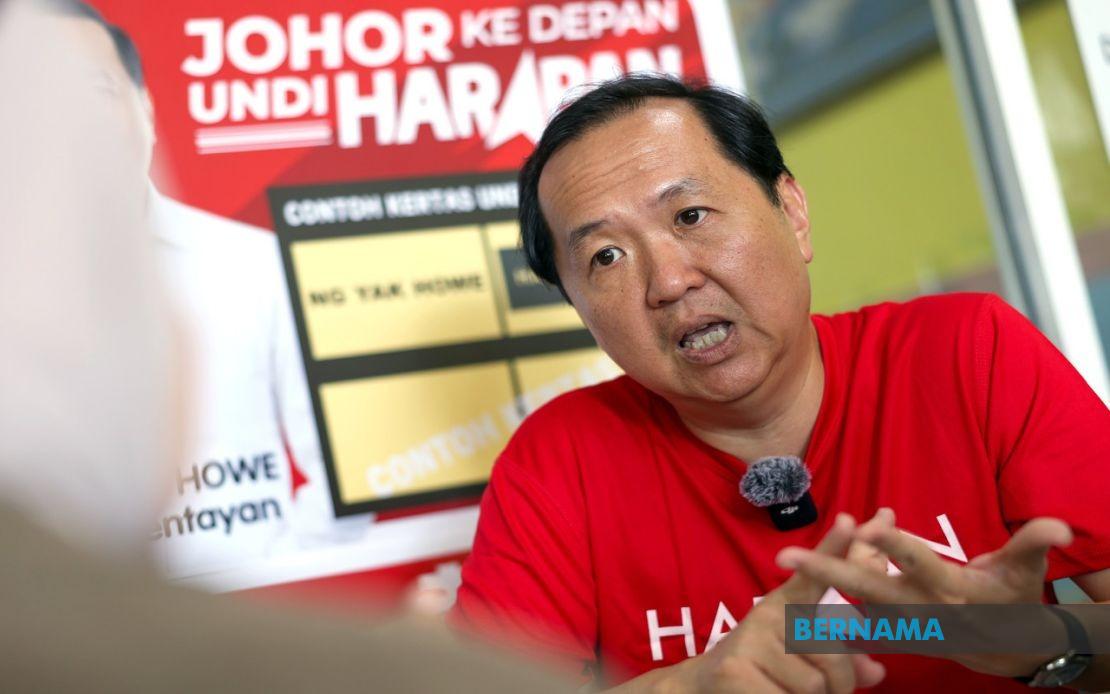
Muar's town centre faces a mounting challenge as residents increasingly relocate to suburban areas, leaving commercial spaces vacant and dimming the area's evening vibrancy. Pakatan Harapan candidate Ng Yak Howe, the incumbent assemblyman for Bentayan, has made reversing this trend a central plank of his campaign as he seeks a third consecutive term. The Bentayan seat covers more than half of Muar town centre, placing Ng in a direct position to influence the area's trajectory heading into the 16th Johor state election scheduled for July 11, with early voting on July 7.
The problem Ng identifies is familiar to many town centres across Malaysia: daytime activity masks underlying weakness. Businesses thrive during working hours as office-goers and shoppers frequent retail establishments, but the area falls noticeably quiet once the sun sets and people retreat to residential neighbourhoods. This pattern reflects broader urbanisation trends where younger families and working professionals prefer suburban comfort to central living, creating a self-reinforcing cycle where reduced evening foot traffic discourages new investment. For a heritage town like Muar, this represents not merely an economic concern but a cultural one, as the erosion of town centre vitality threatens to diminish the community identity and historical significance long associated with the area.
Ng's approach to revitalisation rests on a straightforward premise: bring people back to the town centre through targeted incentives and increased activity. During a recent walkabout engaging traders and residents, he outlined plans combining immediate stimulus measures with longer-term investment in the area's appeal. Working alongside Bakri Member of Parliament Tan Hong Pin, Ng has already implemented cash voucher schemes and lucky draw campaigns designed to incentivise local spending and encourage foot traffic. These initiatives, while modest in scope, represent an acknowledgment that reversing decline requires both psychological momentum and tangible financial benefits to consumers.
The scale of the challenge becomes apparent when examining the commercial vacancy rate. Currently, 18 percent of premises in the town centre remain unoccupied, representing considerable lost economic potential and creating visual indicators of decline that further discourage business investment. Filling these spaces and reactivating them with vibrant commercial or service uses constitutes a necessary step toward restoring the area's attractiveness. This is not simply a matter of commercial real estate economics; vacant shophouses create security concerns, invite vandalism, and signal to potential investors and residents that an area is in decline rather than recovery.
Ng brings particular credentials to this challenge. A trained quality assurance engineer with over a decade of industrial experience before entering full-time politics, he combines technical problem-solving expertise with more than 25 years in the political arena. This background suggests an understanding of systematic approaches to urban challenges, moving beyond rhetoric toward measurable outcomes. His current role as a Johor DAP committee member further embeds him within party structures capable of mobilising resources and attention toward constituency-level initiatives.
The Bentayan seat presents a competitive electoral landscape. With 34,205 registered voters, Ng faces a straight fight against Barisan Nasional candidate Chua Lee Huat. In Johor's traditionally complex political terrain, where urban and suburban voting patterns diverge, the town centre revival agenda may resonate particularly with established merchants and traders rooted in the traditional commercial district. However, suburban voters whose families have already relocated may prioritise different concerns, including infrastructure connecting outlying areas to employment and education centres.
The broader context involves 172 candidates contesting across Johor's 56 state seats, with the election expected to shape state governance for the coming term. Within this competition, localised campaigns addressing specific constituency challenges like Muar's town centre decline become critical differentiators between candidates. Voters in Bentayan are essentially evaluating which representative possesses both the commitment and capacity to address the specific economic pressures affecting their immediate community.
Ng's revival strategy implicitly acknowledges that modern town centres cannot compete with suburban developments on the basis of convenience or scale. Instead, successful revitalisation typically relies on creating distinctive character, cultural attractions, and experiential value that suburban shopping centres cannot replicate. Muar's historical significance, architectural heritage, and established business networks represent untapped assets. Any comprehensive town centre strategy would logically build upon these strengths rather than attempting to recreate suburban functionality in a central location.
The vacancy problem extends beyond lost rental income for property owners. Abandoned or underutilised commercial spaces represent forgone tax revenue for local authorities, diminished employment opportunities for residents, and reduced economic multiplier effects as money circulates within the local community. Revitalisation thus benefits not only merchants and property owners directly, but cascades through the local economy as increased business activity generates wage income and supports ancillary services.
For Malaysian readers following Johor's state election, Ng's Bentayan campaign illustrates how candidates translate macroeconomic trends into localised policy responses. The migration to suburban areas reflects national patterns of urbanisation and changing lifestyle preferences, yet its impact is felt acutely in specific town centres like Muar. How political representatives address these consequences—whether through stimulative spending, regulatory reform, or infrastructure investment—will significantly influence which communities thrive and which fade in coming years.

