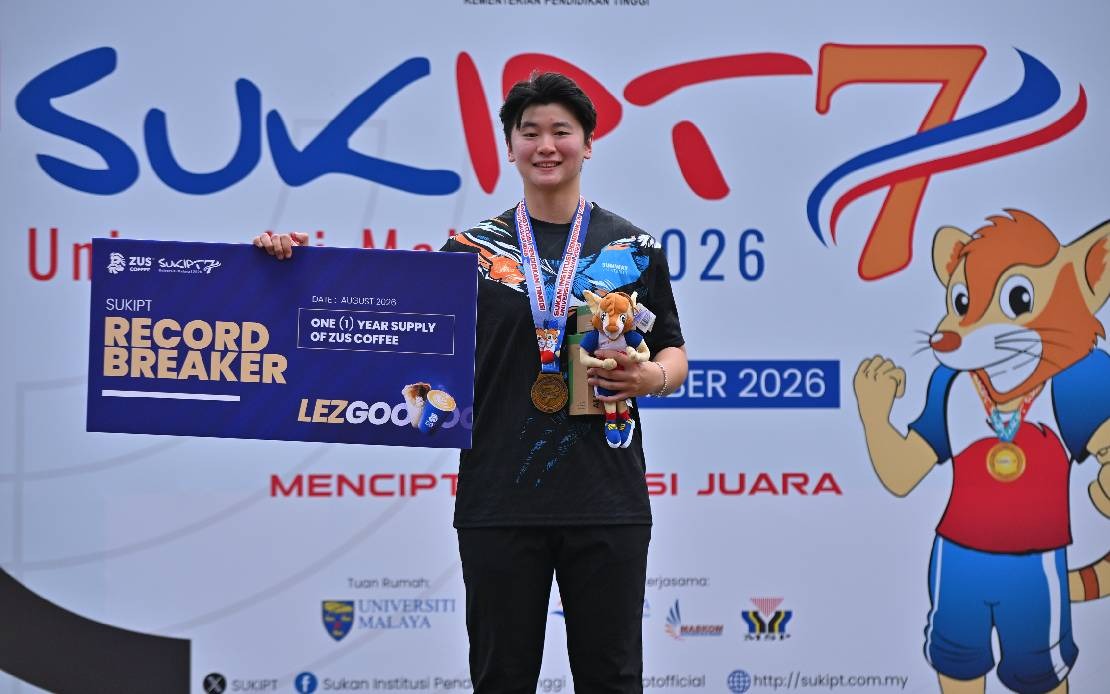
Malaysian javelin thrower Ng Jing Xuan delivered a symbolic gift to Sunway University this National Day, becoming the most successful competitor in the 2026 Higher Education Institutions Sports Games (SUKIPT) after obliterating a decade-old meet record at the UM Arena in Kuala Lumpur. The 22-year-old's commanding throw of 46.92 meters eclipsed the previous mark of 44.41 metres, which had stood unchallenged since the 2016 edition when Nur Fatin Adibah Suharman of Universiti Malaysia Perlis (UniMAP) set it. Her victory proved decisive, with no competitor coming within striking distance of her final result.
Despite the accolade, Jing Xuan's celebration carried a tinge of unfinished business. She had harboured ambitions of reaching her personal national record of 52.17 metres during the competition, a threshold she had come close to during pre-games training sessions. When that breakthrough failed to materialise, she acknowledged the disappointment, though she recognised the significance of still advancing the SUKIPT benchmark. The contrasting emotions reflected the reality facing elite athletes balancing incremental progress against their ultimate ceiling.
The athlete's preparation for SUKIPT had been notably rigorous. Following her participation in the Asian U23 Athletics Championships, Jing Xuan devoted an entire month to intensive conditioning and technical refinement, arriving at the games with elevated expectations. Her training sessions had produced throws that suggested the national record was within grasp, making the morning's outcome particularly frustrating. She attributed some of her sluggish performance to a last-minute schedule adjustment that shifted her event from afternoon to morning competition, disrupting the rhythm and mental preparation she had cultivated.
These logistical challenges underscore a recurring theme in Malaysian university sports: the infrastructure and organisational complexity required to host SUKIPT effectively. As Malaysia's premier inter-varsity sporting carnival, SUKIPT draws competitors from across the country's public and private higher education sector, requiring meticulous coordination across multiple venues and disciplines. When scheduling changes occur, even elite athletes like Jing Xuan experience disruptions that can meaningfully influence outcomes, a consideration that tournament organisers must weigh against operational constraints.
The remainder of the women's javelin competition saw Farisha Athirah Wai of Universiti Pendidikan Sultan Idris (UPSI) secure silver with 36.21 metres, while Tai Yu Tian from Universiti Putra Malaysia (UPM) claimed bronze with 32.74 metres. The substantial gap between first and second place underscores Jing Xuan's technical prowess and experience at the university level, where she has emerged as a dominant force in her discipline.
Jing Xuan's accomplishment carries particular resonance for Malaysian athletics at a critical moment. The nation's track and field programme has worked to elevate standards across multiple disciplines, and female throwers represent an increasingly competitive pool. The precedent she sets—breaking records, competing fearlessly against established benchmarks—helps establish higher expectations within Malaysia's university sports ecosystem. When younger athletes observe competitors like Jing Xuan advancing records at SUKIPT, they internalise the possibility of progression to national and regional levels.
Looking beyond SUKIPT, Jing Xuan has already reset her focus toward two significant competitions on the immediate horizon. The ASEAN University Games scheduled for December represents the next opportunity to test her form against regional peers from neighbouring countries. These games traditionally feature enhanced competition levels compared to domestic university championships, exposing Malaysian athletes to international technical standards and different throwing styles. Success in December would strengthen her candidacy for senior-level representation.
Even more prominently, the upcoming SEA Games loom as the flagship regional competition where Jing Xuan envisions cementing Malaysia's javelin credentials. SEA Games medals carry substantial prestige within Southeast Asia and drive national sporting narrative. For an athlete of Jing Xuan's calibre, capturing gold or a medal-winning performance would substantially elevate her profile domestically while advancing Malaysia's collective athletics standing regionally. The 52.17-metre national record she nearly pursued at SUKIPT suddenly becomes a realistic pathway if she can synthesise technical consistency with competitive intensity.
Her articulation of determination to channel the Merdeka Day spirit into preparation demonstrates the common tendency among Malaysian athletes to frame sporting achievement through a nationalist lens. This connection between individual athletic success and national pride remains potent within Malaysian culture, where representing the country at SEA Games or Commonwealth Games traditionally carries emotional weight beyond the sporting arena itself. Jing Xuan's resolve to pursue regional and international glory reflects this broader understanding that personal progression and national interest align in competitive sport.
The SUKIPT record she set will likely stand for several years unless a similarly talented thrower emerges from Malaysia's university system. Historical precedent suggests that meet records in women's javelin at the university level remain relatively stable; Nur Fatin Adibah Suharman's 2016 record endured for a full decade before Jing Xuan's 2026 breakthrough. This relative stability reflects both the limited pool of elite female javelin throwers in Southeast Asia and the technical difficulty of the discipline, where marginal improvements require substantial training investment and genetic predisposition.
For Sunway University specifically, hosting an athlete who shatters SUKIPT records on National Day amplifies the institution's sporting stature within Malaysia's higher education sector. Universities increasingly compete not merely on academic rankings but on sporting excellence and alumni achievement. Jing Xuan's accomplishment enhances Sunway's recruitment narrative, demonstrating institutional capacity to develop elite athletes capable of breaking national benchmarks.
As Malaysian athletics continues developing depth across throwing disciplines, Jing Xuan's trajectory offers a template. Her willingness to set ambitious targets, tolerate disappointment when falling short of personal records while celebrating incremental progress, and maintain focus on larger international objectives reflects the psychological resilience required for sustained athletic excellence. These qualities, combined with technical proficiency, position her as a potential torchbearer for Malaysian javelin on the regional stage.

