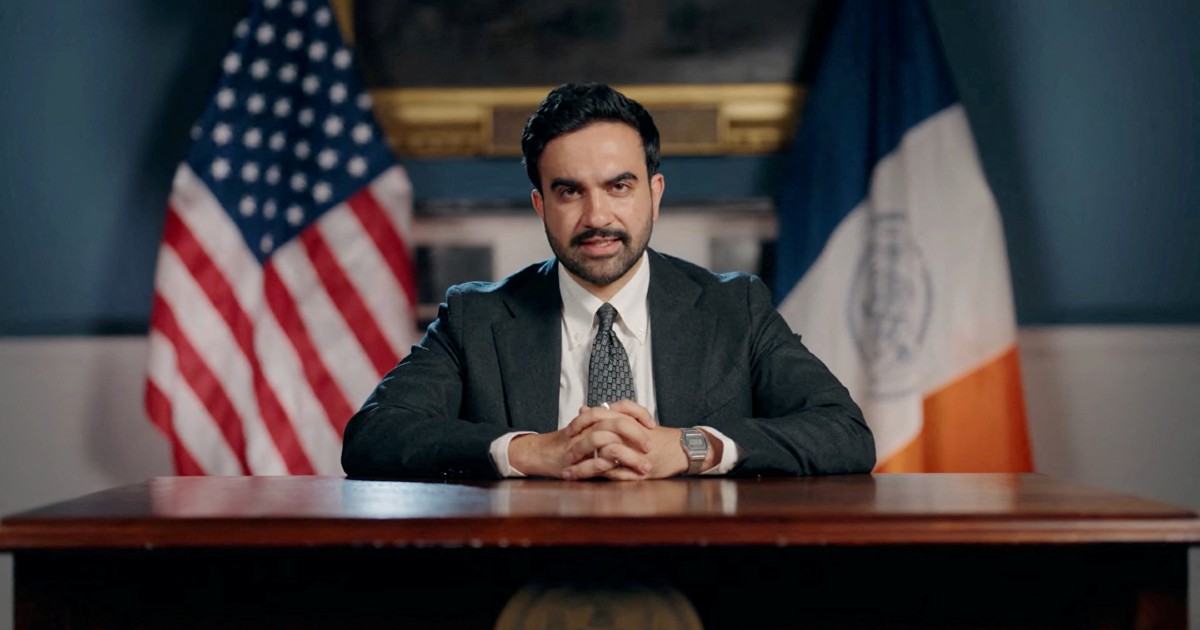
New York Mayor Zohran Mamdani clarified Tuesday that his city does not possess the legal authority to apprehend Israeli Prime Minister Benjamin Netanyahu pursuant to an arrest warrant issued by the International Criminal Court, while simultaneously appealing to federal authorities in Washington to assume responsibility for the matter.
The declaration represents a significant moment in the ongoing diplomatic tension surrounding the ICC's decision to issue arrest warrants for senior Israeli officials. Mamdani's statement underscores the constitutional complexity that arises when international legal mechanisms intersect with American domestic jurisdiction, a critical issue for observers across Southeast Asia who track global governance and the enforcement of international law.
The distinction between municipal and federal authority in the United States is fundamental to understanding why Mamdani felt compelled to make this public statement. As the chief executive of a major American city, the mayor has jurisdiction over local law enforcement agencies that operate within New York's five boroughs, but these bodies cannot unilaterally execute warrants that derive their force from international treaties. Such authority rests exclusively with federal institutions, including the US Department of State, Department of Justice, and federal law enforcement agencies like the FBI.
Mamdani's intervention follows significant international developments. The ICC, based in The Hague and established to prosecute individuals for crimes against humanity and genocide, issued its arrest warrant based on allegations stemming from the conflict in Gaza. This decision has provoked competing reactions globally, with some nations and observers viewing it as essential accountability while others characterise it as overreach.
The position adopted by New York's mayor aligns with the broader stance taken by the United States government. Washington has historically maintained a complex relationship with the ICC, having never ratified the Rome Statute that established the court. This foundational legal distance creates ambiguity regarding how American authorities should handle ICC warrants, particularly when the subject is a leader of Israel, a strategic American ally.
For Malaysian readers and Southeast Asian policymakers, this situation illuminates broader questions about international justice mechanisms and state sovereignty. Many nations in the region maintain their own concerns about how international courts might affect their leaders or citizens, making the Netanyahu case a instructive precedent. The tension between international legal obligations and national autonomy demonstrates why countries in Southeast Asia often approach international court decisions with particular sensitivity.
Mamdani's explicit appeal to federal authorities reflects awareness that any enforcement action at the local level would almost certainly provoke significant constitutional and diplomatic complications. If New York City police were to attempt such an arrest, it would immediately trigger legal challenges, potentially undermine the city's relations with federal authorities, and create a dangerous precedent whereby municipalities could independently interpret international legal obligations.
The political dimension cannot be overlooked. Netanyahu has historically enjoyed substantial support among influential constituencies in New York, including significant portions of the Jewish American and pro-Israel communities. Mamdani's clarification, while technically establishing a legal boundary, may also serve to defuse expectations that the city would take unilateral action that could inflame these sensitive constituencies.
Federal authorities in Washington have similarly avoided taking explicit enforcement measures. The US State Department has not issued statements suggesting that federal law enforcement will pursue Netanyahu's arrest, despite his potential visit to American territory. This apparent inaction reflects the delicate diplomatic balance the United States seeks to maintain. Officials in Washington must weigh their historical alliance with Israel against international legal norms and American credibility with the ICC and other international institutions.
The broader context involves ongoing conflict in Gaza, where tens of thousands have died and humanitarian conditions have deteriorated significantly. The ICC allegations relate to conduct during this conflict. Different nations have responded to the ICC warrant with varying degrees of cooperation, creating a fragmented international response.
Mamdani's statement carries implications for how American cities and federal authorities navigate similar situations in the future. As international courts become increasingly active in issuing arrest warrants for sitting leaders and high officials, questions about enforcement will likely multiply. The precedent being set through the Netanyahu case will influence how future ICC warrants are handled across American jurisdiction.
For Southeast Asian governments and observers monitoring international legal developments, this episode highlights the ongoing tension between national sovereignty and international accountability mechanisms. Countries like Malaysia that participate in international legal frameworks must consider how they would respond to similar situations involving their own leaders or those of neighbouring states, making the American approach instructive.
Ultimately, Mamdani's intervention represents municipal candour about constitutional limitations, but leaves substantive questions unresolved about how the international community will enforce accountability mechanisms when powerful nations decline to participate fully in the institutions that issue them.

