Residents of Kampung Seberang Gajah in Tangkak face imminent relief from chronic internet connectivity problems, with telecommunications authorities moving forward on plans to construct an additional transmission tower serving the locality. The initiative addresses long-standing complaints from the area, where existing network infrastructure has proven inadequate despite the presence of two operational telecommunications towers in nearby locations.
Deputy Communications Minister Teo Nie Ching disclosed during an on-site inspection that the Malaysian Communications and Multimedia Commission (MCMC) has directed telecommunications service providers to establish the new facility. The two existing towers, while geographically proximate, deliver insufficient signal coverage and fail to meet the practical demands of inhabitants across the surrounding region. This gap between infrastructure availability and actual service quality typifies connectivity challenges in many rural Malaysian communities, where terrain and population distribution patterns complicate network planning.
The construction blueprint has progressed beyond preliminary stages, with detailed engineering and site specifications now finalised. However, the project remains dependent on securing formal approval from the local municipal authority before ground-breaking can commence. This permitting requirement, while essential for regulatory compliance, introduces a timing variable that could extend the waiting period for affected residents. The responsible telecommunications operator currently navigates this administrative process, balancing procedural obligations with community expectations for rapid implementation.
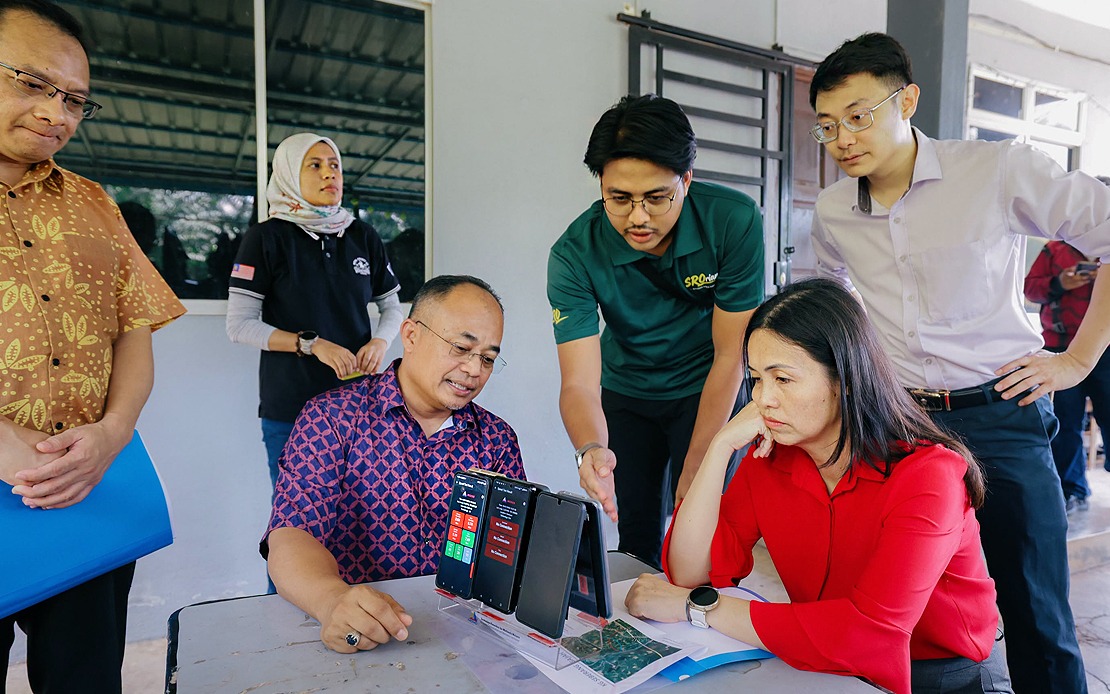
Teo's visit to Kampung Seberang Gajah formed part of a coordinated technical assessment conducted jointly with MCMC personnel and representatives from operating telecommunications companies. The on-site survey evaluated existing service performance metrics and identified specific coverage deficiencies constraining residential broadband quality. Such fact-finding missions provide policymakers with granular intelligence necessary for infrastructure prioritisation decisions, particularly in regions where network expansion projects compete for finite resources and capital allocation.
The deputy minister emphasised the importance of accelerating both the permit approval phase and subsequent construction work, recognising that delays compound community frustration and economic disadvantage. Rural internet access increasingly determines educational opportunity, business competitiveness, and access to digital government services. Kampung Seberang Gajah's situation reflects a broader Malaysian challenge: ensuring digital inclusion reaches communities beyond urban concentrations where commercial incentives for network investment naturally cluster.
Officials present during the inspection included State Affairs Sector Head Bukhari Yahya and MCMC Southern Region Office director Rizal Abd Malek, alongside telecommunications industry representatives. This multi-stakeholder participation signals institutional coordination aimed at removing bureaucratic friction. The inclusion of both federal and state officials underscores the layered governance structure governing telecommunications infrastructure deployment in Malaysia, where federal licensing sits alongside state-level land and building permissions.
The timing of this infrastructure development carries significance for economic connectivity in southern Johor. Improved internet reliability supports remote work arrangements, e-commerce participation, and digital skill acquisition among rural populations. For households and small enterprises in peripheral areas, broadband quality directly influences competitive positioning within the Malaysian economy. The new tower represents recognition that digital divides between urban and rural zones constitute a policy concern meriting active government intervention.
Telecommunications coverage expansion in rural Malaysia faces inherent economic constraints. Network operators must balance service provision objectives against profitability requirements, making remote areas with dispersed populations commercially challenging. MCMC's directive effectively mandates infrastructure investment that market forces alone might not generate, reflecting a policy determination that universal connectivity serves public interest objectives transcending pure commercial calculations. This regulatory approach acknowledges that digital access increasingly functions as essential infrastructure comparable to electricity or water supply.
The Kampung Seberang Gajah project also illustrates how systematic needs assessment drives resource allocation decisions. Rather than deploying towers based on generalised planning models, MCMC conducted direct performance evaluation, identifying specific gaps requiring remediation. This evidence-based methodology enhances confidence that approved projects address genuine deficiencies rather than duplicating existing capacity. For other underserved communities awaiting similar interventions, the Tangkak initiative potentially demonstrates how coordinated federal-state action and private sector cooperation can advance rural digital inclusion objectives.
Looking forward, residents await finalisation of permitting procedures and commencement of construction phases. The pace of implementation will test institutional commitment to bridging rural-urban connectivity disparities. Success in Kampung Seberang Gajah could validate replicable models for addressing similar coverage gaps elsewhere in Malaysia, particularly in Peninsular states where terrain and settlement patterns create comparable challenges. Conversely, protracted delays would compound scepticism about government capacity to translate policy announcements into tangible service improvements within reasonable timeframes.

