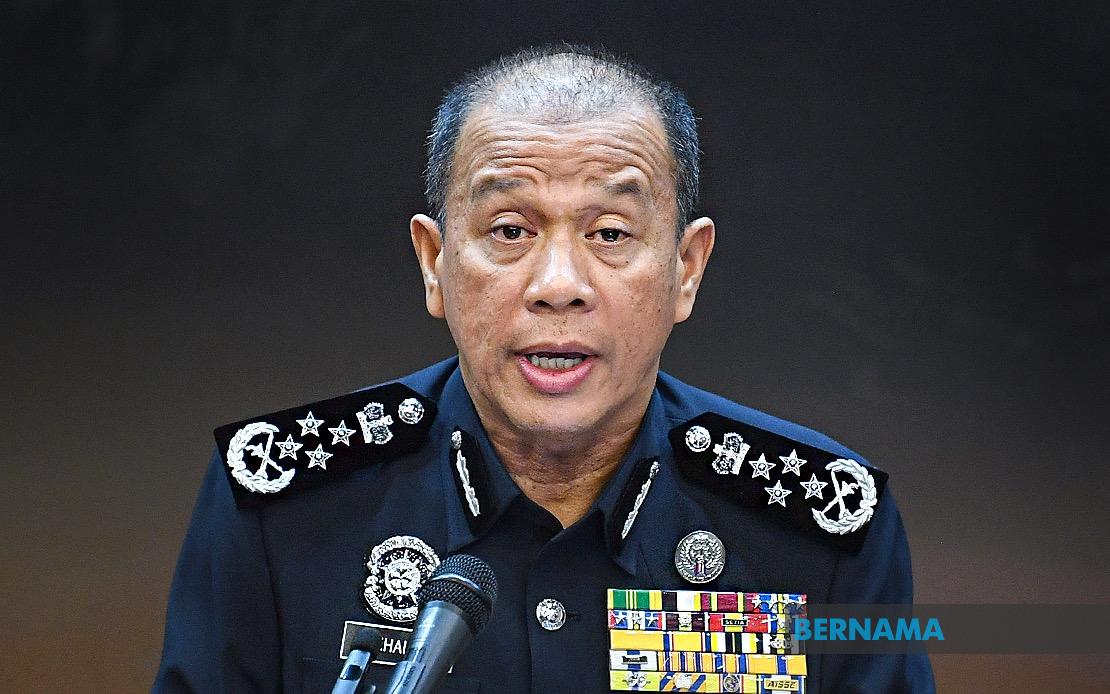
Malaysia's police force is celebrating a government initiative aimed at overhauling how its officers advance through the ranks, with the Inspector-General of Police Tan Sri Mohd Khalid Ismail characterising the move as a watershed moment for personnel motivation and institutional confidence. The announcement, made during a state patriotism programme at Terendak Camp in Kuala Lumpur, signals the administration's determination to reform career pathways within both the Royal Malaysia Police (PDRM) and the Malaysian Armed Forces (MAF) by aligning them more closely with the broader civil service model.
The initiative responds to longstanding frustration among uniformed personnel over promotional bottlenecks that have historically slowed advancement even for qualified officers. Prime Minister Datuk Seri Anwar Ibrahim revealed that the government has approved in principle a mechanism to strip away bureaucratic layers and accelerate the promotion timeline for both the PDRM and MAF. This decision represents a tangible acknowledgment of the government's recognition that career satisfaction and professional development directly influence institutional effectiveness and personnel retention within the security apparatus.
Mohd Khalid's statement underscores the psychological importance of this reform for frontline officers who often work in challenging conditions with limited tangible incentives beyond their base salary. By expediting promotions and creating clearer advancement criteria, the government aims to foster an environment where professional ambition translates into concrete opportunity. The IGP noted that PDRM personnel have long anticipated such reforms, suggesting the change addresses accumulated grievances within the service about career stagnation.
The operational rationale behind streamlining promotions extends beyond morale considerations. A more transparent and efficient advancement system can reduce organisational friction, improve succession planning at all levels, and allow the PDRM to retain experienced officers who might otherwise seek alternative employment. Within the context of Malaysia's competitive labour market, where skilled professionals command premium salaries in the private sector, the police force risks losing trained personnel unless it demonstrates genuine commitment to career progression.
Anwar confirmed that comprehensive details of the new promotion mechanism will be unveiled during the Ambang Merdeka celebrations at Stadium Merdeka on August 30, providing a high-profile platform for announcing what the administration evidently considers a significant policy achievement. This timing suggests the government intends to position the reform as part of its broader agenda of strengthening national institutions and rewarding those in public service.
Mohd Khalid has pledged full PDRM cooperation during the implementation phase, a critical assurance given that police bureaucracy must seamlessly absorb and execute the new system across its nationwide structure. The force's readiness to collaborate indicates confidence that the reform aligns with institutional values and operational realities. Implementation across a decentralised force with thousands of personnel will require careful coordination between federal police headquarters and state commands.
The connection between career advancement and institutional integrity is central to the IGP's framing. Mohd Khalid argued that improved career pathways will strengthen officer commitment to professional standards and ethical conduct. This logic assumes that personnel who feel valued and see genuine opportunity for advancement develop stronger institutional loyalty and less susceptibility to corruption. Whether the promotion reform alone can meaningfully improve integrity metrics remains uncertain, but it contributes to a broader environment that either encourages or discourages ethical conduct.
For Malaysia's policing environment, this development carries implications beyond personnel satisfaction. Public confidence in the PDRM has fluctuated over recent years amid concerns about corruption, accountability, and operational effectiveness. When officers perceive unfair or opaque promotion practices, it can erode morale and indirectly affect service quality. A more merit-based and transparent system potentially addresses these perceptions, though tangible delivery matters more than policy announcements.
Regionally, Malaysia's approach to police reform occurs within a broader Southeast Asian context where several nations grapple with similar institutional challenges. Thailand, Indonesia, and the Philippines have all undertaken police reforms addressing promotion equity and transparency. Malaysia's willingness to tackle these issues places it within an evolving regional trend acknowledging that modern policing requires professional development systems competitive with private and international opportunities.
The alignment of PDRM and MAF promotion systems with the broader civil service framework represents a significant institutional harmonisation effort. Rather than maintaining separate advancement pathways, the government has decided that security forces personnel should progress through mechanisms more closely resembling those in non-security ministries and agencies. This approach may enhance inter-agency mobility and create consistent standards for advancement, though it requires careful calibration to account for the distinct operational demands of policing and military service.
Implementation success will depend on whether the announced mechanism genuinely reduces bureaucratic delay or merely reshuffles administrative layers. Officers and observers will scrutinise whether the August 30 announcement delivers concrete timelines for promotion decisions, transparent criteria for advancement, and meaningful opportunities for career progression at all ranks. If the new system merely replaces one form of bureaucracy with another, scepticism may overshadow any initial morale benefit.
The government's decision to prioritise security force personnel sends a signal about its institutional priorities and recognition that police and military effectiveness underpins broader governance objectives. Whether this gesture translates into sustained institutional reform and genuine career satisfaction will ultimately determine whether the initiative achieves its stated objective of strengthening professionalism and public safety service delivery across Malaysia.

