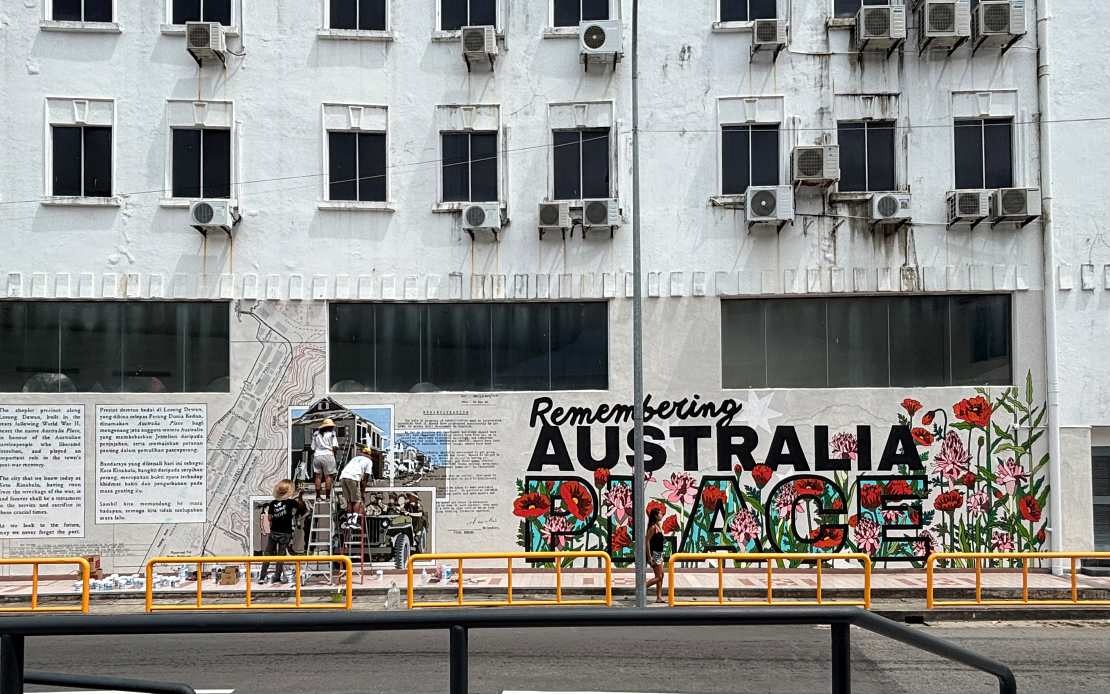
A vibrant new mural has been unveiled in Kota Kinabalu at the site informally known as 'Australia Place', serving as a public testament to the deep and enduring bonds that have connected Sabah and Australia across generations. The artwork, titled 'Remembering Australia Place', was installed on the Wisma Intiutama building and unveiled on Friday, coinciding with the eve of Sandakan Day, the solemn commemoration of shared wartime experiences that fundamentally shaped the relationship between the two regions.
The mural project carries particular significance beyond its artistic merit, as it captures narratives of human connection that have woven together the fabric of Australia-Malaysia relations over many decades. Australian High Commissioner to Malaysia Danielle Heinecke emphasised that the artwork embodies far more than historical nostalgia—it represents the ongoing partnership and mutual respect that continues to evolve between the nations. In her statement, she highlighted how the mural tells stories of individuals whose lives have bridged the two countries, reinforcing bonds that remain central to contemporary bilateral engagement and cooperation.
The creative vision behind the mural came from Pillars of Sabah, a local community arts organisation that employed innovative storytelling techniques to visually represent shared values of friendship, resilience, and collaborative partnership. Rather than presenting history as a static record, the artwork uses colour and narrative to illustrate how cooperation and people-to-people connections have formed the bedrock of the Australia-Malaysia relationship. This approach transforms 'Australia Place' from merely a geographical location into a cultural landmark that speaks to both past achievements and present-day collaboration.
Central to the project's emotional resonance is the personal background of Jared Abdul Rahman, co-founder of Pillars of Sabah, whose own heritage embodies the Australia-Sabah connection. Born to a Sabahan father and Tasmanian mother who met while the father pursued education in Australia under the Colombo Plan, Jared represents a living bridge between the two nations. His involvement in creating this mural therefore transcends professional commission, becoming instead a deeply personal expression of dual cultural identity and familial legacy connected to the educational and professional exchanges that have long characterised the bilateral relationship.
The Colombo Plan, which facilitated Jared's father's studies in Australia, represents a crucial historical dimension of Southeast Asian-Australian relations that remains underappreciated in contemporary discourse. This developmental cooperation scheme brought hundreds of Malaysian and regional students to Australian universities throughout the post-war decades, establishing networks of alumni who returned home as ambassadors of cross-cultural understanding and professional expertise. Such educational exchanges have created multiple generations of Malaysians with direct personal experience of Australian institutions and values, generating grassroots goodwill that transcends official diplomacy.
The launch event itself demonstrated the breadth of stakeholder engagement surrounding this initiative. Kota Kinabalu Mayor Datuk Seri Sabin Samitah joined High Commissioner Heinecke in unveiling the artwork, while the gathering attracted parliamentarians, community leaders, and university alumni—a cross-section indicating the mural's resonance across multiple segments of Sabahan society. This inclusive attendance pattern underscores how Australia-Malaysia relations extend beyond government-to-government interaction into networks of civic participation and intellectual exchange.
Particularly noteworthy was the involvement of students and teachers from Sekolah Menengah Kebangsaan Sanzac in the mural's creation process. By engaging younger generations in reflecting upon the historical partnership with Australia, the project ensures that awareness of these connections transmits across cohorts and does not fade as older generations who experienced earlier phases of the relationship eventually pass. Educational institutions represent crucial channels for sustaining bilateral understanding, and their active participation in commemorative projects strengthens institutional memory within communities.
The timing of the mural unveiling on the eve of Sandakan Day carries profound symbolic weight, as it connects contemporary cultural celebration to the historical foundations that lend gravity and authenticity to Australia-Malaysia relations. Sandakan Day commemorates the Sandakan Death Marches of World War II, during which 2,434 prisoners of war lost their lives in brutal circumstances. Beyond this tragic toll, the day also honours Sabahans who displayed extraordinary courage and compassion by risking their own safety to assist these prisoners and facilitate escape attempts. This aspect of shared suffering and sacrifice creates a moral foundation for the partnership that transcends ordinary diplomatic relations.
The historical context of the Sandakan Death Marches cannot be separated from contemporary Australia-Malaysia ties. The marches represented an extreme test of human character—Australian soldiers endured unimaginable hardship while Sabahans displayed moral courage in assisting them despite grave personal risk. This shared experience of adversity and mutual support established a template for the relationship that subsequent decades of cooperation have reinforced. When contemporary initiatives like the 'Remembering Australia Place' mural are unveiled on Sandakan Day's eve, they implicitly acknowledge that the partnership rests upon foundations of genuine human solidarity forged in the crucible of wartime crisis.
For Malaysian readers, the mural's significance extends beyond bilateral relations to illuminate broader patterns of Southeast Asian engagement with Australia. Malaysia occupies a pivotal position in Southeast Asian geopolitics, and its multifaceted relationship with Australia—encompassing education, trade, security cooperation, and cultural exchange—serves as a model for regional engagement. Sabah's specific focus on celebrating this relationship through public art demonstrates how local communities can actively participate in shaping international relations narratives beyond the confines of capital cities and formal institutions.
The choice to commemorate these connections through public mural art rather than conventional monuments reflects contemporary approaches to heritage preservation and historical remembrance. Street art and community-based public installations possess democratic characteristics that traditional memorials sometimes lack, inviting casual passersby to engage with historical narratives without requiring deliberate pilgrimage to official sites. 'Australia Place' itself, having retained its informal designation for decades despite no official status, represents organic community naming—and the new mural formalises and celebrates this locally-generated geographical identity.
Looking forward, the mural establishes a visual anchor for future commemorative activities and community gatherings focused on Australia-Malaysia relations. By transforming a previously unnamed site into a officially recognised cultural landmark with artistic significance, the project creates infrastructure for ongoing engagement and reflection. Future generations of students, community members, and visitors will encounter this artwork and be prompted to inquire into the historical relationships it depicts, thereby perpetuating awareness of shared heritage.
The 'Remembering Australia Place' mural ultimately represents more than artistic expression or historical documentation—it embodies a deliberate choice by both Australian and Malaysian communities to sustain and celebrate a partnership rooted in authentic human connection. Through the collaborative efforts of local artists, community members, educational institutions, and diplomatic representatives, the artwork transforms a public space into a testament to the enduring value of cross-cultural friendship and mutual respect in navigating complex international relationships.

