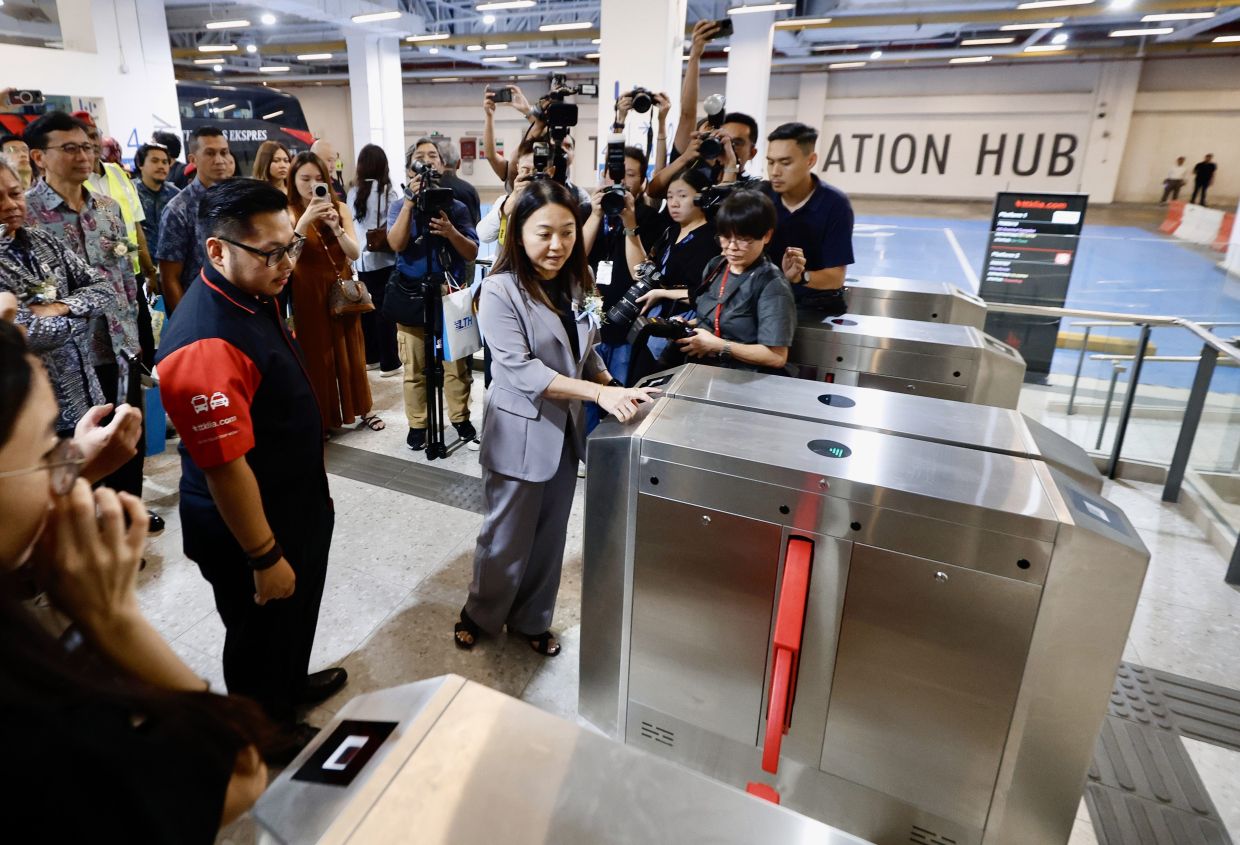
Kuala Lumpur's congested transport landscape has gained a significant new facility with the official launch of the LaLaport Transportation Hub at Bukit Bintang City Centre, positioned as a cornerstone of the capital's wider mobility strategy. The multimodal facility, which commenced phased operations in February and was formally inaugurated on July 16, brings together approximately 30 licensed bus operators under a single integrated platform, marking an ambitious attempt to streamline intercity and express bus services in Malaysia's most densely trafficked urban corridor.
The hub represents a deliberate shift toward consolidating fragmented transport operations that have historically scattered throughout the city. Located strategically within the mall's East Atrium at Level LG1, the facility occupies a purpose-designed space with 11 dedicated bus bays, reflecting careful planning to eliminate the previous chaos of competing bus terminals across different locations. This architectural integration places the transport hub directly adjacent to the city's existing mass transit infrastructure, specifically the Hang Tuah interchange, which serves as a nexus point for LRT and Monorail networks. The deliberate connectivity between these systems, facilitated by a sheltered pedestrian walkway, addresses a longstanding frustration for commuters navigating between different transport modes in Malaysia's tropical climate.
Infrastructure minister Hannah Yeoh, speaking during the launch ceremony, underscored the facility's role within broader urban mobility objectives. She emphasized that the hub provides express bus passengers with designated, weather-protected boarding and alighting areas, eliminating the informal street-side pickups that have previously characterized bus services in Malaysian cities. Her remarks reflected government acknowledgment that unstructured transport operations contribute significantly to traffic congestion and poor passenger experience. The hub's design incorporates modern amenities including air-conditioned waiting lounges, ticketing counters, automated self-service machines, and real-time passenger information displays, features that distinguish it from conventional bus terminals in the region.
Current projections estimate the facility will handle approximately 3,000 passengers daily during its initial operational phase, with structural and operational capacity to accommodate 10,000 daily movements. This threefold expansion potential reflects optimistic planning based on underlying demand patterns visible in Kuala Lumpur's transport ecosystem. According to data compiled by Kuala Lumpur City Hall, the capital experiences an average daily influx of 1.2 million vehicles, while approximately 5.5 million individual journeys occur into and out of the city daily. These staggering figures contextualize why transport infrastructure investment has become increasingly critical for Malaysia's largest metropolitan area, where vehicular congestion has become economically disruptive and environmentally problematic.
The regulatory framework governing the hub's operations falls under the Land Public Transport Agency, which has licensed all participating operators and maintains oversight of service standards. This licensing requirement distinguishes the hub from unregulated informal bus operations that persist in Malaysian cities, introducing accountability mechanisms that should theoretically improve safety and service reliability. The phased launch strategy, beginning in February rather than a single grand opening, allowed operators and management to resolve operational challenges incrementally before full commercialization. This pragmatic approach has become increasingly common in Malaysian infrastructure projects, recognizing that new integrated systems often encounter unforeseen coordination difficulties during initial rollout.
Beyond traditional intercity bus services, the hub functions as a comprehensive mobility platform encompassing multiple transport categories. Shuttle van services connect passengers directly to KL International Airport Terminals 1 and 2, capturing significant market demand from business and leisure travelers who previously relied on fragmented airport transfer options. The facility also incorporates demand-responsive transport services, a flexible mode that represents emerging mobility concepts gaining traction across Southeast Asia. Dedicated zones for taxis and e-hailing vehicle pickups acknowledge the important role that these services play within broader transport ecosystems, rather than viewing them as competitors to be excluded. This integrated approach contrasts with some transport planning initiatives that attempt to eliminate private vehicle use entirely, instead recognizing that multimodal integration often produces superior outcomes for passenger convenience.
The Bukit Bintang location carries particular significance for Malaysia's transport architecture. The commercial precinct has historically functioned as a major employment and retail destination, concentrating significant passenger demand. Situating the transport hub within a major shopping mall provides passengers with incidental benefits—access to retail and dining facilities while waiting for connections—that transform what might otherwise be an unpleasant transit experience. This integration of transport infrastructure with commercial properties remains relatively innovative in Malaysian contexts, where transport terminals have traditionally occupied purpose-built but isolated facilities disconnected from retail and hospitality ecosystems.
The hub's emergence reflects acknowledgment that Malaysia's rapid urbanization has outpaced traditional transport planning frameworks. Kuala Lumpur's development as a regional financial center and ASEAN hub has generated passenger demand that overwhelmed existing bus terminal infrastructure. The proliferation of informal bus stops and the associated congestion at street level have created public safety concerns while degrading urban amenities. By consolidating operations within a modern, regulated facility, authorities aim to transition from informal, street-based transport to structured, professional operations that meet contemporary service expectations.
However, the facility's success will ultimately depend on whether the 30 participating operators maintain service quality and whether passenger volumes justify the infrastructure investment. Malaysian transport history includes examples where ambitious facilities failed to achieve projected usage levels, particularly when fare structures or service frequencies proved uncompetitive relative to alternative travel modes. The hub's integration with mass transit networks partially mitigates this risk by offering seamless connectivity, but competition from private vehicle use and e-hailing services remains formidable. Monitoring the hub's performance over subsequent months will provide insights into whether integrated transport facilities can effectively redirect passenger behavior in Southeast Asian cities where automotive ownership remains aspirational and private vehicle use remains culturally dominant.

