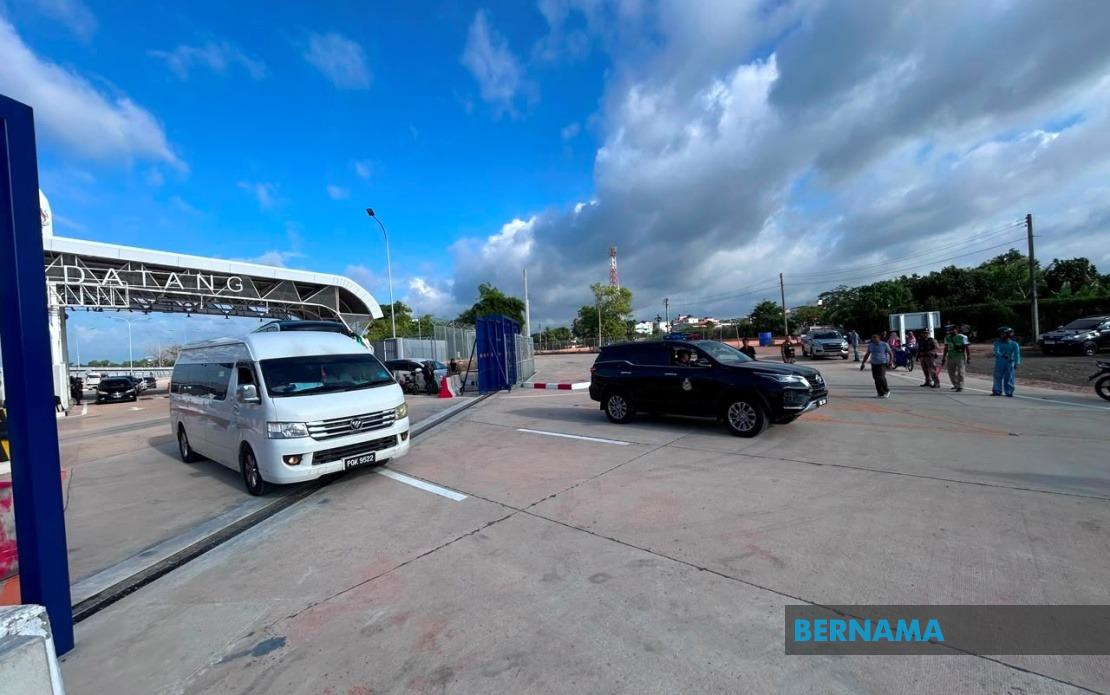
The anticipated new road corridor linking Bukit Kayu Hitam's Immigration, Customs, Quarantine and Security complex in Kedah to Thailand's Sadao Customs, Immigration and Quarantine facility officially commenced operations on July 11, welcoming travellers from 6 am. The infrastructure initiative marks a significant milestone in bilateral cooperation, designed to enhance the efficiency of one of Southeast Asia's busiest land borders while reducing the bottlenecks that have plagued travellers during peak seasons.
Prime Minister Datuk Seri Anwar Ibrahim and Thai counterpart Anutin Charnvirakul presided over the official inauguration ceremony the previous day, underscoring the strategic importance both governments attach to facilitating seamless movement across their shared frontier. The project emerged from recognition that the traditional crossing points, particularly during weekends and public holidays, have frequently reached saturation, creating delays that impact both leisure travellers and commercial operators dependent on timely border passages.
Immediate observations from early users suggested the infrastructure was performing as intended, with traffic flowing smoothly along the newly opened alignment. The engineering design incorporates critical improvements that address persistent complaints about the previous arrangement, most notably the segregation of heavy commercial vehicles from light passenger transport. This systematic separation has long been identified as essential for managing congestion, yet the original infrastructure failed to accommodate this principle effectively.
Mohd Faizal Ahmad, a 42-year-old motorist from Penang, articulated the perspective of regular leisure travellers, emphasising that the new corridor represents a substantial improvement over arrangements that previously became gridlocked during school holiday periods. His assessment reflected broader user sentiment that the revised route would meaningfully reduce transit times, particularly for Malaysian citizens undertaking weekend trips to popular Thai destinations. Such improvements carry economic significance beyond mere convenience, as shortened journey times encourage discretionary spending in neighbouring markets and support tourism sectors on both sides of the border.
Commercial drivers operating articulated lorries provided technical insights into how the infrastructure redesign addresses operational realities of freight movement. Wan Muhammad Shahid Wan Mohd Desa, a 28-year-old driver, noted that the old arrangement forced heavy vehicles to merge with passenger traffic during the Sadao checkpoint entry sequence, creating compounding delays as different vehicle categories competed for limited lane capacity. The new design allocates dedicated pathways for heavy commercial transport, allowing drivers to process through customs procedures without the cascading congestion that previously affected both incoming and outgoing flows.
The expansion and modernisation of the Sadao facility itself constitutes a parallel improvement supporting the corridor's effectiveness. Thai national Mat Li Daman, 59, who crosses the border regularly, praised the enhanced physical infrastructure at the new complex, particularly the spacious configuration that accommodates documentation and vehicle declaration procedures without the cramped conditions that characterised older checkpoint designs. Such facility improvements directly impact user experience and operational capacity, enabling checkpoint staff to process transactions more efficiently while providing travellers with less stressful processing environments.
The bilateral project reflects growing recognition that border infrastructure inadequacy creates economic friction extending far beyond inconvenience for individual travellers. Congestion at major crossing points dampens cross-border commerce by introducing unpredictability into supply chains and increasing transaction costs for legitimate trade. Malaysian and Thai businesses engaged in regional manufacturing and distribution networks have long advocated for improved border efficiency, as unnecessary delays at checkpoints directly translate to higher operational expenses that ultimately burden consumers throughout Southeast Asia.
Tourism represents another sector benefiting from the corridor's implementation. Both nations cultivate significant tourism industries, and reduced travel friction between them supports growth in visitor flows. Malaysians exploring Thailand's culture, cuisine, and heritage destinations, coupled with Thai nationals discovering Malaysia's diverse attractions, generate employment and economic activity in peripheral communities near border regions. By lowering the friction cost of cross-border movement, the infrastructure encourages spontaneous and repeat travel that might otherwise be deterred by lengthy queuing experiences.
The corridor's strategic timing warrants consideration within the context of broader ASEAN integration objectives. As regional bodies pursue increased interconnectedness through initiatives like the ASEAN Economic Community, physical infrastructure supporting friction-free movement becomes increasingly central to realising free flow of goods and people. Malaysia, as a regional economic hub with extensive cross-border linkages throughout Southeast Asia, benefits particularly from such improvements, as they strengthen its position as a facilitating node within regional supply chains and tourism networks.
Operational challenges inherent in managing any major border crossing will undoubtedly emerge as traffic volumes increase and seasonal peaks return. Both nations' authorities will need to monitor congestion patterns, optimise checkpoint resource allocation, and potentially implement dynamic traffic management strategies to sustain performance levels observed during the initial opening period. Continued cooperation between Malaysian and Thai authorities in this domain sets important precedent for future bilateral infrastructure initiatives.
The opening demonstrates the potential for collaborative infrastructure development to address shared cross-border challenges. Similar congestion problems persist at other Malaysia-Thailand crossings and throughout Southeast Asia's network of land borders. Success at Bukit Kayu Hitam-Sadao could encourage replication at other critical junctures, multiplying benefits throughout the region. For Malaysian travellers and traders, this corridor represents an immediate quality-of-life improvement and a practical manifestation of the regional cooperation that underpins modern Southeast Asian development.

