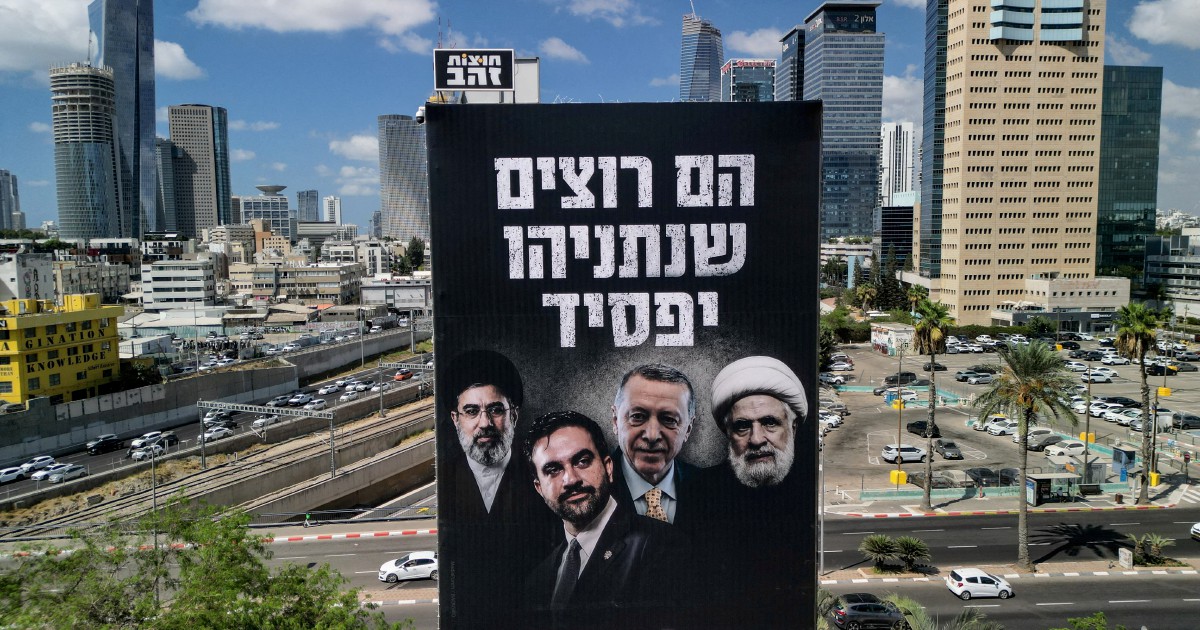
Likud party members gathered in Tel Aviv on Monday to vote on their slate of candidates for Israel's October 27 general election, marking a critical moment for Prime Minister Benjamin Netanyahu's political future as his right-wing coalition confronts an increasingly competitive electoral environment. The internal party selection process, while routine in Israeli politics, carried unusual significance this cycle given the precarious position Netanyahu's government now occupies following months of political turbulence and shifting public sentiment.
The timing of Likud's candidate selection underscores the intensifying pressure on Netanyahu's administration. Recent opinion polling has consistently demonstrated a narrowing gap between the government coalition and opposition blocs, suggesting that the electoral margin once considered safely in Netanyahu's favour has deteriorated substantially. This shift reflects accumulated frustration over economic management, judicial reforms, and broader governance concerns that have gradually eroded public confidence in the current administration.
Netanyahu's political standing has been complicated by multiple concurrent challenges. His judicial reform agenda has proven deeply divisive, fracturing the consensus necessary for stable coalition governance. Simultaneously, economic pressures including inflation and cost-of-living concerns have resonated with ordinary Israeli voters who question the government's economic competence. These factors, compounded by longstanding questions regarding Netanyahu's personal legal situation, have created an unusually fluid political landscape heading into this election cycle.
The internal Likud voting mechanism itself reflects the party's democratic traditions, though Netanyahu's historical control over candidate selection has often minimised genuine competition within the party ranks. This year's process therefore carries heightened symbolic weight, potentially signalling whether grassroots members remain solidly behind their leader or whether cracks have emerged within the party's traditional support base. Any significant deviations from Netanyahu's preferred candidate order could be interpreted as expressions of internal dissent.
Likud's role as Israel's dominant right-wing party means its electoral performance will substantially determine the overall composition of the next Knesset and the ideological character of Israel's governing coalition. The party has traditionally anchored the right-wing bloc, and weakness in its vote share could cascade through the broader coalition framework. Smaller right-wing parties that typically depend on Likud's strength for their own parliamentary viability could face additional electoral headwinds if Likud momentum falters.
The opposition has capitalised on these dynamics by projecting unity and presenting themselves as a viable alternative government. Centrist and left-leaning parties have worked to consolidate their voter bases, sensing an unprecedented opportunity to displace Netanyahu after his prolonged tenure. This opposition coordination represents a significant shift from previous electoral cycles where the Israeli political right typically enjoyed structural advantages in voter distribution and coalition mathematics.
For Malaysian observers and other Southeast Asian readers monitoring Israeli politics, this election cycle demonstrates the vulnerability of even entrenched leaders when institutional pressures and public discontent accumulate simultaneously. The parallels with regional contexts where long-serving administrations have faced electoral recalibration offer instructive lessons about political dynamics in democracies where incumbency advantages can deteriorate rapidly when underlying conditions shift.
The October 27 election will ultimately determine whether Netanyahu can sustain his position through renewed electoral endorsement or whether Israeli voters will mandate a government transition. The Likud candidate selection represents only the opening phase of what promises to be an intensely competitive campaign. Party members' choices on Monday will shape the parliamentary representation from Likud in the next Knesset, influencing both the party's internal power dynamics and its ultimate electoral positioning.
Netanyahu's ability to reconstruct a governing coalition following the October election will depend not only on Likud's overall vote share but also on the willingness of smaller coalition partners to negotiate with him. Recent political turbulence has strained some of these traditional alliance relationships, introducing additional uncertainty into post-election coalition calculations. The candidate selection process therefore functions as an important indicator of party confidence heading into what promises to be a consequential electoral contest for Israeli politics.

