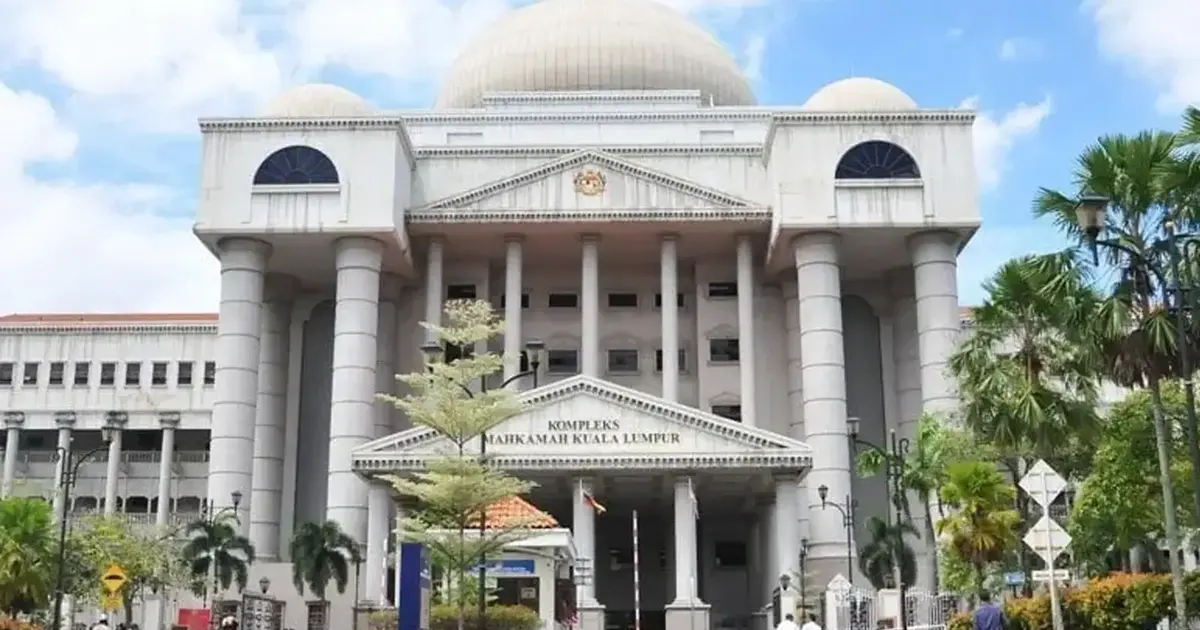
In a significant development within an ongoing investigation into corporate dealings, Aliza Abd Malek, a director at Nepturis Sdn Bhd, has testified that she lacks knowledge of whether former Prime Minister Muhyiddin Yassin was aware of the company's ownership structure. The statement raises questions about the nature of relationships between political figures and private enterprises during the period when Muhyiddin held office.
The testimony centres on allegations that Nepturis may have leveraged connections to secure government projects. Such concerns reflect broader scrutiny in Malaysia regarding potential conflicts of interest and the role of corporate entities in accessing state resources. The case underscores the importance of transparency in government contracting and the need for robust oversight mechanisms to prevent preferential treatment based on political proximity.
Aliza's assertion that she cannot speak to Muhyiddin's knowledge of Nepturis's structure is noteworthy given the high-profile nature of the investigation. In Malaysia's political landscape, where questions about corporate-political nexuses have gained prominence, the clarity of ownership arrangements and decision-making transparency within companies bidding for government work remains contentious. Her limited knowledge claim potentially shifts responsibility or suggests compartmentalisation within business operations.
The Nepturis case emerges amid sustained public concern about how government contracts are awarded and whether competition remains fair and merit-based. Malaysian observers have consistently raised concerns about whether well-connected firms gain advantages in procurement processes. While Aliza's testimony suggests limited personal knowledge, the broader implications extend to systemic questions about corporate governance and political influence in contract allocation.
Muhyiddin served as Prime Minister from March 2020 to August 2021, a period encompassing significant economic disruption from the COVID-19 pandemic. During this timeframe, substantial government spending on pandemic relief, healthcare infrastructure, and economic stimulus programmes created substantial contracting opportunities. The timing of Nepturis's activities during or proximate to this period lends contextual weight to investigations into whether the company benefited from preferential positioning.
The defence presented by Aliza Abd Malek—that she cannot attest to another person's knowledge—represents a common evidentiary challenge in corporate investigations. Such claims complicate efforts to establish intent or awareness among key figures. In Malaysian legal proceedings, determining what high-level officials knew about subsidiary arrangements or business structures often relies on documentary evidence, communications records, or testimony from multiple witnesses, making singular denials of limited efficacy.
For Malaysian business and political observers, the Nepturis matter carries significance beyond the immediate parties involved. It touches fundamental questions about the accountability mechanisms governing how state resources flow to private enterprise. The investigation's trajectory will likely influence broader discussions about strengthening procurement transparency, enhancing conflict-of-interest declarations, and establishing clearer firewalls between political office-holders and commercial beneficiaries.
The case also reflects a pattern of heightened scrutiny following Malaysia's political transitions. The 2020-2021 period witnessed considerable turbulence in the nation's political landscape, and subsequent investigations into deals struck during that era have become increasingly common. Such retrospective examinations, while sometimes politically charged, serve important functions in illuminating whether institutional safeguards adequately protected public interests during periods of political flux.
Aliza's limited knowledge claim does not necessarily exonerate any party or settle substantive questions about impropriety. Rather, it highlights the investigative challenge of establishing knowledge and intent in multi-layered corporate structures. Authorities pursuing such investigations must typically construct broader evidential narratives drawing from financial records, correspondence, witness testimony, and circumstantial evidence—rarely from single-source admissions.
For Malaysian readers monitoring governance standards, the Nepturis investigation underscores why strengthening institutional independence and transparency mechanisms remains vital. Enhanced requirements for beneficial ownership disclosure, stricter lobbying registration standards, and more rigorous procurement auditing could reduce opportunities for such arrangements to develop undetected. Southeast Asian nations, including Malaysia, have made strides in this direction, though enforcement remains inconsistent.
The investigation's progression will likely generate further testimony and documentation reviews. Subsequent revelations may establish clearer connections or conversely, demonstrate that Nepturis operated without direct political manipulation. Either outcome holds value for public understanding of corporate-political relationships during the Muhyiddin administration. The case serves as a ongoing reminder that transparency in government contracting remains essential to maintaining public confidence in institutional integrity and fair resource allocation.

