Bishnu Prasad Paudel, who previously served as Nepal's finance minister, was taken into custody late Monday on allegations of money laundering, according to law enforcement officials in Kathmandu. The detention marks an escalation in the government's determined push to investigate and prosecute alleged financial misconduct spanning earlier administrations, signalling a broader shift in how the country's younger generation of policymakers intends to address systemic governance issues.
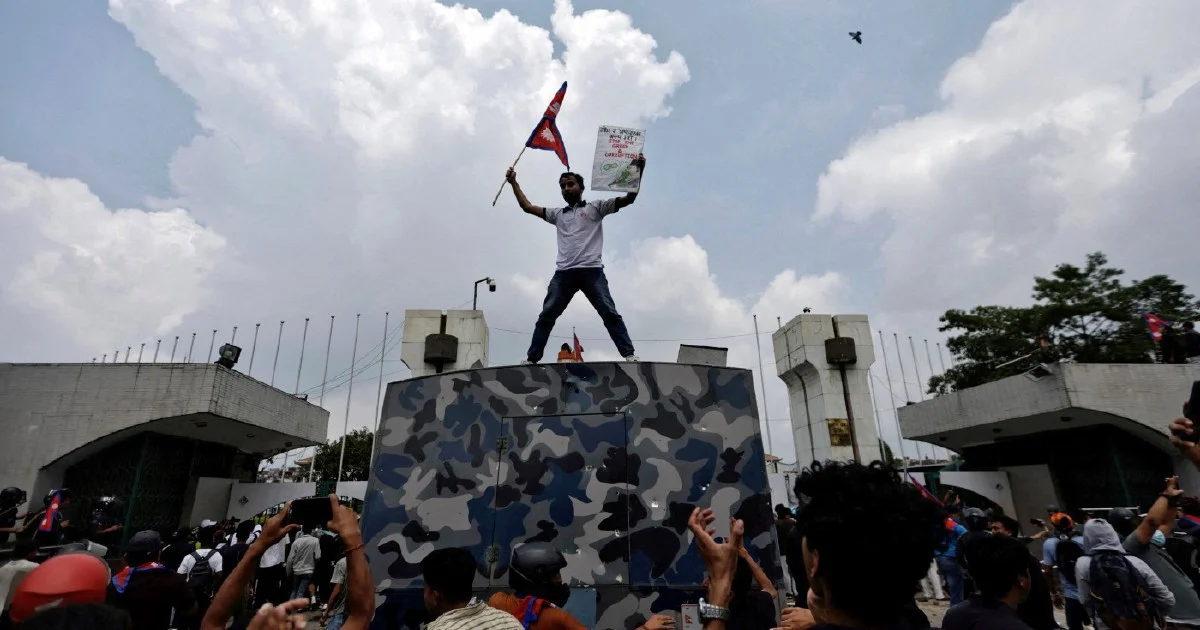
The arrest reflects broader patterns unfolding across South Asia, where new administrations frequently initiate high-profile prosecutions of former officials as a means of establishing legitimacy and demonstrating commitment to transparency. Nepal's current government, distinguished by its substantial youth representation, has positioned anti-corruption efforts as a cornerstone of its reform agenda. This approach resonates with younger constituencies who have increasingly demanded accountability for historical financial mismanagement.
Paudel's detention carries particular significance given his tenure in a ministerial portfolio responsible for overseeing the nation's fiscal policies and budget allocations. Former finance ministers typically occupy positions of considerable influence, making scrutiny of their stewardship especially consequential for public confidence in institutional integrity. The timing of his arrest, occurring amid broader investigative efforts into previous governments, suggests authorities are pursuing systematic rather than selective accountability.
Money laundering investigations in Nepal have historically faced procedural challenges and resource constraints that limited effectiveness. This latest case may signal institutional strengthening within law enforcement agencies, or alternatively, reflect political determination to prioritize such cases within prosecutorial hierarchies. The government's willingness to pursue a high-ranking former official demonstrates either genuine institutional resolve or strategic political signalling—or conceivably, elements of both.
For regional observers, Nepal's approach offers instructive comparisons with anti-corruption initiatives elsewhere in South Asia. India, Bangladesh, and Sri Lanka have similarly witnessed new administrations launching prosecutions against predecessors, with varying degrees of transparency and procedural fairness. Nepal's young policymakers appear intent on distinguishing their approach through demonstrable action, though questions regarding selective prosecution versus comprehensive accountability remain pertinent.
The broader institutional context matters considerably. Nepal's judicial system has experienced periodic challenges regarding independence and capacity, factors that necessarily shape confidence in current proceedings. International observers monitoring governance standards will likely scrutinize whether investigations apply consistent evidentiary standards and procedural protections across cases, or whether investigations become instrumentalized for political advantage.
For Malaysia and other Southeast Asian nations, Nepal's anti-corruption trajectory offers relevant observations. Like several ASEAN economies, Malaysia has experienced transitions involving new governments prioritizing accountability investigations. The comparative experience underscores both the potential and pitfalls of aggressive prosecution agendas—valuable for combating genuine misconduct, yet susceptible to becoming mechanisms for political settling of scores rather than impartial justice.
The financial crimes sector remains particularly vulnerable to political manipulation, partly because money laundering investigations often involve complex forensic analysis permitting considerable interpretive discretion. Paudel's case will likely involve examining transaction trails, beneficial ownership structures, and fund flows—domains where technical expertise and institutional impartiality prove essential for producing credible outcomes.
Nepal's youth-oriented government faced considerable expectations upon assuming office regarding corruption eradication. These expectations create momentum for visible action but simultaneously risk pressuring authorities toward incomplete investigations or procedurally questionable tactics designed primarily to demonstrate activism. Sustainable anti-corruption progress typically requires patient institutional building rather than dramatic prosecutions, though political constituencies understandably demand tangible evidence of commitment to change.
The investigation's progression will reveal much regarding Nepal's institutional development. Transparent disclosure of evidence, respect for defendants' legal rights, and commitment to pursuing cases regardless of political affiliation ultimately determine whether anti-corruption efforts strengthen governance or merely redistribute power. These considerations extend beyond Nepal, carrying implications for governance standards across the broader South Asian region as successive governments grapple with balancing accountability demands against procedural integrity.
Paudel's detention initiates a process whose ultimate significance depends substantially upon how authorities conduct investigations and adjudicate resulting charges. The case exemplifies contemporary tensions between generational demands for accountability and institutional capacities to deliver impartial justice—tensions increasingly characteristic of political transitions throughout Asia.