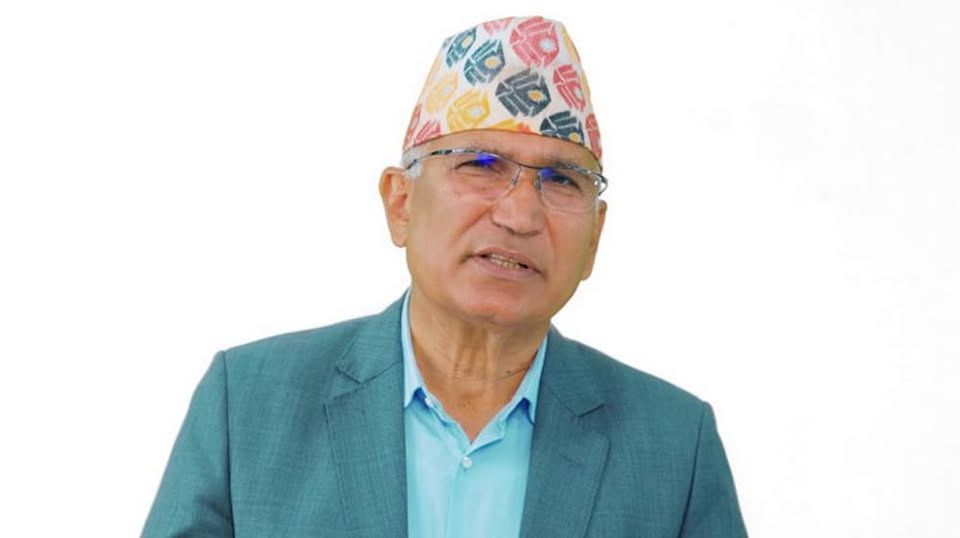
Nepal's anti-corruption campaign has claimed another prominent victim with the arrest of Bishnu Paudel, a former finance minister and senior official in the opposition Communist CPN-UML party, on allegations of money laundering. Police took him into custody on Monday, as Nepal's push to root out graft in its upper echelons intensifies following political upheaval that reshaped the nation's leadership structure just months ago.
Paudel holds the position of vice-chair within the CPN-UML, the party led by former Prime Minister KP Sharma Oli, whose administration was dismantled during mass protests in September 2025. His arrest represents a continuation of the government's stated commitment to pursuing corruption cases against prominent figures from the previous regime. Nepal Police spokesman Abhi Narayan Kafle confirmed that investigators will examine the former minister's alleged involvement in money-laundering activities, though specific details regarding the nature and scale of the suspected offences remain undisclosed.
The political backdrop to Paudel's detention is significant. Current Prime Minister Balendra Shah, who ascended to office in March after winning elections, explicitly campaigned on a platform of institutional reform and tackling embedded corruption. Shah, a musician-turned-politician whose unconventional path to power reflects the tumultuous nature of Nepali politics, was elected by voters exhausted by governance failures and economic malaise. His administration has moved swiftly to pursue cases against members of the previous government, though these actions have already sparked accusations of political motivation from the opposition benches.
Oli, who lost his parliamentary seat to Shah in the recent electoral contest, has publicly characterised Paudel's arrest as a politically motivated manoeuvre designed to weaken his party rather than serve genuine prosecutorial purposes. The former prime minister has levelled broader charges against Shah's government, alleging authoritarian tendencies and selective application of the law. These accusations reflect the polarised environment in which Nepal's anti-corruption efforts are unfolding, where genuine accountability efforts risk being conflated with partisan score-settling in the eyes of critics.
The ruling party's response, articulated through CPN-UML publicity head Niraj Acharya, indicates that the opposition remains committed to engaging with the legal process while simultaneously challenging what it characterises as discriminatory government conduct. Acharya's statement that party leaders are prepared to face any form of judicial scrutiny suggests confidence in their positions, yet his simultaneous complaint about selective enforcement reveals the deep suspicions poisoning Nepal's political atmosphere. These competing narratives underscore how corruption investigations in transitional democracies often become ensnared in broader power struggles.
Paudel's case arrives amid a sequence of high-profile detentions targeting the previous administration. In March, within a day of Shah assuming office, police apprehended both Oli and former Interior Minister Ramesh Lekhak for questioning regarding their alleged roles in a violent state crackdown on demonstrators during the 2025 uprising. The two men were detained for approximately two weeks before being released without formal charges, and both have consistently denied culpability for the bloodshed. The lack of charges coupled with the questioning itself has fuelled opposition claims that the government is using the legal system as a tool for political harassment.
Context matters enormously here. The 2025 protests that toppled Oli's government originated from public anger over a social media ban, but quickly evolved into a broader uprising reflecting years of accumulated frustration with governance failures and corruption. The demonstrations turned violent, resulting in at least 76 deaths and more than 2,500 injuries across two days of intense clashes between security forces and protesters. The scale of this bloodshed elevated the political stakes dramatically and created public demand for accountability that Shah's government has moved to satisfy, even if opposition figures dispute the fairness and impartiality of these prosecutions.
Parallel to the Paudel case, Nepal's institutional anti-corruption machinery has been equally active. The Commission for Investigation of Abuse of Authority, the country's dedicated watchdog body, has filed charges against sixteen individuals in what spokesman Suresh Neupane characterised as a major procurement scandal. The accused include the head of Nepal's passport department, and the alleged scheme involved a staggering US$66 million in embezzlement connected to electronic passport procurement. This large-scale case demonstrates that corruption investigations extend beyond targeting political opponents and reflect systemic challenges within Nepal's bureaucracy.
For Malaysia and other Southeast Asian nations observing Nepal's trajectory, the developments raise both cautionary and instructive observations. Transitions from authoritarian or captured governance regimes to more accountable systems inevitably entail difficult prosecutorial decisions, yet the risk of wielding the law as a weapon against opponents rather than as a tool for genuine accountability remains acute. Nepal's experience illustrates how even legitimate anti-corruption campaigns can become tainted by perceptions of political bias, undermining public confidence in judicial institutions and rule of law.
The challenge confronting Shah's administration involves pursuing genuine accountability for corruption while simultaneously maintaining sufficient neutrality and procedural fairness to preserve public and international confidence in the legal process. Paudel's arrest and questioning of Oli represent attempts to signal seriousness about reform, yet their selective application against one political faction raises questions about whether Nepal is building inclusive institutions or simply redistributing power among competing elites. Sustained anti-corruption efforts require mechanisms that transcend partisan fluctuations and apply consistently across the political spectrum.
As Nepal continues navigating these turbulent waters, the broader lesson for the region concerns the fragility of institutional reform in polarised environments. Corruption undoubtedly demands prosecution, yet divorced from broader institutional strengthening and transparent procedures, such efforts risk becoming hollow political theatre. For Malaysian observers accustomed to their own complex history with anti-corruption campaigns and political contestation, Nepal's experience offers a sobering reminder that tackling graft requires not merely the political will to pursue prominent figures, but the sustained commitment to building genuinely independent institutions capable of earning public trust.