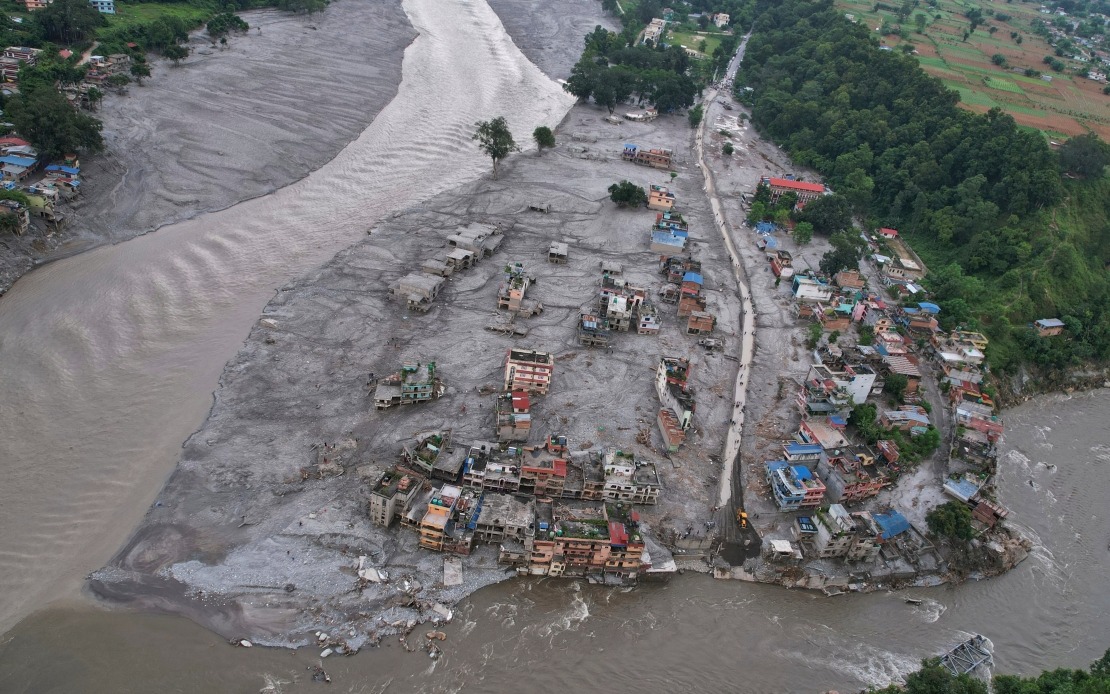
Nepal faces an uncertain path forward in accepting international rescue assistance following catastrophic flooding that has claimed over 600 lives across the affected region and left nearly 3,000 people unaccounted for. The government has adopted a measured approach to determining which additional nations may participate in search and rescue operations, choosing to first evaluate the full extent of the humanitarian crisis before committing to further foreign deployments. This cautious stance reflects the complexity of coordinating multiple international teams in an emergency response, even as the situation remains dire for thousands of missing persons.
The floods, which struck without warning on Wednesday morning, were triggered by the collapse of glacial lakes in the Rasuwa district and subsequent overflow of the Bhote Koshi and Trishuli rivers. The twin disasters devastated Nepal's central and northern regions with particular ferocity, destroying infrastructure and trapping hundreds of people in isolated locations. Among those most vulnerable are over 900 workers employed at 11 hydropower facilities throughout the affected zones, many of whom remain sequestered in tunnels and underground powerhouses with limited access to rescue teams. These industrial sites, some still under construction, present extraordinary challenges for rescue personnel who must navigate complex underground systems while managing aftershock risks and structural instability.
Currently, Nepal has formally accepted search and rescue assistance from four nations: Australia, China, India, and South Korea. Officials in Kathmandu have determined that these countries warrant priority participation partly because they maintain significant worker populations at the damaged hydropower projects. This strategic approach to international coordination ensures that rescue teams can operate with cultural familiarity and pre-established workplace knowledge that may accelerate operations. The deliberate selection also reflects diplomatic considerations, as these four nations represent Nepal's most strategically important neighbours and partners in the region.
Malaysia, through its Prime Minister Datuk Seri Anwar Ibrahim, has formally offered assistance including the possible deployment of the Malaysian Special Search and Rescue Team (SMART), an elite unit trained in complex emergency response operations. Malaysia is simultaneously working to coordinate humanitarian aid delivery to Nepal, positioning itself as both a direct responder and a logistical hub for regional assistance efforts. According to the charge d'affaires of the Malaysian Embassy in Kathmandu, Mohd Firdaus Azman, Nepalese officials have communicated their intention to complete a situational assessment before extending rescue mission invitations to any additional countries, indicating that Malaysia's offer remains under active consideration.
The Malaysian Foreign Ministry has reported that 55 Malaysian nationals in Nepal and 36 in China remain uncontactable as of Saturday evening, adding urgency to Malaysia's involvement in the relief operation. These individuals represent Malaysian interests across multiple sectors—from business and tourism to engineering and construction—highlighting how interconnected Southeast Asian economies are to Nepal's development trajectory. The inability to account for these citizens underscores why Malaysia's SMART team deployment could serve dual purposes: supporting Nepal's broader rescue efforts while facilitating the location and extraction of Malaysian nationals caught in the disaster.
The decision to conduct a situation assessment before accepting additional rescue teams reflects Nepal's capacity constraints and the practical realities of coordinating emergency operations across a region severely damaged by infrastructure collapse. Transportation routes remain compromised, communication networks are fragmented, and field conditions continue to evolve as aftershocks rumble through affected districts. Deploying too many international teams simultaneously could create bottlenecks, duplicate efforts, or consume scarce logistical resources that would be better directed toward immediate relief activities. Nepal's measured approach demonstrates pragmatic crisis management rather than reluctance to accept help.
The rescue operation itself presents technical challenges of extraordinary complexity. Workers trapped in hydropower facilities require specialized equipment and expertise to extract safely from underground chambers that may be partially flooded, structurally compromised, or difficult to access. The presence of foreign nationals, including workers from the countries already engaged in rescue efforts, means that rescue teams must operate with multilingual coordination and cultural awareness. Teams from Australia, China, India, and South Korea can leverage existing relationships with their nationals and potentially access workplace records that detail tunnel systems and emergency protocols.
Regional implications extend beyond immediate rescue operations. Nepal's development strategy has long emphasized hydropower as a cornerstone of economic growth and energy security, with facilities funded and staffed by international partners throughout Asia. The flooding catastrophe raises questions about climate adaptation, disaster preparedness in mountainous regions, and the vulnerabilities of infrastructure dependent on complex glacial systems. For Southeast Asian nations with similar geographic and developmental challenges, Nepal's experience offers sobering lessons about infrastructure resilience and the need for coordinated regional disaster response mechanisms.
Malaysia's positioning in the emerging relief architecture reflects its broader strategic role as a Southeast Asian leader capable of mobilizing significant resources for regional humanitarian crises. The potential deployment of SMART represents Malaysia's capacity to contribute specialized expertise while maintaining diplomatic flexibility and coordination with established players. As Nepal completes its situational assessment, the decision about additional rescue teams will likely depend on specific capability gaps identified by officials on the ground and the accessibility of affected areas as conditions stabilize.

