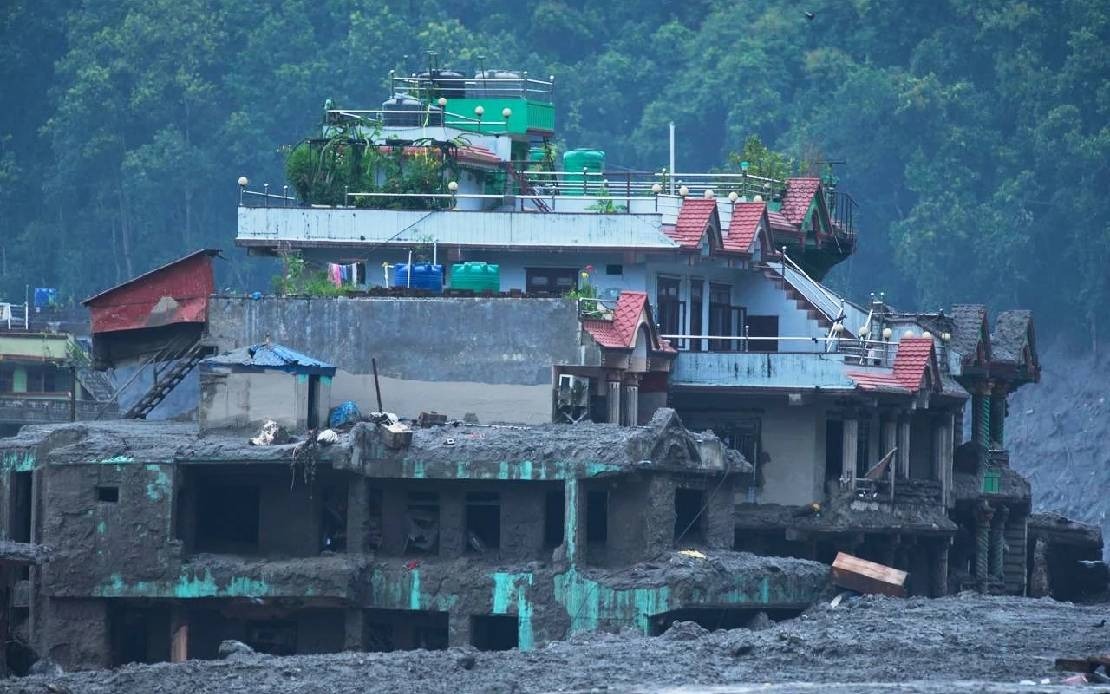
A catastrophic flood unleashed by a glacier collapse in Nepal's Himalayan borderlands has prompted the impoverished nation to issue urgent appeals for international technical assistance and massive financial support. The disaster, which struck on Wednesday, has claimed at least 626 lives in Nepal and seven in China's Tibet region, with nearly 3,000 people still unaccounted for—approximately 2,426 in Nepal and over 550 in Tibet's Gyirong County. Among the missing are at least 540 foreigners, predominantly Hindu pilgrims from India, whose fate remains uncertain as rescue efforts continue against mounting logistical challenges.
The sheer scale of destruction wrought by the torrent of rock, ice, mud and debris has overwhelmed local authorities and prompted Nepal's finance minister to outline staggering reconstruction costs. Swarnim Wagle told Reuters that preliminary assessments suggest rebuilding will require between US$4 billion and US$5 billion, though he cautioned that this figure remains an initial estimate as damage surveys continue across affected regions. The figure underscores the catastrophic impact on a nation of 30 million people already constrained by limited economic resources and infrastructure.
Search and rescue operations have proven fitful, hampered by treacherous mountain weather conditions. On Saturday, rescuers were forced to suspend activities as heavy rain and dense fog made traversing the affected terrain dangerously unpredictable. Narendra Pariyar, the chief administrator of the severely impacted Rasuwa district, explained that weather conditions rendered continued rescue efforts impractical, with priorities shifting toward transporting survivors to Kathmandu for medical care and rehabilitation. The suspension of operations added to mounting frustration among families desperately seeking news of missing relatives.
Uniquely, Nepal's appeal for foreign assistance focuses not on search and rescue capacity but on specialized capabilities the nation lacks. Foreign Minister Shisir Khanal articulated this distinction clearly, noting that Nepal requires international help in extracting people trapped in collapsed tunnels, reopening transport and communication arteries severed by destroyed bridges, identifying decomposed remains, conducting DNA testing, and preserving bodies under conditions of extended storage. These highly technical demands reflect the particular challenges presented by mountainous terrain and the decomposition of victims in the days following the disaster.
The gruesome reality of mass casualty management has forced authorities into difficult decisions regarding the handling of remains. Three days after the flood struck, bodies being recovered showed severe decomposition, rendering visual identification impossible. Health officials determined that corpses would be buried following legal protocols rather than held indefinitely, mitigating risks of disease outbreak and epidemics. The Chitwan district administration announced plans to collect DNA samples from remains before burial in designated open spaces, establishing a record for eventual identification once laboratory analysis could be conducted. At Maharajgunj Medical Campus in Kathmandu, where some bodies were transported, bereaved families gathered to attempt identification through photographs strung on boundary walls—a haunting testament to the identification crisis.
The disaster also created secondary geological hazards that prolonged the emergency beyond the initial flood event. A vast lake formed along the Nepal-China border as flood waters accumulated, raising acute concerns about catastrophic overflow that could trigger additional destruction downstream. Authorities suspended rescue operations briefly on Friday when the lake began threatening to spill into Nepal's Lhende Khola and Trishuli rivers. By Saturday, Chinese authorities reported that satellite imagery indicated water was draining gradually through natural channels, reducing overflow risk. However, officials warned that two upstream reservoirs continue to require close monitoring, with flood dangers persisting until both drain completely.
India has emerged as the most concrete source of immediate support, reflecting both geographic proximity and long-standing humanitarian ties. New Delhi dispatched three aircraft carrying approximately 60 tonnes of relief supplies, including blankets, medicines, food staples, and water purification tablets. Beyond these initial shipments, India's government has committed to deploying specialized teams for tunnel rescue operations and medical response, alongside its disaster management force and prefabricated bridge components designed to restore severed communication routes. These offerings address precisely the technical gaps Nepal's foreign minister identified.
China, whose Tibet region also suffered casualties and missing persons, has called for emergency humanitarian assistance and international rescue coordination, though specific contributions remain unelaborated. Beijing's measured response reflects both the scale of its own losses in the border region and diplomatic sensitivities surrounding cross-border disaster response. International media outlets have reported that Chinese authorities continue efforts to trace more than 500 people missing on their territory, adding to the massive search burden.
For Malaysia and Southeast Asia more broadly, this disaster illuminates vulnerabilities facing mountainous regions susceptible to climate-driven glacial instability and extreme weather events. Nepal's predicament—possessing inadequate technical capacity to manage large-scale disasters while facing catastrophic financial burdens—resonates across the region's developing economies. The reliance on Indian and international assistance for expertise in tunnel rescue, forensic identification, and infrastructure reconstruction underscores how transnational disasters expose gaps in national emergency preparedness. The estimated US$4-5 billion reconstruction bill represents roughly 10-12 percent of Nepal's annual gross domestic product, illustrating the asymmetric burden devastating disasters impose on lower-income nations. As climate change intensifies glacial melt and extreme weather patterns, comparable disasters may become more frequent across the Himalayan region, demanding enhanced regional coordination and pre-positioned international emergency capacities.

