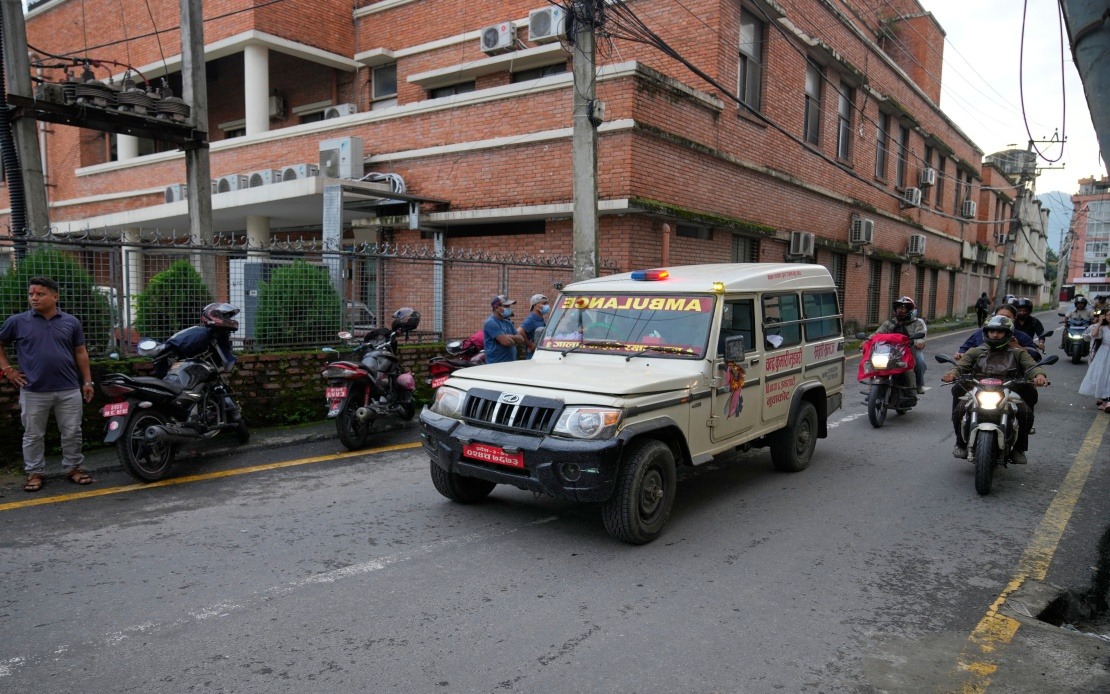
A coordinated rescue operation in Nepal has pulled 121 international travellers to safety following one of the region's most destructive natural disasters in recent years. The Wednesday deluge, triggered when a Himalayan glacier ruptured and sent torrents through the Bhote Koshi and Trishuli river valleys, unleashed chaos across Nepal and spilled into adjacent Chinese territory, leaving a death toll that has climbed to approximately 550 people. The rescued foreigners represent a diverse cross-section of global tourism, with the majority being Indian nationals alongside smaller contingents from China, South Korea, the United States, Russia, Italy, Belgium, Bulgaria, Portugal, Spain, and Switzerland according to figures compiled by Nepal's tourism authority.
The composition of rescue lists underscores the international dimension of the disaster, revealing the scale of foreign exposure in Nepal's mountain regions during the peak trekking and pilgrimage season. Among those extracted were 85 Indians, 16 Chinese nationals, nine South Koreans, two Americans, two Russians, two Italians, and single nationals from five European countries. For Malaysia and other Southeast Asian nations with citizens potentially in Nepal during the disaster window, the rescue operation's swift international coordination offers both reassurance about emergency response capabilities and sobering reminders of the region's exposure to geological hazards. The scale of the rescue effort, coordinated as of Friday evening, represents only a fraction of the challenge confronting Nepalese authorities, with hundreds of foreign nationals still unaccounted for and search teams operating under severe logistical constraints.
India has emerged as the nation bearing the heaviest burden, with 320 Indian nationals reported missing according to Randhir Jaiswal, spokesman for the Indian Ministry of External Affairs. The Indian government has already mobilised substantial resources, dispatching two shipments of humanitarian assistance totalling 47.5 tonnes with additional aerial relief supplies prepared for departure. Among those accounted for were 63 Indian workers employed at the Trishuli hydropower project who have been confirmed safe, alongside 21 rescued individuals transported across the border to India. The Missing persons figure, however, grows more complex when accounting for approximately 100 individuals holding non-Indian passports but identified as Indian-origin, many of whom were participating in the Kailash Mansarovar pilgrimage programme in China's Xizang region. Indian authorities have confirmed that around 400 Indian nationals within the Chinese region have reported their safety, yet the opacity surrounding some populations underscores the challenge of accounting for all those affected across mountainous terrain spanning multiple national jurisdictions.
Nepalese authorities are confronting an unprecedented logistical and humanitarian crisis as recovery operations intensify across downstream areas. Hospital facilities in major centres including Chitwan and Pokhara have reached capacity, forcing authorities to struggle with the grim task of identifying deceased victims and locating appropriate storage facilities for recovered bodies. The disaster has exposed critical infrastructure limitations within Nepal's healthcare and disaster management systems, with search and rescue teams fanning across multiple downstream zones in an effort to locate both bodies and potential survivors still trapped in remote locations. The scale of the catastrophe has not been witnessed in Nepal for several decades, and the rapid onset of the flooding—triggered by a single glacier rupture rather than gradual snowmelt—left minimal warning time for those in the affected valleys.
Nepal's political leadership has swiftly mobilised the state apparatus in response to the catastrophe. Prime Minister Balendra Shah convened his Cabinet on Friday to conduct a comprehensive review of the disaster's immediate aftermath and coordinate relief operations across affected districts. In a symbolic gesture aimed at demonstrating solidarity with flood victims, Shah and his Cabinet colleagues have collectively committed one month's salary to the Prime Minister's Natural Disaster Relief Fund, establishing a precedent for financial support flowing toward ground-level recovery efforts. The government action signals recognition that the disaster will require sustained international cooperation and domestic resource mobilisation over an extended recovery period extending well beyond the immediate rescue phase.
Regional solidarity has extended beyond India's substantial bilateral assistance. Pakistani Prime Minister Shehbaz Sharif initiated direct telephone contact with his Nepalese counterpart on Friday to convey condolences and pledge Pakistan's dispatch of emergency relief materials to Nepal. The coordinated international response reflects the shared vulnerability of South Asian nations to climate-driven geological hazards and underscores how natural disasters transcend borders, creating humanitarian imperatives that override typical diplomatic considerations. For Malaysia and other Southeast Asian countries, the disaster serves as a potent reminder of the region's exposure to similar climate-triggered risks, particularly as temperatures continue rising and glacial systems across the Himalayas face accelerating melt cycles.
The economic and human consequences of the disaster extend beyond immediate casualty figures, with implications for international travel patterns, insurance protocols, and risk assessment frameworks for mountainous regions. Tourism represents a vital economic engine for Nepal's mountain communities, yet incidents of this magnitude inevitably deter international visitors and create cascading economic losses through cancelled bookings and curtailed seasons. The rescue operation itself, while successful in extracting 121 foreign nationals, highlights the vulnerability of travellers in remote regions where telecommunications infrastructure and emergency response capabilities remain underdeveloped compared to major urban centres. Insurance companies and travel operators across Asia will likely reassess their protocols for high-altitude tourism in the wake of this catastrophe, with potential implications for Malaysian tourists considering Nepal visits in coming months.
The glacial collapse that triggered this disaster represents a broader climate-change phenomenon affecting the Hindu Kush-Himalayan region, where rapidly warming temperatures are destabilising ancient ice masses. Scientists have long warned that accelerating glacial retreat and increased frequency of glacier-related disasters represent one of the region's most significant climate change impacts, yet Wednesday's catastrophe represents a visceral demonstration of these abstract projections. For policymakers across South Asia including Malaysia, the disaster underscores the urgency of regional climate adaptation strategies, early-warning systems for glacier-related hazards, and infrastructure planning that accounts for increased frequency of extreme hydrological events. The financial, humanitarian, and economic costs of this single event—likely to exceed billions of dollars when comprehensive assessments are completed—provide quantifiable evidence supporting investment in climate resilience infrastructure.
As rescue operations continue and authorities begin the extended process of cataloguing victims and delivering relief, the disaster has catalysed renewed international focus on Nepal's disaster preparedness capabilities. The government's limited capacity to manage bodies and coordinate search efforts across vast mountainous terrain suggests structural vulnerabilities that require sustained investment from both international donors and Nepal's domestic budget. For Malaysia and neighbouring countries, the Nepal floods serve as instructive case studies in disaster response logistics, particularly regarding coordination between national authorities and international humanitarian organisations operating across multiple jurisdictions. The coming weeks will determine whether Nepal's relief efforts evolve into effective long-term reconstruction programmes, establishing precedents for how the region manages future climate-induced catastrophes of similar or potentially greater magnitude.

