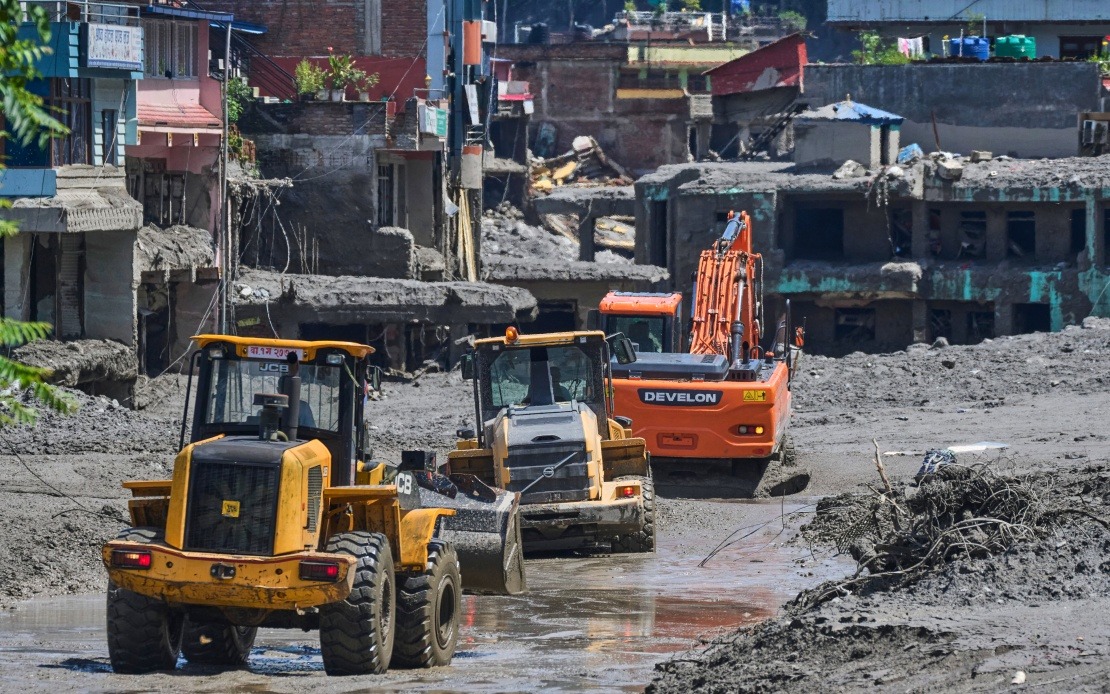
The Nepalese government has thrown its full weight behind emergency operations following a catastrophic flooding event in the Bhote Koshi River that struck on Wednesday, with officials confirming that search and rescue efforts, relief distribution, and rapid emergency response have become the administration's paramount concern. According to statements issued by the Embassy of Nepal in Kuala Lumpur, the disaster has exacted a heavy human toll and unleashed widespread destruction across multiple regions, prompting coordinated action from both civilian authorities and security personnel.
The geographic scope of the disaster underscores its severity, with four districts bearing the brunt of the damage. Rasuwa, Nuwakot, Dhading and Gorkha have all been designated as priority zones requiring intensive intervention, each grappling with the immediate aftermath of the flooding. In these mountainous and often remote terrain areas, access to affected communities presents a significant logistical challenge for relief teams, potentially delaying assistance to those most in need.
The scale of human suffering remains incompletely documented at this stage, though preliminary assessments indicate substantial loss of life across the affected regions. Simultaneously, the physical destruction has been equally consequential, with both residential infrastructure and critical public facilities damaged or destroyed. This dual impact—casualties combined with infrastructure collapse—typically complicates disaster response efforts, as relief agencies must simultaneously address immediate humanitarian needs while working amid compromised access routes and communication systems.
Relevant authorities and security agencies are maintaining round-the-clock operations to locate survivors and those still missing in the floodwaters and debris fields. The government statement emphasises that concurrent with rescue operations, teams are working to quantify the full extent of casualties and catalogue property damage. This information-gathering component is crucial for coordinating subsequent phases of reconstruction and determining the scale of national and international support required.
Recognising the magnitude of the disaster exceeds the capacity of government resources alone, the Office of the Prime Minister and the Council of Ministers have issued a formal appeal requesting financial support from the private sector, civil society organisations, and international well-wishers. This solicitation specifically targets funds earmarked for the safe relocation of displaced persons and their long-term rehabilitation following the immediate emergency phase.
The Embassy of Nepal in Kuala Lumpur has extended this appeal to the significant Nepalese diaspora communities residing throughout Malaysia, targeting not only individual citizens but also formal associations, commercial enterprises, and humanitarian organisations with Nepal connections. This multi-channel approach to fundraising acknowledges that reconstruction financing will require contributions from diverse sources, and that the expatriate community often possesses both the financial means and emotional motivation to respond rapidly to national emergencies.
To facilitate rapid fund mobilisation, the embassy has designated two official financial channels through Nepal's banking system. The Prime Minister's Disaster Relief Fund and Prime Minister's Relief Fund represent the government's established mechanisms for channelling emergency resources to affected populations. These accounts operate through Rastriya Banijya Bank—the nation's largest state-owned commercial bank—and Nepal Bank Limited, with multiple account numbers provided to ensure clarity and prevent misdirection of funds.
The provision of QR codes for rapid digital payment processing signals that Nepalese authorities understand contemporary fundraising dynamics and are removing friction from the donation pathway. This modernised approach to disaster fundraising may prove particularly effective in reaching younger diaspora members and those accustomed to mobile payment platforms, potentially accelerating the capital mobilisation timeline compared to traditional remittance methods.
For Malaysia and the broader South Asian region, the Nepal floods represent a sobering reminder of climate-related disaster vulnerability affecting mountainous terrain. The Himalayan foothills and their river systems face increasing precipitation intensity during monsoon seasons, with climate scientists projecting that such catastrophic flooding events will intensify and occur with greater frequency across the coming decades. Neighbouring countries including Bhutan, Bangladesh, and parts of northern India have experienced comparable disasters in recent years, suggesting this represents an emerging regional crisis pattern rather than an isolated incident.
The disaster also underscores the practical importance of maintaining robust bilateral relations and disaster assistance frameworks within South Asia. Malaysian authorities and regional partners may look toward this situation as a case study for rapid response mechanisms and international coordination protocols. The Embassy of Nepal's proactive communication to diaspora communities and international partners demonstrates how diplomatic missions can serve essential roles during national emergencies, facilitating information flow and resource mobilisation beyond traditional government-to-government channels.
The full recovery trajectory for Nepal's affected districts will likely span months or years, extending far beyond the immediate search and rescue phase currently dominating official attention. Early contributions channelled through the designated relief funds will prove critical in preventing the humanitarian situation from deteriorating during the vulnerable period between emergency response conclusion and formal reconstruction programme implementation.

