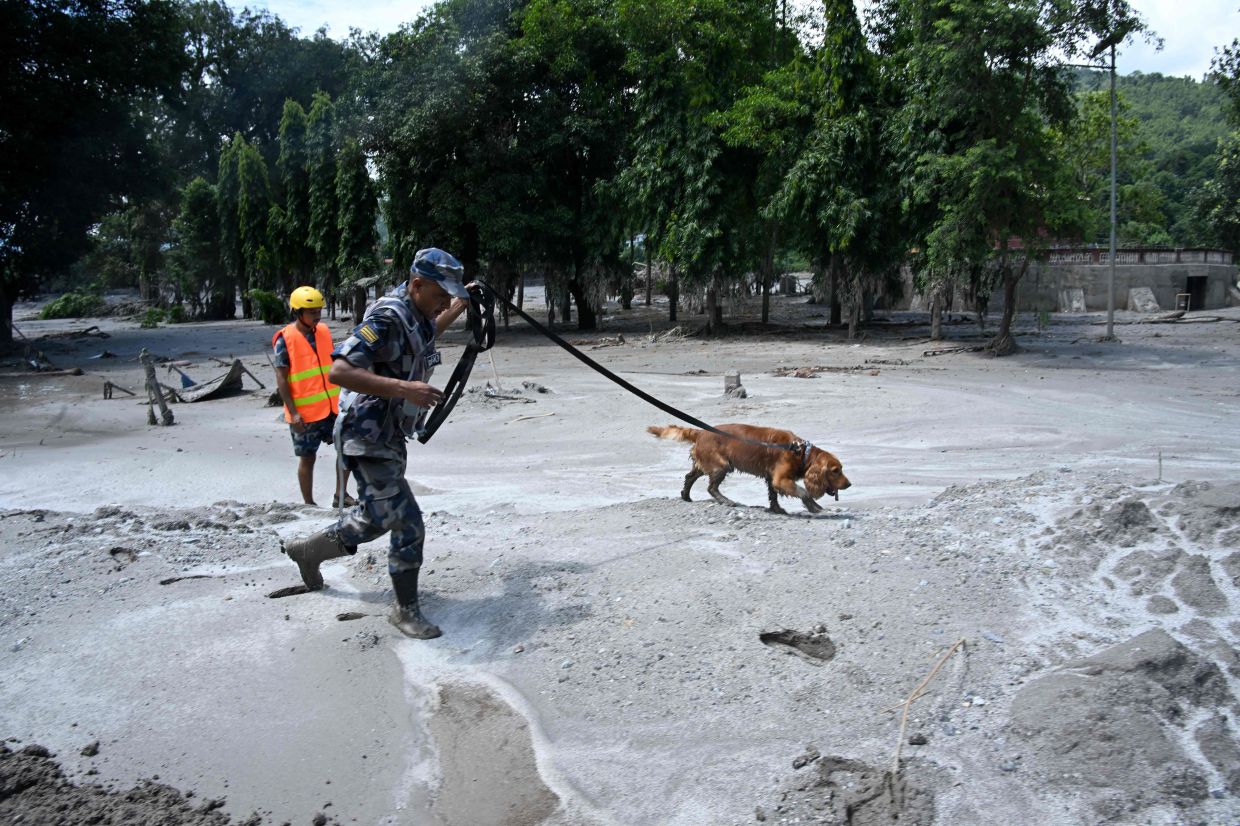
The Nepal-Tibet border region has been struck by a catastrophic natural disaster that has claimed at least 392 lives, with authorities struggling to account for more than 1,400 people across both sides of the international boundary. Flash floods and devastating landslides swept through the mountainous area, triggering a complex rescue and recovery operation that continues to unfold amid challenging terrain and communication difficulties. The scale of the humanitarian crisis is still unfolding, as initial casualty figures remain fluid and subject to adjustment as rescue teams advance into affected communities and authorities work to verify the status of those reported missing.
The discrepancies in casualty and missing person figures reflect the inherent chaos of disaster response in a remote, mountainous region. Nepal's disaster management agency reported 910 unaccounted individuals as of late August, including at least 517 foreign nationals, though the breakdown by nationality was not immediately available. On the Tibetan side of the border, Chinese authorities documented 558 missing persons, of whom 260 were identified as foreigners. Combined, these figures place the total missing across both sides at 1,468, though officials acknowledge that numbers may fluctuate as rescue operations continue and verification procedures advance. The phenomenon of changing casualty numbers following major disasters is well-documented in disaster management literature, caused by factors including double-counting of individuals with dual citizenship, delays in matching recovered bodies with missing person reports, and the general administrative chaos that accompanies large-scale emergencies.
The Nepal Tourism Board provided more granular data regarding missing tourists and travelers, identifying 667 unaccounted individuals as of late August. Among these, 127 were Nepali nationals, while the remainder were foreign visitors and trekkers. However, a significant gap exists in understanding how many permanent residents of the disaster zone remain missing, as most available figures focus on international visitors rather than the broader local population affected by the catastrophe. This data limitation underscores the particular vulnerability of tourists and trekkers in the region, who often occupy remote lodges and camps along popular trekking routes that were directly impacted by the flooding and landslides.
Chinese nationals represent a substantial portion of those unaccounted for, with China's foreign ministry reporting nearly 100 missing Chinese citizens in Nepal. However, Nepal's Tourism Board figure of 24 unaccounted Chinese nationals represents a significant discrepancy that may reflect ongoing verification efforts or differences in reporting methodology between the two countries. This numerical inconsistency highlights the complexities of cross-border disaster management and the challenges faced by different governments in tracking their nationals during international emergencies.
Indian nationals have been heavily affected by the disaster. The Nepal Tourism Board identified 178 Indian citizens as missing, while simultaneously noting that eleven Indian nationals had been successfully located and rescued. This indicates that rescue operations have achieved some success despite the challenging conditions, though the recovery rate remains concerning given the scale of the overall missing population. India's significant tourist presence in Nepal, driven by cultural ties and geographic proximity, means that Indian citizens comprise one of the largest foreign groups affected by natural disasters in the region.
The United States has reported a significant number of missing citizens, with the U.S. State Department initially citing 90 unaccounted Americans, though the Nepal Tourism Board provided a lower figure of 65. The State Department noted that three American citizens had been rescued and that authorities were not yet aware of any confirmed American fatalities. This relatively lower confirmed death rate among Americans may reflect the tendency for foreign tourists to congregate in established lodges and more accessible areas, though it may also partly reflect incomplete information gathering during the immediate aftermath of the disaster.
Malaysia has been particularly impacted, with Prime Minister Anwar Ibrahim announcing that more than 50 Malaysians in Nepal remain unreachable. The Nepal Tourism Board figure of 51 unaccounted Malaysians aligns closely with the Prime Minister's statement, indicating a relatively high proportion of Malaysian tourists were in the affected region at the time of the disaster. For Malaysian authorities and the public, this represents one of the most significant overseas incidents involving Malaysian nationals in recent times, prompting heightened diplomatic engagement with Nepali officials and international coordination efforts to locate and assist those missing.
Other nations with substantial numbers of missing citizens include Canada, Australia, and Ukraine. Canada's Foreign Minister Anita Anand stated that the government was aware of 30 Canadians and permanent residents whose whereabouts remained unconfirmed, a figure slightly higher than the Nepal Tourism Board's count of 25 missing Canadians. Australia reported 39 missing nationals, according to Foreign Minister Penny Wong, while Ukraine's foreign ministry identified 56 Ukrainian citizens as out of contact. Notably, Ukraine's foreign ministry added reassurance that no Ukrainians had been confirmed among the injured or deceased at that point, though the high number of out-of-contact nationals indicates significant uncertainty regarding their fates.
The United Kingdom reported 33 missing nationals, while New Zealand's government and tourism board confirmed five missing New Zealand citizens. Germany, Russia, France, Japan, Latvia, and South Africa have each reported between four and eight unaccounted nationals. Additionally, nine Singaporean nationals remain unaccounted for, reflecting the broad geographic spread of tourists affected by the disaster. These figures collectively demonstrate that the flooding and landslides affected visitors from multiple continents, underscoring both Nepal's significance as a major tourist destination and the indiscriminate nature of natural disasters.
South Korea's experience illustrates the occupational dimension of the disaster, with the country's foreign ministry reporting that nine hydropower workers from the nation went out of contact in the Rasuwa district. The Nepal Tourism Board subsequently confirmed that four South Koreans had been rescued, suggesting that at least some of the missing workers may have survived. This detail highlights that the disaster affected not only tourists but also workers employed in infrastructure projects in the region, adding an additional layer of complexity to the relief and recovery operation.
For Southeast Asian nations and their regional partners, the Nepal disaster serves as a sobering reminder of the vulnerability of citizens traveling and working in remote, mountainous regions prone to natural hazards. The incident underscores the importance of maintaining robust consular networks, clear communication protocols for emergency situations, and international cooperation mechanisms that can be rapidly activated when disasters strike. The involvement of Malaysian nationals among those missing demonstrates that hazards in distant regions remain a significant concern for Malaysian citizens and their government, particularly as regional travel for leisure and work continues to expand.

