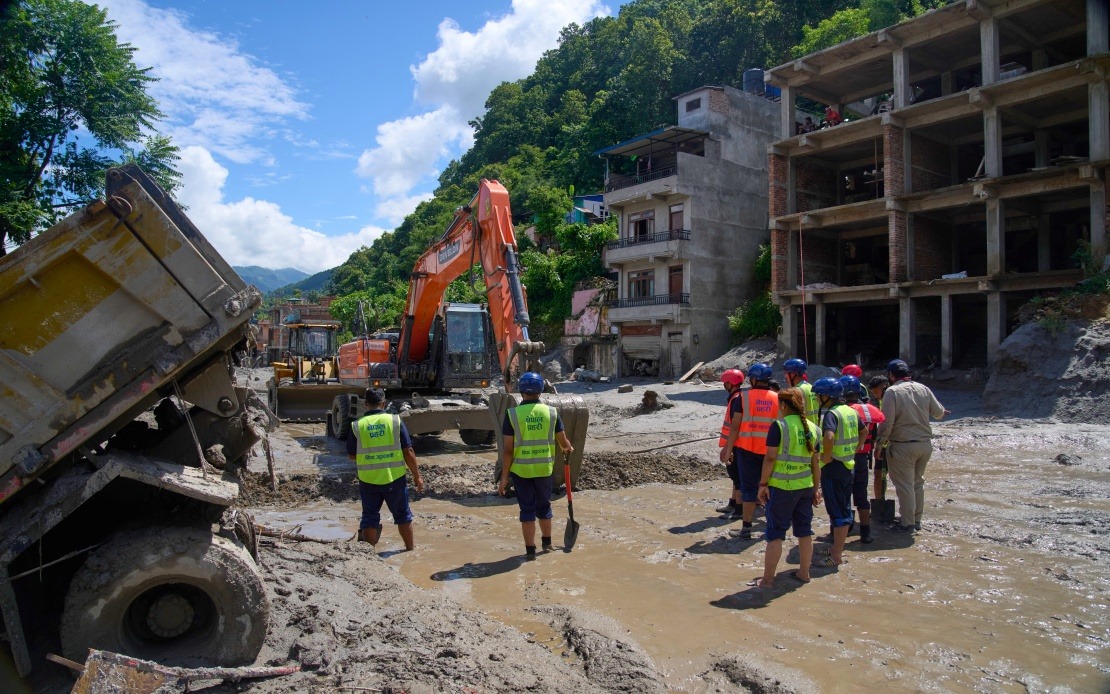
Nepal's government has mobilised a dedicated Emergency Response Team through its Foreign Ministry to manage the complex search and coordination efforts following catastrophic flooding in the Rasuwa district that has claimed nearly 400 lives and left hundreds unaccounted for. The establishment of this centralised coordinating mechanism reflects the scale of the humanitarian crisis now unfolding across the region, with search operations hampered by the sheer volume of missing persons spanning multiple nationalities.
The calamitous flooding struck the Bhotekoshi River region without warning on Wednesday morning, transforming the waterway into a devastating torrent that swept away entire communities. By Thursday evening, confirmed fatalities had reached 359, yet this grim tally provides only a partial picture of the disaster's human toll. Among those confirmed lost are both local residents and foreign visitors caught unprepared by the rapid onset of flooding, presenting authorities with intricate coordination challenges across language barriers and jurisdictional boundaries.
The Emergency Response Team functions as a unified command centre designed to bring order to the sprawling rescue operation. Its responsibilities encompass verifying identities of affected individuals, confirming which nationals remain missing, coordinating with search and rescue personnel deployed across the disaster zone, and providing essential support services to stranded tourists and their anxious families. This multifaceted approach acknowledges that managing a crisis of this magnitude requires simultaneous attention to operational rescue efforts, information verification, and diplomatic communication with governments worldwide.
In a critical operational step, Nepal's Foreign Ministry has established direct communication channels for reporting missing persons and sharing verified information. The public, families of missing individuals, diplomatic missions, and international organisations can contact the response team through multiple platforms: telephone or WhatsApp on +977-9744441227 or +977-9744441228, or via email at [email protected]. This redundancy in communication methods recognises that during emergencies, people may have access to different technologies and that multiple contact points increase the likelihood that crucial information reaches coordinating authorities.
The missing persons list presents a complex demographic picture. Among the more than 800 unaccounted for are hundreds of foreign tourists, with the majority identified as nationals of India and Nepal. This distribution reflects the region's popularity as a trekking and tourism destination, particularly during the summer season when international visitors traverse mountain routes and river valleys. The geographic and cultural diversity of missing persons compounds coordination challenges, as authorities must liaise with Indian officials, attempt to verify information through multiple language channels, and manage expectations across numerous families distributed internationally.
So far, rescue operations have achieved limited but significant successes. At least 31 individuals have been extracted from the floodwaters and surrounding terrain, representing a survival rate that offers glimmers of hope amid the broader catastrophe. However, the ratio of rescued to missing persons underscores the operation's remaining challenges. The flood's destructive force has damaged infrastructure, washed away bridges, and rendered many areas inaccessible except by helicopter or on foot, significantly constraining rescue teams' mobility and limiting daily rescue yields.
The disaster holds particular significance for Malaysia, as an undetermined number of Malaysian nationals remain unaccounted for. Malaysian Foreign Minister Datuk Seri Mohamad Hasan has indicated that the exact number of missing Malaysians has not yet been confirmed by Nepali authorities. This information gap reflects the broader challenge facing all nations with citizens in the affected area: the chaos of the initial disaster period, communication infrastructure damage, and the difficulty of accounting for all persons in a mountainous region prone to sudden flooding make rapid confirmation extremely challenging.
For Malaysia, the incident highlights the risks inherent in adventure tourism and mountain trekking in Nepal, a destination that attracts thousands of Malaysian tourists annually seeking spiritual fulfilment at temples and natural experiences amid the Himalayas. The disaster serves as a sobering reminder that despite Nepal's established tourism infrastructure, the region remains vulnerable to sudden environmental catastrophes that can overwhelm rescue capabilities and claim lives indiscriminately. The Malaysian government's engagement with Nepali authorities through diplomatic channels reflects the critical importance of government coordination when citizens face crisis abroad.
The Emergency Response Team's establishment also signals Nepal's recognition that managing modern disasters requires structured information management and transparent communication with international partners. By creating a central point of contact and standardised reporting procedures, the Foreign Ministry aims to reduce confusion, prevent duplication of search efforts, and ensure that rescue resources are deployed where they can achieve maximum impact. This institutional approach to crisis management has become increasingly common across Southeast Asia, where countries recognise that disasters rarely respect borders and demand coordinated international responses.
The broader implications for the region are significant. Nepal's disaster demonstrates how climate patterns may intensify extreme weather events, potentially increasing the frequency of flooding in monsoon-affected areas. For Malaysian travellers and businesses operating in high-altitude regions of South Asia, the incident serves as a cautionary example of how rapidly conditions can deteriorate and how essential comprehensive travel insurance, communication protocols, and government support become during emergencies. As tourism continues driving economic development across the Himalayas, the balance between opportunity and risk becomes increasingly precarious.
In the coming days and weeks, the Emergency Response Team's effectiveness will be tested as it manages a growing volume of missing persons inquiries, coordinates with international rescue teams, and attempts to provide closure to families awaiting confirmation of loved ones' fates. The team's success in reuniting survivors with families and accurately accounting for the deceased will set precedents for how Nepal and the international community respond to future natural disasters. For Malaysia and other nations with affected citizens, staying informed through official channels remains critical as information gradually emerges from the disaster zone.

