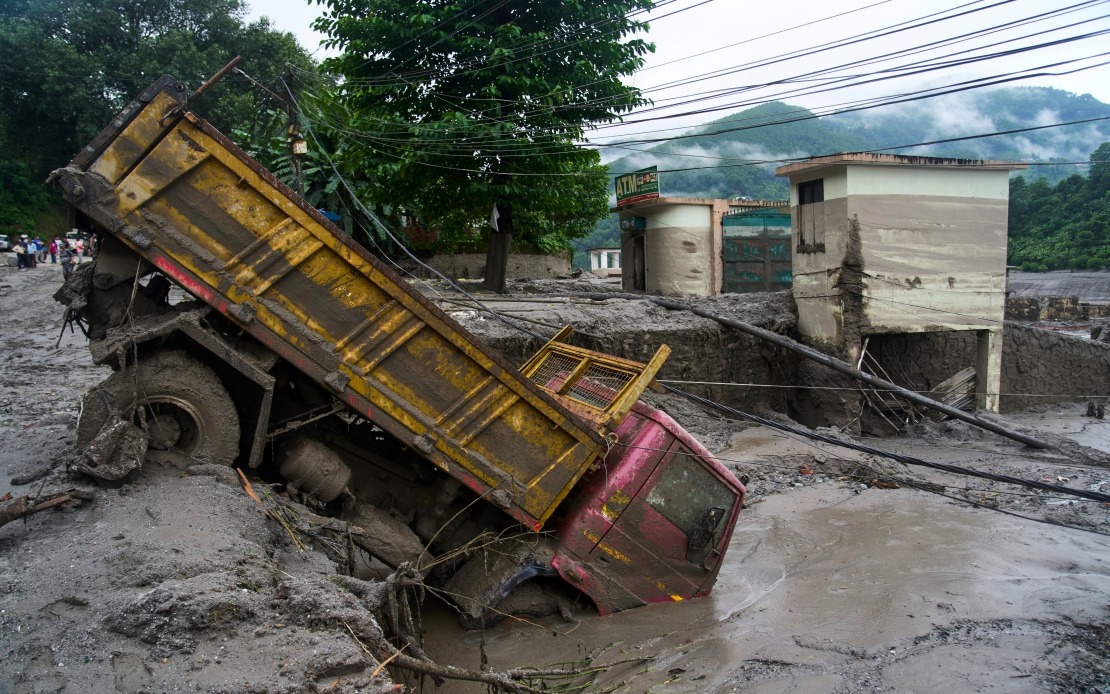
Nepalese authorities have raised fresh alarm over the possibility of another destructive flood event along the Bhote Koshi River, just days after a catastrophic deluge wreaked havoc in the mountain region. The National Disaster Risk Reduction and Management Authority (NDRRMA) released an alert on Friday indicating that water volumes carrying significant quantities of debris and mud have begun rising once more in Rasuwa district, precisely where the initial tragedy struck on Wednesday.
The resurgence in river flow represents a compound risk for responders and residents already reeling from the earlier disaster. The same geographical stretch of the Bhote Koshi, which experienced the major flood occurrence on August 26, is now showing concerning signs of instability as water and sediment accumulation builds again. This pattern of successive surges complicates rescue operations and increases the window of vulnerability for communities in downstream areas across multiple river systems in the region.
The cascading nature of these flood events reflects the particular vulnerability of Nepal's mountainous terrain during monsoon season. The presence of debris and mud coursing through waterways amplifies the destructive potential beyond what clear water alone would achieve, as such material can dislodge structures, block channels, and trigger secondary disasters. The NDRRMA's decision to issue a formal alert demonstrates the authority's assessment that conditions warrant heightened vigilance rather than confidence in stabilisation.
Mountain valley communities in Nepal face distinctive challenges during intense precipitation events. Terrain constraints mean that flooding accelerates quickly through narrow gorges and river systems, offering little time for evacuation once conditions deteriorate. The Bhote Koshi and its larger neighbour, the Trishuli River, drain heavily populated areas where thousands depend on proximity to water sources for agriculture and livelihoods. The confluence of these geographical realities with climate variability has transformed seasonal monsoons into life-threatening phenomena with increasing frequency.
All personnel engaged in ongoing rescue and relief operations along both the Bhote Koshi and Trishuli rivers have been instructed to maintain maximum alertness. The NDRRMA's guidance extends beyond those actively searching for survivors to encompass any individuals remaining in designated high-risk zones. The authority has emphasised the imperative to relocate to elevated and secure positions should rescue teams detect even minor indicators of danger. This precautionary posture acknowledges that secondary floods, triggered by saturated ground conditions and accumulated precipitation upstream, can materialise with minimal warning.
The human toll from the Wednesday flood remains staggering. Official figures document 475 confirmed deaths, a figure that tragically continues to rise as recovery teams progress through affected areas. The missing persons count, numbered in the hundreds, underscores the scale of displacement and loss. Search operations extending into downstream river channels and ravines consume enormous resources as authorities attempt to locate both survivors sheltering in remote locations and victims whose bodies have been transported far from impact zones by the force of flood waters.
For Malaysia and other Southeast Asian nations, Nepal's unfolding crisis carries pertinent lessons regarding disaster preparedness in mountainous regions. The subcontinent's monsoon patterns and topography present parallels to terrain found in Malaysian states such as Kelantan, Terengganu, and Pahang, where flash flooding periodically causes considerable damage. Nepal's experience demonstrates the critical importance of maintaining robust early warning systems, pre-positioned emergency supplies, and trained rapid response teams capable of mobilising within hours rather than days.
The coordination challenges evident in Nepal's response also warrant attention from regional disaster management authorities. Multiple river systems requiring simultaneous monitoring, combined with communications difficulties in remote mountain settlements, strain institutional capacity. Neighbouring countries managing complex watershed systems shared across international boundaries might benefit from examining Nepal's coordination mechanisms between the NDRRMA and local authorities, particularly regarding information flow and resource allocation decisions.
Climate change appears to be intensifying the frequency and severity of such events. Scientific literature increasingly documents how warming temperatures alter precipitation patterns in South and Southeast Asia, resulting in more concentrated rainfall events separated by longer dry spells. This volatility particularly endangers regions like Nepal where communities have limited financial resources for resilience-building infrastructure such as embankments, drainage systems, and early warning networks.
The recovery phase extending from this disaster will likely occupy Nepalese authorities for months or years. Beyond immediate rescue operations, attention will shift to disease prevention, shelter provision, and livelihood restoration. The psychological impact on survivors witnessing such devastation creates invisible burdens that persist long after floodwaters recede. International humanitarian assistance will prove essential given Nepal's development constraints, though external support cannot replace indigenous capacity-building that reduces vulnerability to future events.
For the broader Southeast Asian region, the unfolding situation underscores why investment in disaster resilience commands urgent priority. The Bhote Koshi River's renewed surge serves as a reminder that natural hazards do not operate on predictable schedules, and that preparedness must extend beyond single flood events to anticipate cascading dangers. Nations throughout the region sharing monsoon climates and mountainous topography would do well to intensify information-sharing regarding flood early warning methodologies and resource management practices refined through hard experience.

