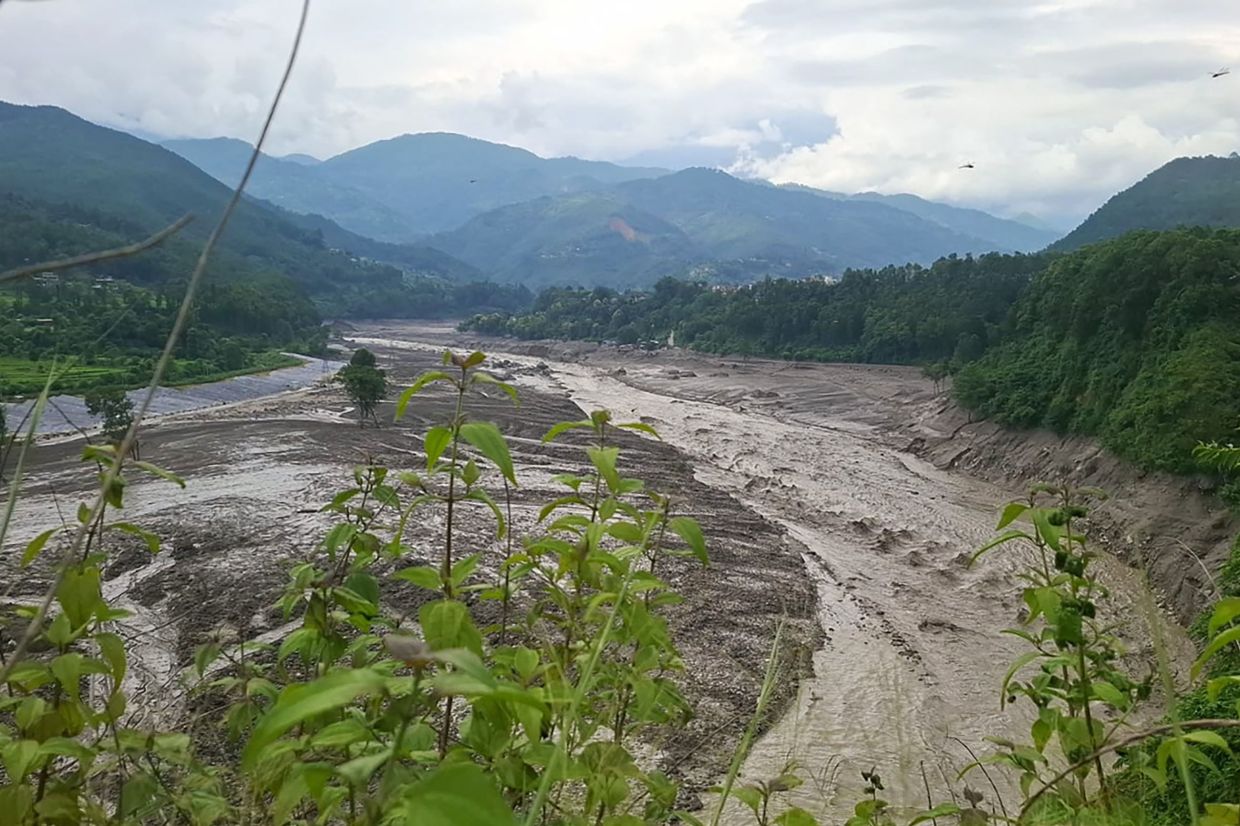
A devastating flash flood ravaged Nepal on Wednesday, 26 August, after an avalanche from a glacier triggered a catastrophic surge of water through the Himalayan valleys. The disaster claimed at least 22 lives and left hundreds of people unaccounted for, including international tourists and migrant workers scattered across multiple districts. The sheer scale of the tragedy has drawn emergency responses from neighbouring countries and raised urgent questions about the region's vulnerability to climate-driven natural disasters.
The Bhotekoshi River swelled without warning around 9am local time, devastating communities in its path with devastating force. Multiple villages, roads, bridges and hydroelectric facilities were swept away or severely damaged by the onslaught. In Nuwakot district, one of the hardest-hit areas, entire buildings were buried under metres of mud and debris, with dozens of multistorey structures, commercial vehicles and buses entombed beneath the deluge. The speed and volume of the flooding left residents with little time to escape, transforming ordinary waterways into torrents of destruction that wiped away months or years of development in minutes.
Among those missing are 384 tourists and workers from across the globe, creating a multinational humanitarian crisis. Citizens from India, the United States and the United Kingdom feature prominently on the missing list, but the disaster has also touched the Malaysian community. Malaysia's Foreign Ministry reported that its embassy in Kathmandu received notifications from travel agencies indicating loss of contact with 11 Malaysians believed to be in Rasuwa district, one of the worst-affected regions. The mix of tourists on pilgrimage, construction workers and others caught in the disaster highlights how vulnerabilities in remote mountain areas can suddenly engulf people from across the world.
Government officials in Kathmandu moved swiftly to seek international assistance, with Sasmit Pokharel, a spokesperson for the Nepali government, announcing that both India and China had been requested to contribute rescue teams and resources. Indian Prime Minister Narendra Modi immediately responded, pledging full humanitarian support and confirming that Indian rescue teams were coordinating closely with Nepali counterparts. China's President Xi Jinping similarly ordered authorities to intensify search and rescue operations in the Tibetan border area of Gyirong, while also directing the evacuation of residents in high-risk zones on the Chinese side of the border. These coordinated cross-border responses underscore the severity of the crisis and its impact on multiple nations.
Climate scientists at the Kathmandu-based International Centre for Integrated Mountain Development have traced the immediate cause of the flooding to an avalanche involving rock and ice that broke loose from a Himalayan glacier. The massive debris pile temporarily dammed the Lhende Khola River, a tributary of the Bhotekoshi, before the accumulated water behind this natural barrier catastrophically breached the blockage and rushed downstream in a torrent. According to Saswata Sanyal, a disaster risk reduction specialist at the research organisation, this marks the second major flood event in the Lhende Khola within fourteen months, signalling an alarming trend of accelerating instability in the region.
The previous catastrophe occurred in August of the previous year, when a glacial lake in Tibet overflowed during an unusually warm period, killing nine people and damaging critical infrastructure including a bridge linking Nepal and China. The recurrence of similar events within such a compressed timeframe is not coincidental but reflects deeper changes occurring across the Himalayan ecosystem. Researchers emphasise that early warning systems and disaster preparedness have become essential adaptation strategies in a warming Himalayan environment where such events are becoming distressingly routine.
The Hindu Kush Himalayan region, spanning Nepal and several neighbouring countries including India, faces particular vulnerability to hydrological disasters because it is warming at roughly twice the global average rate. This accelerated warming is primarily driven by human-caused greenhouse gas emissions that are disproportionately affecting high-altitude environments. Heavy precipitation events, intense heatwaves and rapid glacier retreat have all increased markedly in frequency and severity over recent decades. Landslides, mud flows and catastrophic floods have become recurring phenomena rather than exceptional events, fundamentally altering the risk landscape for communities across the region.
Research conducted earlier this year by scientists based in Kathmandu revealed a troubling acceleration in glacier loss across the Hindu Kush Himalaya region. Ice loss rates have doubled since the year 2000, with the primary driver being escalating global temperatures linked to climate change. This accelerating melt means that glaciers are becoming smaller and less stable, making rock and ice avalanches more likely and increasing the chance that temporary dams formed by debris will fail catastrophically. The region's glaciers represent not just environmental features but crucial regulators of water flow that billions of people depend upon for drinking water, irrigation and hydroelectric power generation.
The implications for Malaysia and Southeast Asia are significant, even though the immediate disaster occurred in Nepal. Approximately 291 of the 384 missing tourists and workers come from countries including India, the United States and the United Kingdom, but the presence of 11 Malaysians among the missing reminds readers that Southeast Asian citizens regularly traverse the Himalayan region for pilgrimage, tourism and employment. As climate change intensifies, the frequency of such disasters will likely increase, creating greater risks for anyone travelling to or working in these mountain zones. The region's tourism industry, which generates substantial revenue for Nepal and draws visitors from across Southeast Asia, will face growing challenges as safety concerns mount.
The disaster underscores a fundamental challenge facing developing nations in mountain regions: adapting to rapidly changing environmental conditions while maintaining economic opportunities and protecting residents. Nepal's rescue operations are being hampered by damaged infrastructure, difficult terrain and the scale of destruction, even with international assistance. Investment in early warning systems, improved building standards, better drainage infrastructure and community preparedness programmes could save lives in future events. However, such measures require sustained international cooperation and climate finance, particularly given that wealthy nations bear primary responsibility for historical greenhouse gas emissions driving the Himalayan warming trend that now endangers communities across South and Southeast Asia.

