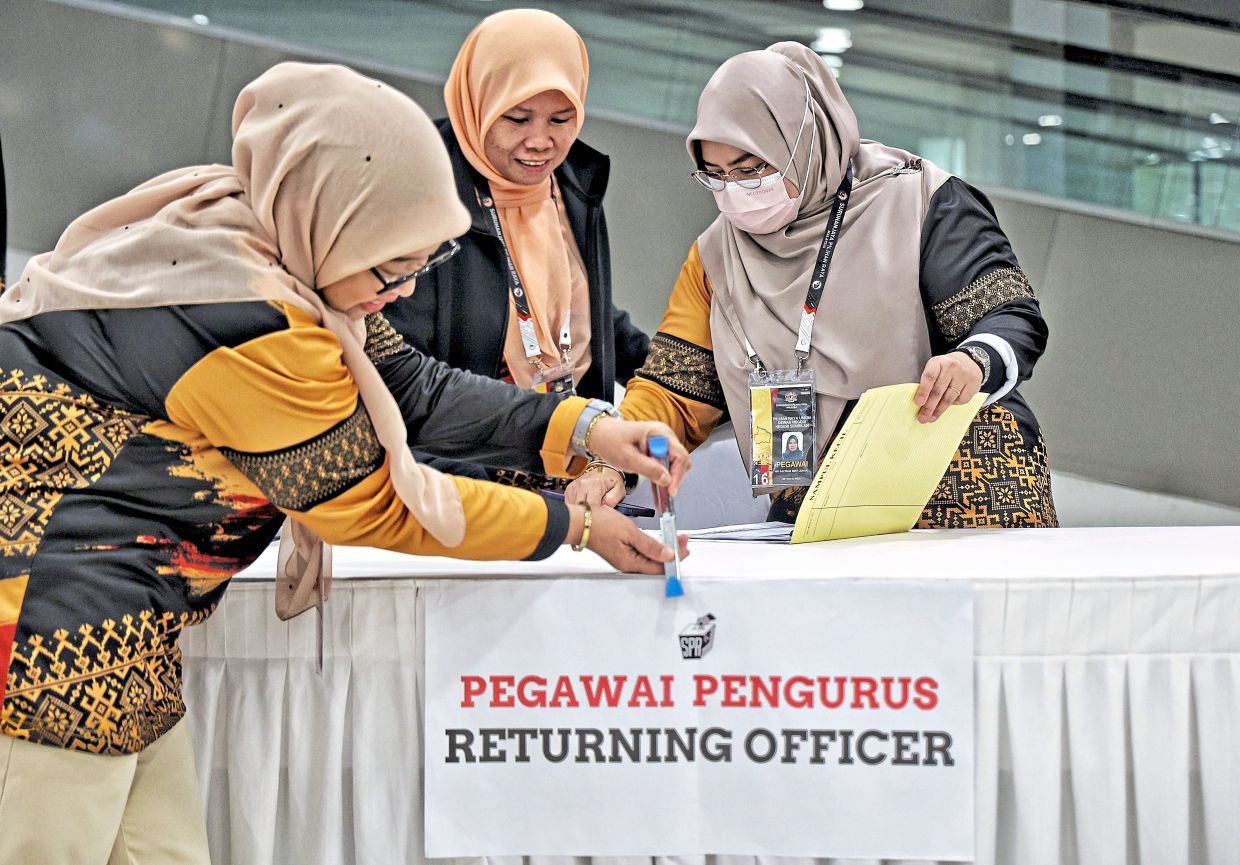
Malaysia faces a pivotal political moment as voters in Negri Sembilan prepare to cast their ballots on August 1, in what analysts describe as a defining test for an emerging opposition coalition that could fundamentally reconfigure the country's power structure. The election will reveal whether a strategic alliance between PAS and Barisan Nasional can successfully challenge the federal unity government led by Prime Minister Datuk Seri Anwar Ibrahim, with implications that extend far beyond the state level.
Signals of this political realignment began crystallising before the recent Johor state elections, when PAS demonstrated its commitment to coordinating with Barisan by strategically directing supporters to vote for the ruling coalition in constituencies where PAS was not contesting. Although PAS failed to secure any seats under the Perikatan Nasional banner in Johor, observers interpreted this as a calculated retreat in service of a grander strategic objective. The Johor campaign essentially functioned as a rehearsal for a more ambitious configuration that could reshape Malaysia's federal politics.
Negri Sembilan differs fundamentally from Johor, which represents a traditional Barisan stronghold capable of sustaining itself independently. Unlike Johor's entrenched Barisan dominance, Negri Sembilan presents a genuinely competitive three-way battleground where the new PAS-Barisan coalition faces its first serious test against the incumbent federal alliance. The August 1 polls will demonstrate whether this newly constructed political equation possesses sufficient internal coherence and grassroots support to translate parliamentary theory into electoral reality.
For the DAP specifically, the Negri Sembilan election carries existential implications. The party has historically anchored Pakatan Harapan through its reliable mobilisation of non-Malay voters, yet the Johor election exposed significant vulnerability within this traditional base. DAP's loss of four of its ten 2022 seats in Johor signalled that voter sentiment can shift when political circumstances change. A similarly poor performance in Negri Sembilan would intensify internal pressures and force difficult conversations at the party's rescheduled National Congress scheduled for August 16, where delegates may fundamentally question whether maintaining Cabinet positions justifies continued electoral erosion.
The party's recent decision to withdraw from the Melaka state government reveals growing tensions between DAP's stated democratic principles and political pragmatism. While DAP cited opposition to newly-adopted constitutional amendments permitting nominated assemblymen, the timing and selectivity of its stance invite scrutiny. Notably, DAP maintains its presence within the Umno-led Pahang government despite similar constitutional arrangements, and historical records show that Sabah DAP accepted nominated positions in 2018. This inconsistency exposes a troubling pattern whereby parties bend ideological commitments to protect specific political territories, ultimately weakening the broader structural integrity of Malaysia's political architecture.
The Negri Sembilan election also represents a critical battleground in the competition for Malay voter legitimacy, an arena where Anwar's coalition faces mounting pressure. Should the PAS-Barisan arrangement succeed in channelling Malay-majority constituencies toward the new alignment, Pakatan would confront a serious crisis of political legitimacy regardless of its parliamentary seat count. In Malaysian politics, commanding credible Malay voter support provides essential democratic legitimacy for any government, and losing that foundation would expose the unity government to persistent questions about its representative mandate, particularly given Malay voters' historical importance to Malaysia's political consensus.
A victory for the new alignment in Negri Sembilan would dramatically shift internal power dynamics and accelerate calculations about a broader federal realignment. An empowered Umno emerging from strong performances under this new configuration would possess overwhelming leverage over the prime minister, fundamentally altering the balance within the unity government. This shift in relative power raises the possibility that Barisan could eventually withdraw from the federal coalition entirely, formalise its partnership with PAS at the national level, and force a complete restructuring of parliamentary mathematics.
Understanding these implications requires examining the current parliamentary composition as a system of carefully balanced components. The federal government currently commands 151 of 220 seats through an intricate coalition spanning Pakatan Harapan (77 seats), Barisan Nasional (30), Gabungan Parti Sarawak (23), Gabungan Rakyat Sabah (seven), former Bersatu rebels (six), Parti Warisan (three), Sabah independents (two), and single seats from Sabah STAR, Parti KDM, and Parti Bangsa Malaysia. Arrayed against this bloc sits an opposition comprising PAS (43 seats), Parti Wawasan Negara (19, including MPs whose allegiances lean toward Hamzah Zainudin), Bersatu (six), and Muda (one seat).
The precariousness of this arrangement becomes apparent when considering structural shifts. If Barisan's 30 seats were to transfer from the government bloc to the opposition, the mathematics would invert catastrophically. The government's majority would shrink from 151 to 121 seats, while the opposition would expand to 99 seats, eliminating the current 82-seat cushion and reducing the prime minister's safety margin to merely 10 seats above the 111-seat majority threshold. Such a realignment would render the government acutely vulnerable, requiring perfect discipline and potentially dependent upon the goodwill of smaller regional players and independent parliamentarians.
From this mathematically precarious position, relatively minor defections could prove fatal to the government's stability. A handful of dissident MPs from regional parties or former allies could be sufficient to breach the razor-thin majority, particularly if exploited by an opposition seeking to capitalise on accumulated grievances. While opposition defectors like the six Bersatu MPs might theoretically support the unity government in exchange for concessions, reliance upon such ad-hoc arrangements offers no durable foundation for stable governance. The unity government would essentially operate under permanent siege, dependent upon deal-making and constant reassurance of individual MPs rather than commanding genuine majority solidarity.
The Negri Sembilan election functions as a bellwether for these structural vulnerabilities. A crushing defeat for Pakatan in this contest would supply the new PAS-Barisan alignment with powerful momentum and psychological confidence to pursue more aggressive federal strategies. Should this outcome subsequently influence results in the Melaka state elections, the accumulating evidence of voter preference for the emerging alignment would embolden Barisan's calculation that withdrawing from the unity government represents a politically viable strategy. The entire architecture that has sustained Anwar Ibrahim's administration would begin fragmenting, potentially triggering a cascade of defections and realignments that neither the prime minister nor his coalition partners could effectively contain once the process begins.
For Malaysian voters and regional observers, the August 1 Negri Sembilan polls represent far more than a routine state election. The result will provide crucial information about whether Malaysia's political landscape is fundamentally shifting, whether the unity government's structural foundation remains resilient, and whether the nation faces a period of renewed coalition volatility. The stakes embedded within this single election extend across multiple political frontiers—the legitimacy of Anwar's government, the future of DAP's political participation, Malay voter preference, and ultimately the stability of Malaysia's federal administration itself.

