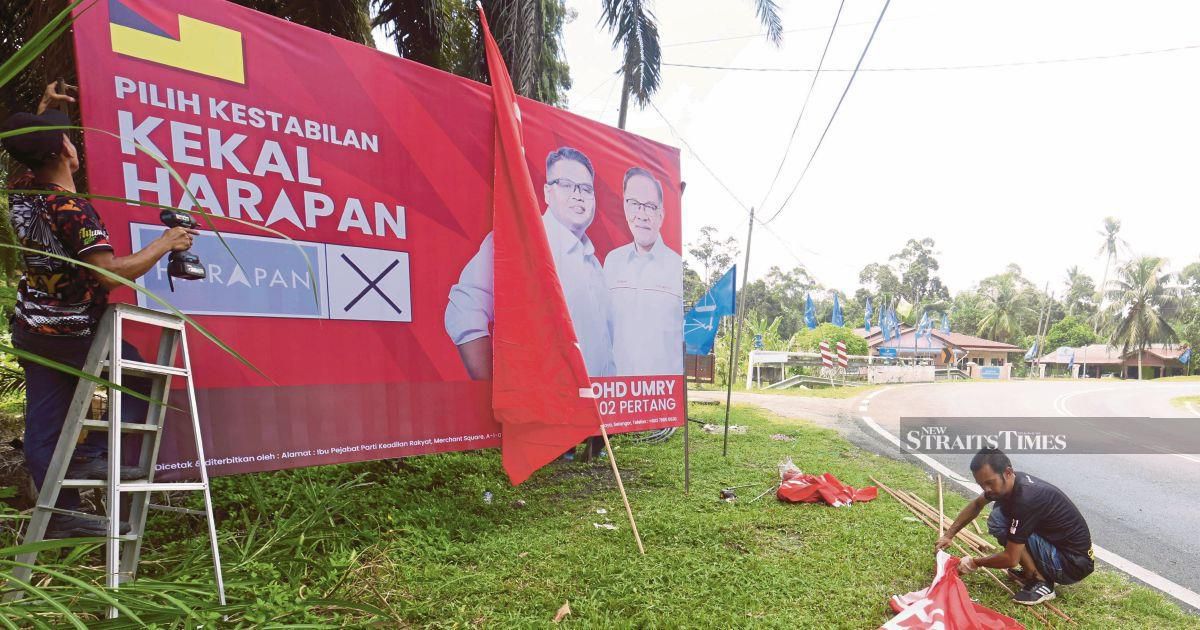
Negri Sembilan's upcoming state election is emerging as a pivotal test of Malaysia's evolving political architecture, with 103 candidates competing for the 36-seat state assembly in what observers view as a barometer of shifting coalition dynamics at the state level. The electoral contest carries particular significance for Bersatu, the party founded by former Prime Minister Mahathir Mohamad, which finds itself navigating a delicate balancing act between its historical alignment with Perikatan Nasional and its more recent cooperation agreements with Barisan Nasional at various political levels.
The composition of the candidate slate reflects deeper tensions within Malaysia's fractured political landscape. Bersatu's positioning in this election illustrates the party's broader strategic dilemma: pursuing federal collaboration with Barisan Nasional while maintaining its identity as a component of Perikatan Nasional at the state level. This duality has created operational complexities that previous electoral contests have only partially tested, making Negri Sembilan a crucial proving ground for whether such hybrid arrangements can survive intact without triggering internal party fractures or losing voter confidence.
For Barisan Nasional, particularly UMNO, the Negri Sembilan contest offers an opportunity to assess the credibility of its cooperative framework with Bersatu outside the federal government's protective umbrella. The traditional ruling coalition has invested considerable political capital in maintaining both its dominance and incorporating new partners, yet state-level elections often reveal weaknesses that national surveys mask. Understanding how Bersatu's local membership and grassroots structures respond to official party positioning on cooperation matters becomes essential for predicting whether such partnerships can withstand electoral pressure.
Perikatan Nasional's interest in the outcome stems from its role as Bersatu's original political home. The coalition, which governed several states during the 2018-2022 period, faces the ongoing challenge of maintaining relevance as former allies negotiate with other blocs. Bersatu's performance in Negri Sembilan could signal whether Perikatan retains genuine purchase over its traditional component parties or whether the alliance has fundamentally weakened as an electoral force.
The concentration of 103 candidates across just 36 seats indicates a highly competitive environment where multiple parties believe they can capture legislative seats. This density of candidates typically results from three-way or four-way contests in many constituencies, fragmenting opposition votes and potentially benefiting larger, better-organised parties with established machinery. The distribution of these candidates among coalitions will partly determine whether any single bloc can achieve clear working majorities or whether the state assembly emerges as a more balanced institution requiring careful negotiation.
Negri Sembilan's economic profile influences electoral dynamics in distinctive ways. As a state positioned between Kuala Lumpur and the southern industrial zones, it contains significant middle-class populations alongside traditional constituencies dependent on agriculture and small commerce. These varied constituencies respond differently to national political messages; while urban voters may focus on governance competence and economic management, rural areas often prioritise direct economic support and community development initiatives that state governments can readily deliver.
The timing of the Negri Sembilan election within Malaysia's broader electoral calendar carries strategic implications. Other state elections remain scheduled for coming months or years, and results in Negri Sembilan could influence how parties approach those contests. Strong performances by particular coalitions might embolden them to seek similar arrangements elsewhere, while disappointing results could force recalibrations of alliance strategies that extend far beyond the state's borders.
For Malaysian voters in Negri Sembilan, the election presents choices that reflect confusion within the broader electorate about coalition identity and direction. The state has traditionally supported Barisan Nasional, yet Bersatu's emergence as an alternative within the federal government suggests political realignment remains possible. Whether Negri Sembilan voters will reward traditional loyalties, respond to messages of change, or adopt a more pragmatic stance focused on state-level performance remains genuinely uncertain as campaigning intensifies.
The internal party dynamics within Bersatu itself warrant close observation throughout the campaign. Senior party figures may send contradictory signals about the importance of cooperation with Barisan Nasional versus maintaining Perikatan Nasional commitments, potentially confusing party members tasked with mobilising grassroots support. How party leadership manages these tensions—through clear messaging, negotiated coordination with coalition partners, or strategic ambiguity—will significantly shape both the election outcome and perceptions of Bersatu's political viability moving forward.
The Negri Sembilan election ultimately represents more than a state-level contest; it functions as a stress test for Malaysia's emerging political settlement. Whether multiple coalitions can coexist, cooperate selectively, and compete credibly without triggering systemic instability remains an open question that this election will help answer. The results will provide crucial data for predicting how Malaysia's political fragmentation evolves and whether hybrid alliance arrangements represent a sustainable path forward or merely a transitional configuration.

